

You might think you know how to care for your orchids, but it's time to reconsider your approach to watering. Instead of sticking to the usual routine, focus on their specific needs, like humidity and temperature, which can change everything. Techniques like the ice cube method or self-watering systems can revolutionize your care regimen. But what if you're missing signs of overwatering or underwatering that could be harming your plants? Understanding these nuances could be the key to revealing their true potential. Let's explore how to reshape your orchid care strategy.
Key Takeaways
- Utilize self-watering systems to ensure consistent moisture levels without frequent monitoring, eliminating the risk of over- or underwatering.
- Experiment with the ice cube method for controlled watering; it provides gradual moisture and mimics gentle rain, preventing soggy soil.
- Adjust your watering frequency based on specific orchid types and environmental conditions, rather than sticking to a one-size-fits-all schedule.
- Incorporate moisture-retaining potting mixes, like sphagnum moss, to help maintain adequate hydration while preventing root rot.
- Monitor humidity levels with a hygrometer, aiming for 40-70% humidity, and create a microenvironment by grouping orchids together.
Common Misconceptions About Orchid Watering
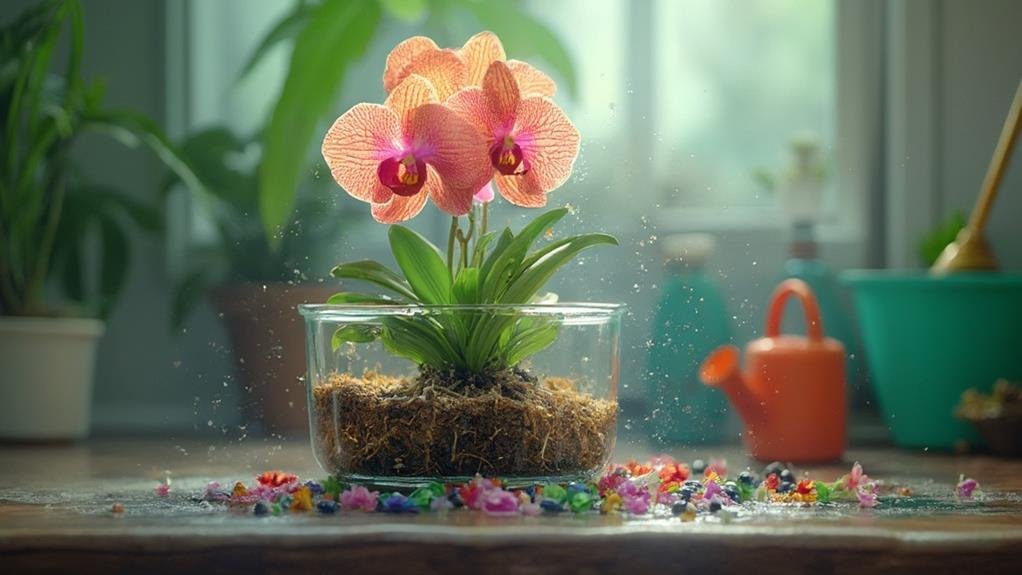
Watering orchids can feel like maneuvering through a maze, especially with the many myths that surround their care.
One common misconception is that orchids thrive on neglect. While it's true they don't need constant attention, they still require regular watering to flourish.
Another myth suggests that all orchids need to be watered weekly. In reality, their needs vary based on factors like humidity and potting medium.
You might also hear that orchids prefer ice cubes. This can actually shock the roots and lead to damage. Instead, aim for a method that mimics their natural environment.
Some believe that the more water, the better, but overwatering is a leading cause of orchid death.
Understanding Orchid Watering Needs
When it comes to orchids, understanding their watering needs is essential for their health.
You'll want to follow specific watering frequency guidelines and be on the lookout for signs of overwatering.
Watering Frequency Guidelines
Orchids typically need watering every few days, but the exact frequency can vary based on several factors.
First, consider the type of orchid you have. Phalaenopsis, for example, usually prefers to dry out between waterings, while Cattleyas might need a bit more moisture.

Next, think about the environment. If your home is warm and dry, your orchids may need more frequent watering. On the other hand, if it's cooler and more humid, you might water less often.
Another important factor is the potting medium. Orchids in bark mix tend to dry out quicker than those in sphagnum moss, so adjust your schedule accordingly.
Always check the moisture level before you water—stick your finger about an inch into the medium; if it feels dry, it's time to water.
Lastly, consider the season. During their growing phase, orchids generally need more water, while they may require less in the winter months.
Signs of Overwatering
One of the most common issues you'll face as an orchid owner is overwatering, which can lead to serious problems for your plants. Recognizing the signs early can save your orchids from distress.
First, check the leaves. If they're turning yellow or soft, it's a red flag. Healthy orchid leaves should be firm and vibrant.
Next, look at the roots. Overwatered roots often appear brown and mushy instead of firm and green. When you lift your pot, you might also notice an unpleasant odor from the medium, indicating root rot.
Another sign is the presence of mold or fungus on the surface of the potting mix. If you see this, it's a sure sign that water is lingering too long.
Additionally, wilting can occur due to either overwatering or underwatering, but if the roots are compromised, it's likely due to excess water.
To serve your orchids better, always allow the potting medium to dry slightly between waterings. By staying vigilant and adjusting your watering routine, you can keep your orchids thriving and beautiful.
Innovative Watering Techniques

When it comes to keeping your orchids happy, exploring innovative watering techniques can make a big difference.
You might consider moisture retention strategies, self-watering systems, or even the ice cube method to simplify your care routine.
Each technique offers unique benefits that can help your orchids thrive.
Moisture Retention Strategies
Maintaining the right moisture level for your orchids can be a challenge, but innovative watering techniques can simplify the process. One effective strategy is to use a moisture-retaining potting mix. Look for blends that include materials like sphagnum moss or coconut coir, as they help retain moisture while still providing adequate airflow to the roots.
Another approach is to group your orchids together. By clustering them, you create a microenvironment where humidity levels remain higher, benefiting all the plants. You'll find that this strategy not only helps with moisture retention but also promotes a healthier ecosystem for your orchids.
Consider using a watering schedule that accounts for the specific needs of each orchid type. Some orchids prefer to dry out between waterings, while others thrive in consistently moist conditions. By observing your plants closely, you can tailor your approach to suit their individual requirements.
Lastly, don't underestimate the power of humidity trays. Placing your orchids on trays filled with pebbles and water can elevate humidity levels around the plants, ensuring they get the moisture they need without overwatering.
This thoughtful attention will certainly enhance your orchids' health and vigor.
Self-Watering Systems
Self-watering systems offer a convenient solution for keeping your orchids hydrated without the constant worry of over- or under-watering.
These innovative setups can simplify your life and guarantee your orchids receive consistent moisture, which is essential for their health and growth. You can choose from various options, including self-watering pots or wicking systems.
With self-watering pots, you fill a reservoir at the bottom, and a wick draws moisture up to the roots as needed. This method helps maintain the right balance, allowing your orchids to absorb water at their own pace.
You won't need to check daily, giving you peace of mind.
Another option is a wicking system that uses capillary action to draw water from a reservoir directly to the roots.
This technique works well for busy individuals or those who might forget to water regularly.
Ice Cube Method
One popular innovative watering technique for orchids is the ice cube method. This approach offers a simple, controlled way to provide your orchids with the moisture they need without the risk of overwatering.
You can place two to three ice cubes on top of the potting medium once a week. As they slowly melt, the water seeps into the roots, mimicking a gentle rain.
By using ice cubes, you can guarantee that your orchids receive a consistent amount of water. This method allows you to serve your plants better by preventing soggy soil, which can lead to root rot.
Plus, it's a great way to keep your watering routine neat and tidy—no more spills or mess!
Signs of Overwatering and Underwatering
While caring for orchids, it's important to recognize the signs of overwatering and underwatering, as both can lead to serious health issues for your plant.
Overwatering often manifests through yellowing leaves, mushy roots, and a foul smell from the potting medium. If you notice these signs, it's time to rethink your watering routine. Verify the pot has proper drainage and consider letting the orchid dry out a bit before watering again.
On the other hand, underwatering can show up as wrinkled or shriveled leaves, and the plant may appear droopy or lifeless. When this happens, your orchid is signaling that it needs more hydration.
It's vital to strike the right balance—check the moisture level of the potting medium regularly.
Best Watering Schedule for Orchids

Establishing a consistent watering schedule is vital for keeping your orchids healthy and thriving. To serve these beautiful plants best, you should aim to water them once a week. However, the exact timing might vary based on your home's humidity and temperature. It's important to check the potting medium; it should be slightly dry before you water again.
In the warmer months, you might find that your orchids need a little extra attention. If temperatures rise or your indoor air feels dry, consider watering every five to six days. Conversely, during the cooler months, cut back on watering to every ten to fourteen days, as your orchids will need less moisture.
Always water in the morning, allowing any excess to drain out by evening. This timing helps prevent root rot and guarantees your orchids soak up the moisture they need.
Tools and Accessories for Effective Watering
Having the right tools and accessories can make a significant difference in how effectively you water your orchids. Start with a high-quality watering can that features a long, narrow spout. This design allows you to reach into your orchid pots without splashing water everywhere.
You'll also want a moisture meter, which helps you gauge when your orchids really need water. This tool takes the guesswork out of the process, ensuring you don't overwater or underwater your plants.
Consider investing in a spray bottle for those orchids that thrive on humidity. A fine mist can boost their health without overwhelming them. Additionally, a funnel can be a handy accessory, letting you pour water directly into pots with minimal mess.
For those who love to serve others, sharing these tools or even gifting them can help fellow orchid lovers nurture their plants effectively.
Finally, don't forget about a sturdy tray to catch excess water. It keeps your surroundings clean and allows the roots to soak up any extra moisture.
With these tools, you'll be well-equipped to care for your orchids and help others do the same!
Maintaining Humidity for Orchids
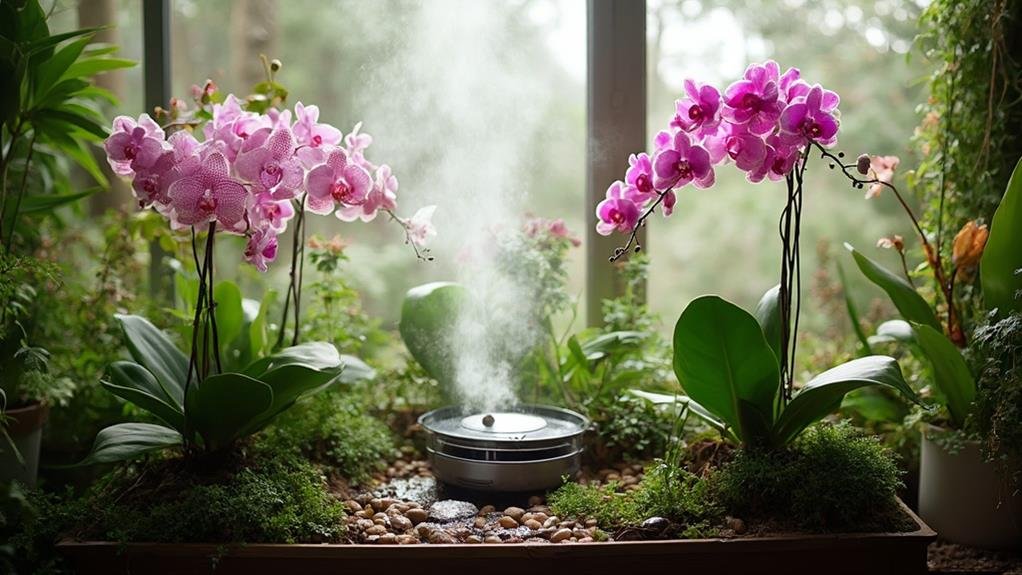
Maintaining the right humidity levels is essential for the health of your orchids. These beautiful plants thrive in environments with humidity levels between 40% and 70%. If you're serving others by nurturing orchids, consider using a hygrometer to monitor the moisture in the air.
To boost humidity, you can group your orchids together. This not only creates a microclimate but also encourages them to thrive.
Another effective method is placing a shallow tray filled with water and pebbles beneath your pots. As the water evaporates, it'll increase the humidity around your orchids without saturating their roots.
Misting your orchids can also help, but be cautious. Misting too frequently can lead to fungal issues. Instead, aim for a light misting every few days, especially during dry seasons.
If you live in an arid climate, consider investing in a humidifier. This can provide consistent moisture and create a perfect environment for your orchids.
Frequently Asked Questions
Can I Use Tap Water for My Orchids?
You can use tap water for your orchids, but it's best to let it sit for 24 hours first. This helps chlorine dissipate, ensuring your plants get cleaner, healthier hydration that promotes their growth.
How Often Should I Change My Orchid's Potting Medium?
You should change your orchid's potting medium every one to two years. This helps guarantee proper drainage and prevents root rot. Regularly check for signs of deterioration to keep your orchids healthy and thriving.
Is Rainwater Better Than Distilled Water for Orchids?
Rainwater's often better for orchids than distilled water because it contains natural minerals and nutrients. If you collect rainwater, make sure it's clean and fresh. Your orchids will thrive with this more balanced hydration.
What Temperature Should Water Be When Watering Orchids?
When watering your orchids, aim for room temperature water. It helps avoid shocking the roots. If you're using cold water, let it sit out for a while to reach a suitable temperature before watering.
Do Orchids Need Fertilization With Every Watering?
Orchids don't need fertilization with every watering. Instead, you should fertilize them every two to four weeks during their active growth period. This approach keeps them healthy without overwhelming their delicate roots.
Conclusion
By shifting your focus from rigid schedules to the unique needs of your orchids, you'll foster healthier plants and more vibrant blooms. Embrace innovative watering techniques and monitor environmental factors, so you can provide the right moisture at the right time. Remember, it's all about understanding your orchids' specific requirements and adjusting accordingly. With these tailored approaches, you'll create the perfect environment for your orchids to thrive, leaving behind outdated watering myths for good.