

You might think of orchids as beautiful, solitary plants, but recent research suggests there's much more beneath the surface. These fascinating organisms may be engaging in complex forms of communication, using chemical signals and root networks to share essential information. Imagine your orchids not just thriving individually, but actively collaborating with one another and even with fungi in their environment. What does this mean for your care routine and the overall health of your plants? Understanding these interactions could change everything you know about maintaining your orchids.
Key Takeaways
- Orchids utilize chemical signals and volatile compounds to warn neighboring plants about environmental stressors and threats like pests or diseases.
- Root networks among orchids facilitate nutrient sharing and information exchange, enhancing community resilience and adaptability.
- Scent and color cues are employed by orchids to attract specific pollinators, improving their reproductive success through targeted communication.
- Orchids can synchronize their blooming cycles through environmental cues and neighboring interactions, promoting effective pollination and aesthetic beauty.
- Understanding and recognizing orchid communication signals can significantly enhance care routines and overall plant health.
The Science Behind Plant Communication
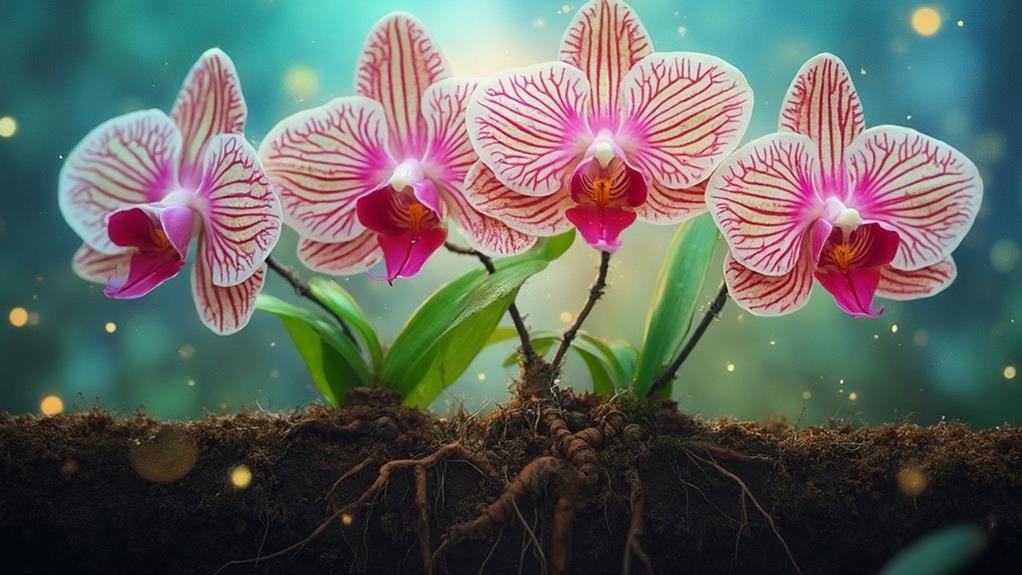
In the intricate world of plants, communication isn't just reserved for animals. You might be surprised to learn that orchids and other plants have intricate systems for exchanging information, essential for their survival and growth. They utilize various methods, including chemical signals, root exudates, and even physical touch.
When you care for your orchids, you contribute to their communication network. For instance, when you water them, you're not just providing hydration; you're also helping them interact with the soil ecosystem. The roots release compounds that attract beneficial microorganisms, fostering a healthy environment. This relationship benefits both the plants and the organisms that support them.
Moreover, plants can respond to environmental stressors, like drought or pests, by emitting volatile organic compounds. These signals can warn neighboring plants, prompting them to activate their defense mechanisms.
How Orchids Share Information
Orchids communicate through a fascinating mix of chemical signals and root networks.
You'll discover how these plants share crucial information, influencing their growth and survival.
Plus, their symbiotic relationships add another layer to how they interact with their environment.
Chemical Signals Exchange
Communication among orchids relies heavily on chemical signals, which serve as crucial messengers in their intricate interactions. These signals, often released into the air or soil, allow orchids to convey important information to one another. You might be surprised to learn that these chemicals can indicate stress, attract pollinators, or even warn nearby plants of potential threats.
When an orchid experiences environmental stress, it exudes specific volatile compounds. These compounds alert neighboring orchids about the change in conditions, prompting them to adjust their own growth or nutrient uptake. This cooperation strengthens the entire community's resilience, showcasing the beauty of interconnectedness in nature.
Additionally, orchids can release scents that attract pollinators. By sending out alluring fragrances, they invite bees and butterflies, which in turn help with their reproduction.

Understanding these chemical signals not only enriches your appreciation for orchids but also encourages you to create an environment that supports their natural communication.
Root Network Communication
While many people focus on the visible beauty of orchids, the hidden world beneath the surface plays an essential role in their survival and interaction. The root systems of these plants are intricate networks that allow them to communicate effectively with one another. Through these root networks, orchids share crucial information about nutrients, water availability, and even potential threats.
When you cultivate orchids, you might notice that they thrive better when planted in proximity to other plants. This isn't just coincidence; their root systems can transfer resources and information.
For instance, if one orchid detects a deficiency in nutrients, it can relay this information through its roots, prompting nearby orchids to adjust their uptake strategies. This cooperation strengthens the entire community.
Symbiotic Relationships Impact
Beneath the vibrant petals of orchids lies a fascinating web of symbiotic relationships that greatly enhances their ability to share information.
These relationships, particularly with fungi and other plants, create a rich network through which orchids can communicate essential signals. When you nurture your orchids, consider the hidden partnerships that support their growth and health.
Orchids often form connections with mycorrhizal fungi, which help them absorb nutrients while exchanging information about environmental conditions.
This collaboration not only strengthens the orchids but also aids other nearby plants. When one orchid encounters stress, it can release chemical signals through its roots, alerting neighboring plants to potential threats, such as pests or diseases.
Signals and Responses in Orchids
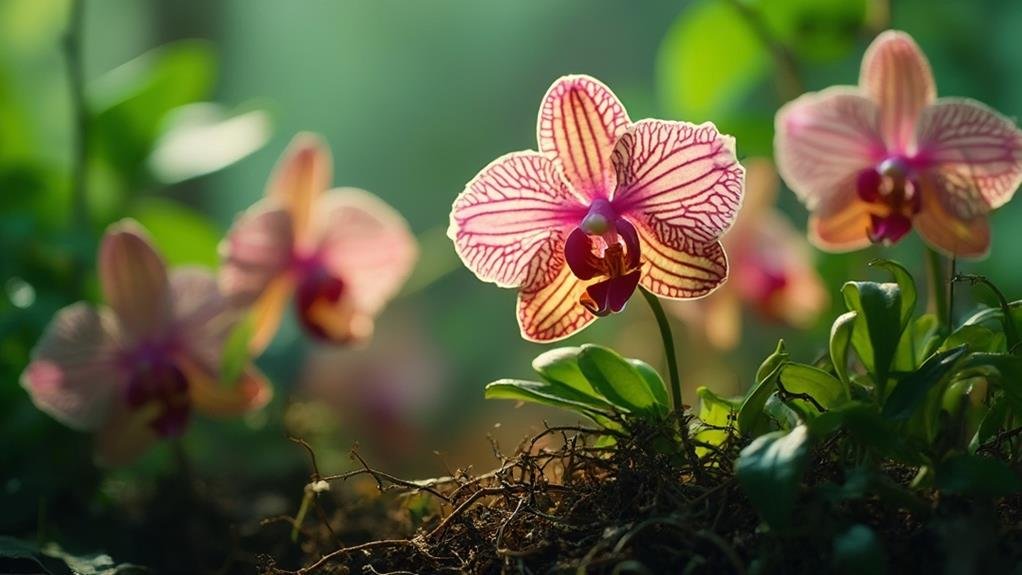
Utilizing a complex array of signals, orchids have developed remarkable strategies to attract pollinators and assure their survival. These stunning plants often mimic the appearance and scent of other flowers or even the pheromones of certain pollinators. When you observe an orchid, you might notice its vibrant colors and intricate shapes, which are designed to entice specific species.
When a pollinator approaches, the orchid responds by releasing fragrances that enhance the likelihood of a successful visit. This chemical communication assures that pollinators are drawn in, making your garden a vibrant hub of activity. You can support this process by planting a variety of orchids that bloom at different times, creating a continuous food source for pollinators.
Moreover, orchids have evolved to produce nectar rewards that further incentivize pollinators to return. By partnering with these beautiful plants, you not only enjoy their elegance but also contribute to the delicate balance of nature.
Observing these interactions can deepen your appreciation for their unique communication methods. Your involvement in cultivating orchids can foster a thriving ecosystem, demonstrating how even the smallest gardens can make a significant impact.
Threat Detection Among Orchids
Orchids not only excel in attracting pollinators but also possess sophisticated mechanisms for threat detection. These remarkable plants can sense environmental changes and potential dangers, such as pests or diseases, which allows them to take action before it's too late.
When they detect a threat, orchids can release specific volatile compounds that signal distress, alerting nearby plants to prepare their defenses.
You might wonder how this affects your care for these beautiful flowers. Understanding their threat detection can enhance your approach to orchid care.
For instance, if you notice your orchids displaying unusual growth patterns or changes in leaf color, it might indicate they're responding to stressors in their environment.
Coordinating Blooming Cycles

Timing is everything when it comes to coordinating blooming cycles in orchids. You might be surprised to learn that these beautiful plants can communicate with one another to synchronize their flowering.
When you care for a group of orchids, pay close attention to how their blooming periods align. This synchronization not only enhances their aesthetic appeal but may also increase their chances of attracting pollinators.
You'll notice that orchids may respond to environmental cues, such as temperature and light, but they also seem to take cues from their neighbors. If one orchid in your collection begins to bloom, others might follow suit, creating a spectacular display.
This collective blooming could also be a strategy to maximize pollination opportunities while minimizing competition for resources.
As you tend to your orchids, consider grouping them together, as this might encourage their natural communication. By fostering a supportive environment, you can help them thrive and create a vibrant, harmonious display.
Observing these blooming cycles can deepen your appreciation for these remarkable plants and enhance the beauty you bring to those around you.
Implications for Orchid Care
Understanding the implications of orchid communication can greatly enhance your care routine. By recognizing that your orchids may signal their needs, you'll be better equipped to provide the ideal environment they crave.
Pay attention to changes in leaf color, growth patterns, and blooming behaviors—these signs can indicate whether they need more light, water, or nutrients.
When you notice your orchids responding to environmental changes, adjust your care accordingly. If they seem to be stretching toward a light source, consider rotating their position or increasing light exposure.
Similarly, yellowing leaves might suggest overwatering, prompting you to reassess your watering schedule.
Creating a nurturing environment for your orchids means being responsive to their needs. Regularly check for pests or diseases, as these can also affect their communication.
Maintaining a clean and stable environment will help your orchids thrive, ensuring they flourish and bloom beautifully.
Future Research Directions

As you explore future research directions in orchid communication, consider the potential communication mechanisms that might exist within these fascinating plants.
You'll also want to examine how environmental factors impact their interactions and the ways different species influence each other.
Potential Communication Mechanisms
In exploring potential communication mechanisms among orchids, researchers are increasingly drawn to the intricate relationships these plants maintain with their environment and pollinators.
You'll find that orchids utilize various signals—like scent and color—to attract specific pollinators. By studying these signals, researchers aim to uncover how orchids "speak" to their surroundings.
One promising area of research involves the chemical signals orchids release. These volatile organic compounds could act as a dialogue with insects, guiding them towards nectar and enhancing pollination efficiency.
You might also consider the role of visual cues, as orchids often exhibit unique patterns and colors that can catch the attention of pollinators.
Additionally, scientists are investigating how orchids might respond to environmental cues, such as changes in temperature and humidity. Understanding these responses could reveal how orchids adapt and thrive in their habitats.
Environmental Impact Studies
Research into the communication mechanisms of orchids naturally leads to exploring their environmental impact and how these plants interact with their ecosystems. Understanding these dynamics can help you appreciate the role orchids play in biodiversity and ecosystem health.
As you embark on future research, consider how orchids might influence soil quality, water retention, and even the presence of other plant species. You might look into the ways orchids adapt to their habitats and how these adaptations affect surrounding flora and fauna.
For example, studying their relationships with pollinators can reveal insights into local food webs and highlight the significance of preserving orchid habitats. This knowledge can empower you to advocate for sustainable practices that protect these unique plants and their ecosystems.
Additionally, environmental impact studies can aid in evaluating the effects of climate change on orchid populations. By understanding these effects, you can contribute to conservation efforts aimed at preserving these essential species.
As you explore these avenues, you'll find that the more we learn about orchids, the more we can serve the greater ecological community and guarantee a thriving environment for future generations.
Inter-Species Interaction Research
Exploring the intricate web of inter-species interactions involving orchids opens up exciting avenues for future research. You might be surprised to learn that orchids don't just thrive in isolation; they engage with various organisms, from pollinators to mycorrhizal fungi. Understanding these relationships can enhance your efforts in conservation and cultivation.
Future research could focus on how orchids communicate with their pollinators through scent or visual cues. By studying these signals, you can learn how to attract more beneficial insects, leading to healthier plants and a richer ecosystem.
Additionally, investigating the partnerships between orchids and fungi can reveal how these connections support nutrient exchange, ultimately improving orchid resilience.
You might also examine how changes in climate impact these inter-species relationships. By gathering data on shifts in pollinator behavior or fungal activity, you can contribute to strategies that help protect vulnerable orchid species.
As you explore this research, consider collaborating with local conservation groups or universities. Your efforts can aid in creating a more vibrant and balanced environment, ensuring that these beautiful plants continue to flourish alongside the species that depend on them.
Frequently Asked Questions
Can Orchids Communicate With Other Plant Species?
You've likely wondered if orchids can communicate with other plant species. While they don't speak like humans, they can share chemical signals and respond to their environment, influencing nearby plants' growth and behavior.
How Do Environmental Factors Influence Orchid Communication?
Environmental factors like light, humidity, and soil quality affect how orchids signal each other. You'll notice changes in their growth patterns and health; these responses help them adapt and thrive in their surroundings.
Do Orchids Communicate Differently in Various Climates?
Yes, orchids communicate differently in various climates. In warmer, humid environments, they may develop stronger signals to attract pollinators, while in cooler climates, their communication might focus on survival strategies and resource sharing.
What Role Do Fungi Play in Orchid Communication?
Fungi play an essential role in orchid communication by forming symbiotic relationships. They help orchids absorb nutrients and water, while facilitating the exchange of chemical signals, enhancing both plant growth and resilience in various environments.
How Can I Observe Orchid Communication in My Garden?
To observe orchid communication in your garden, pay attention to their growth patterns and health. Notice how they react to environmental changes and interact with surrounding plants, fostering a harmonious ecosystem that thrives together.
Conclusion
In summary, understanding how your orchids communicate can transform your care approach. By recognizing their chemical signals and connections with mycorrhizal fungi, you can create a healthier environment for them to thrive. Pay attention to their cues, and you might just enhance their resilience and beauty. As research continues to unfold, you'll be better equipped to nurture these fascinating plants, ensuring they not only survive but flourish in your care. Keep exploring their incredible world!