
You might think your orchid room is the perfect sanctuary for your plants, but it could actually be doing more harm than good. If you're not managing factors like lighting, humidity, and air circulation properly, your orchids could be suffering in silence. Overwatering or using the wrong potting medium can exacerbate the problem, leading to root rot that's hard to reverse. Curious about the specific adjustments you can make to turn things around? Understanding these critical elements is essential for fostering a thriving environment for your orchids.
Key Takeaways
- Insufficient or excessive light can lead to leggy growth or leaf yellowing, impacting overall plant health.
- Low humidity levels can cause dehydration and wilting, hindering orchid vitality.
- Overwatering or poor drainage can result in root rot, significantly decreasing plant health and blooms.
- Nutrient deficiencies from inconsistent fertilization may stunt growth and reduce blooming potential.
- Poor air circulation can lead to mold growth and pest attraction, compromising plant wellbeing.
Improper Lighting Conditions
When growing orchids, understanding lighting conditions is crucial. The right amount of light can make all the difference in the health and vibrancy of your plants. Orchids generally thrive in bright, indirect sunlight. If you place them too close to a window where direct rays hit, you risk scorching the leaves.
Conversely, if they don't get enough light, you'll notice leggy growth and fewer blooms. You should observe your orchids closely to see how they respond to the light in your space. If the leaves turn yellow, it's a sign they're getting too much light. On the other hand, dark green leaves can indicate insufficient light.
To create an ideal environment, consider using sheer curtains to filter sunlight or rotating your plants periodically to guarantee even exposure.
Additionally, using grow lights can help if your natural light is limited. These lights can supplement your orchids' needs, especially during shorter days in winter.
Inadequate Humidity Levels
Many orchid enthusiasts underestimate the significance of humidity levels for their plants' health. Orchids thrive in environments with humidity levels between 40% and 70%. When the air's too dry, your plants can suffer from dehydration, leading to wilting, browning leaves, and ultimately, poor growth.
To create a nurturing atmosphere, you can use a hygrometer to monitor humidity levels in your orchid room. If they fall short, consider adding a humidifier or grouping your orchids together. This encourages a microclimate where moisture is retained.
Misting your plants can help, but don't rely solely on it; it may not provide consistent humidity. Investing in humidity trays filled with water and pebbles can also boost moisture levels while adding a decorative touch.
Poor Air Circulation
Good air circulation is essential for your orchids' health, as stagnant air can lead to various problems.
You might notice signs like mold growth or wilting leaves, indicating that your orchids aren't getting enough fresh air.

Let's explore some effective strategies to improve airflow in your orchid room.
Importance of Ventilation
Proper ventilation is crucial for maintaining a healthy environment in your orchid room. Without adequate airflow, humidity levels can rise, creating a breeding ground for mold and pests that threaten your beautiful plants.
Orchids thrive in conditions that mimic their natural habitats, where fresh air circulates freely. When you guarantee proper ventilation, you're not just benefiting your orchids; you're also enhancing your own enjoyment of this nurturing space.
To achieve ideal airflow, consider using fans or opening windows when the weather permits. Positioning your orchids in a way that allows air to flow around them can also make a significant difference.
Remember, orchids need a balance of humidity and fresh air to grow strong and vibrant. When you prioritize ventilation, you're actively promoting the health of your plants and demonstrating your commitment to their well-being.
This attention to detail can lead to better blooms and foliage, allowing you to share the beauty of your orchids with others. Fundamentally, good ventilation transforms your orchid room into a thriving ecosystem, where both you and your plants can flourish together.
Signs of Stagnant Air
Stale air can be a silent killer in your orchid room, subtly signaling that something's amiss with your plant care. You might notice your orchids showing signs of distress, like yellowing leaves or wilting flowers, which can often be traced back to poor air circulation.
When air stagnates, it creates an environment where humidity levels spike, leading to mold and mildew that can harm your plants.
Another indication of stagnant air is the presence of pests. If you see an increase in insects like aphids or spider mites, it could be a sign that your orchids are struggling to breathe. A lack of air movement means pests can thrive, making it harder for you to maintain a healthy space for your plants.
Additionally, if you detect a musty or sour smell in the room, it's a clear red flag. This scent often indicates that your orchids aren't getting the fresh air they need.
Keeping an eye on these signs can help you serve your orchids better, ensuring they thrive in an environment that promotes their health and well-being. Remember, your orchids depend on you to provide the best conditions for their growth!
Improving Airflow Strategies
Many orchid enthusiasts face the challenge of poor air circulation, but there are effective strategies to improve airflow in your orchid room.
Start by placing your orchids strategically; avoid overcrowding them to allow space for air to move freely around the plants. Consider using fans to enhance airflow—oscillating fans work wonders in distributing air evenly throughout the room.
You can also adjust the height of your shelves. Higher shelves tend to catch more air, while lower shelves might trap stagnant air. If possible, incorporate open shelving instead of enclosed cabinets, as this promotes better circulation.
Regularly check your air vents and filters, ensuring they're clean and unobstructed. If you're using heating or cooling systems, make sure they don't blow directly on your orchids, as sudden temperature changes can stress them.
Lastly, consider adding humidity trays or pebble trays to help maintain humidity levels without sacrificing airflow.
Overwatering Issues
Overwatering is a common pitfall for orchid enthusiasts, often leading to root rot and other serious issues. You might think you're nurturing your plants by giving them plenty of water, but excess moisture can suffocate their roots.
It's vital to understand the specific needs of your orchids, as different types require varying levels of hydration. To prevent overwatering, always check the potting medium before watering. Stick your finger about an inch deep into the substrate—if it feels dry, it's time to water. If it's damp, hold off.
Consider using pots with drainage holes to avoid water pooling at the bottom. Additionally, pay attention to the humidity in your orchid room. While orchids thrive in humid environments, too much moisture can contribute to overwatering.
Guarantee proper airflow around your plants, allowing the medium to dry out between watering sessions.
Pests and Diseases
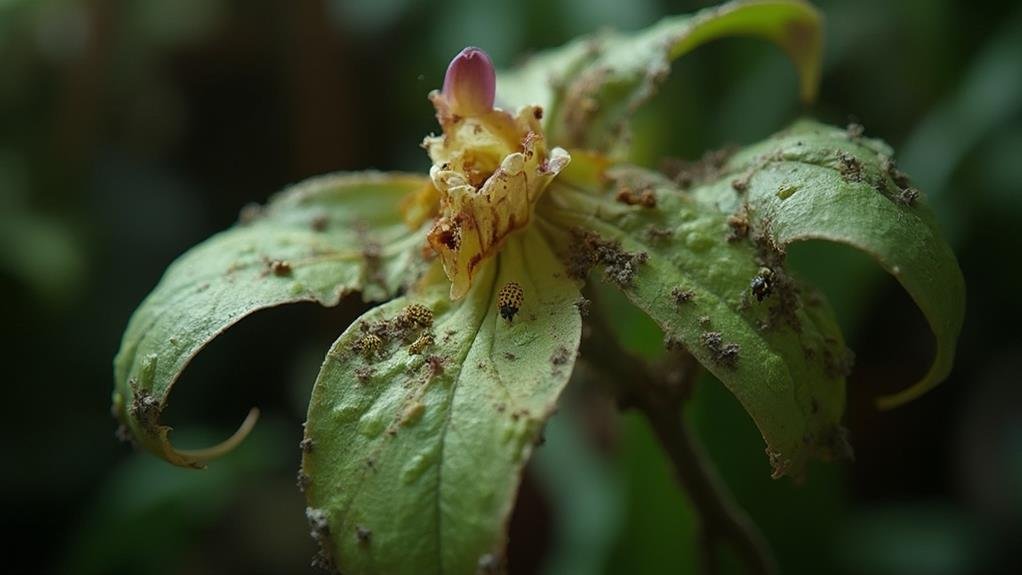
When caring for your orchids, it's essential to keep an eye out for common pests that can harm your plants.
You'll want to recognize the symptoms of diseases early to prevent any serious damage.
Common Orchid Pests
In the vibrant world of orchids, pests can quickly turn a thriving plant into a struggling one. You want to guarantee your beautiful orchids flourish, so it's crucial to be aware of common pests that could invade your orchid room.
One of the most prevalent pests you might encounter is the aphid. These tiny insects suck the sap from your orchids, leading to stunted growth and yellowing leaves.
Another common foe is the mealybug, which appears as white, cottony masses on your plants. They can weaken your orchids considerably if left untreated.
Spider mites are another threat; they're nearly invisible but can cause damage by creating fine webs and causing leaf discoloration.
Scale insects, appearing as small bumps on stems and leaves, also pose a challenge, as they feed on your orchids and can lead to severe stress.
To protect your plants, regularly inspect them for these unwelcome guests. Early detection and intervention can save your orchids and keep them thriving.
Identifying Disease Symptoms
Spotting disease symptoms early can be vital for maintaining the health of your orchids. You need to keep a watchful eye on your plants. Look for yellowing leaves, which might indicate overwatering or root rot.
If you notice black spots or patches on the leaves, it could signal fungal infections. Wilting or drooping flowers may suggest a problem with the roots or insufficient moisture.
Pay attention to any unusual growths, such as mold or slimy spots. These often point to bacterial issues. If you see stunted growth or a lack of blooming, your orchids might be struggling with a hidden disease.
Don't forget to inspect the roots too; they should be firm and healthy, not mushy or discolored.
When you notice these symptoms, it's imperative to act quickly. Your ability to recognize these signs can help you intervene before the problem escalates.
Prevention and Control Methods
Effective prevention and control methods are essential for keeping your orchids healthy and free from pests and diseases. Start by maintaining a clean environment; regularly remove dead leaves and debris that can harbor pests. Use sterilized tools when pruning or repotting to prevent introducing pathogens.
Monitor your plants closely. Check for signs of insects like aphids or mealybugs, and act quickly if you spot any. You can use insecticidal soap or neem oil, both of which are effective and safe for your orchids. Additionally, introduce beneficial insects, like ladybugs, to help keep pest populations in check.
Ensure proper air circulation in your orchid room. Stagnant air promotes fungal diseases, so use fans or open windows to maintain airflow.
It's also vital to avoid overwatering, as this can lead to root rot and other moisture-related problems. Always let your orchids dry out between waterings.
Wrong Potting Medium
Choosing the wrong potting medium can greatly hinder your orchid's growth and overall health. Orchids thrive in well-draining mixes that replicate their natural habitat, often found in trees and rocky crevices. If you use a dense or heavy soil, you might suffocate the roots, leading to root rot and other issues.
When selecting a medium, consider materials like bark, sphagnum moss, or coconut coir. Each has unique benefits, but all promote airflow and drainage essential for your orchids.
Remember, different types of orchids may require specific potting mediums; for instance, epiphytic orchids often prefer a chunkier mix, while terrestrial orchids might need something more moisture-retentive.
If you're unsure what to use, don't hesitate to consult fellow orchid enthusiasts or local gardening experts. They can offer insights tailored to your plant's particular needs.
Always monitor your orchids after repotting; if they show signs of distress, it might be time to reassess your choice of medium. By providing the right potting mix, you're not just nurturing your plants—you're ensuring they flourish, which ultimately brings joy to those around you.
Temperature Fluctuations

Temperature fluctuations can frequently stress your orchids and disrupt their growth. Orchids thrive in stable environments, ideally between 65-75°F during the day and slightly cooler at night. When temperatures swing too widely, your plants may suffer. For instance, if the daytime heat spikes and nighttime temps drop drastically, it can cause shock, leading to wilting or even death.
To keep your orchids healthy, monitor the temperature in your orchid room regularly. Use thermometers to check for sudden changes and maintain a consistent environment. If you notice a drop in temperature at night, consider using heat mats or adjusting your room's heating system.
Make sure that your orchids aren't placed near drafty windows or heat sources that may cause erratic temperature changes. You can also invest in a programmable thermostat to help regulate the temperature automatically.
Lack of Fertilization
If your orchids aren't thriving, a lack of fertilization might be the culprit.
You'll want to look for signs of nutrient deficiency and adjust your fertilization frequency accordingly.
Choosing the right fertilizer is essential to keep your orchids healthy and blooming beautifully.
Nutrient Deficiency Symptoms
Many orchid owners may overlook the importance of proper fertilization, leading to nutrient deficiency symptoms that can hinder their plants' growth and vigor.
When you don't provide your orchids with the nutrients they need, you may notice yellowing leaves, particularly older ones. This can indicate a nitrogen deficiency.
If you see stunted growth or a failure to bloom, it could signal a lack of phosphorus.
Another common symptom is leaf drop or wilting, which often points to potassium deficiency.
In more severe cases, you might find dark spots on the leaves, a sign of calcium or magnesium deficiency.
These symptoms can be alarming, but recognizing them early allows you to take action and support your orchids back to health.
Fertilization Frequency Guidelines
Recognizing nutrient deficiency symptoms is the first step in maintaining your orchids, but proper fertilization frequency is just as important.
You might think that orchids thrive on neglect, but they actually require a consistent feeding schedule to flourish. Aim to fertilize every two to four weeks during the growing season, which typically runs from spring through early fall. This regularity helps guarantee your orchids receive the nutrients they need for healthy growth and vibrant blooms.
During the dormant winter months, you can reduce the frequency to once a month or even skip it entirely, allowing your plants to rest.
Just be sure to monitor their health—if you notice any signs of distress, consider adjusting your fertilization schedule accordingly.
Choosing the Right Fertilizer
Choosing the right fertilizer for your orchids involves understanding their specific nutritional needs and the consequences of lack of fertilization.
Orchids thrive on a balanced diet of macronutrients—nitrogen, phosphorus, and potassium—as well as essential micronutrients. If you don't provide these nutrients, your plants can suffer from stunted growth, poor flowering, and even death.
When selecting a fertilizer, look for a product specifically formulated for orchids, as these often contain the right balance of nutrients.
You'll find options like 30-10-10 or 20-20-20, which indicate the ratio of nitrogen, phosphorus, and potassium. For most orchids, a balanced fertilizer applied monthly during the growing season will do wonders.
Neglecting Repotting

Ignoring the need for repotting can lead to serious issues for your orchid. Over time, roots can outgrow their pots, becoming cramped and unhealthy. If you don't repot, your orchids may struggle to absorb nutrients, which can stunt their growth and diminish their vibrant blooms.
You'll want to check the medium, too. It breaks down over time, losing air pockets needed for proper root respiration. A compacted medium can trap excess moisture, leading to root rot—a common killer of orchids.
By repotting every couple of years, you not only refresh the growing medium but also provide your plant with more space to thrive.
When you notice roots growing out of the drainage holes or circling around the pot, it's time to act. Choose a slightly larger pot with good drainage, and gently untangle any circling roots before replanting.
This simple act of care will go a long way in ensuring your orchids flourish.
Inconsistent Care Routine
An inconsistent care routine can spell trouble for your orchids, leading to stress and poor health. When you vary your watering schedule or change the amount of light they receive, you create an unstable environment that can confuse your plants. Orchids thrive on consistency, so it's essential to establish a reliable routine that meets their needs.
Start by observing your orchids closely. Notice how they respond to your care—are their leaves wilting or turning yellow? This might indicate you're overwatering or underwatering.
Make it a habit to check the moisture level of the potting medium regularly. Aim to water when the top inch feels dry, but don't let them sit in water, as this can lead to root rot.
In addition to watering, maintain consistent humidity and temperature levels. Orchids generally prefer humidity levels between 40% and 60%.
If you can't provide this naturally, consider using a humidifier.
Frequently Asked Questions
Can Orchids Thrive in Low-Light Conditions?
Orchids can struggle in low-light conditions. While some varieties tolerate shade, most need bright, indirect light to flourish. Consider placing them near a window where they can soak up filtered sunlight for ideal health.
What Are the Signs of Overwatering in Orchids?
Overwatering orchids shows signs like yellowing leaves, wilting, and root rot. You'll notice mushy roots or a sour smell from the potting medium. Adjust your watering habits to keep your orchids healthy and thriving.
How Often Should I Check for Pests?
You should check for pests at least once a week. Regular inspections help you catch any infestations early, ensuring your orchids stay healthy. Don't forget to inspect the undersides of leaves, where pests often hide.
Are There Specific Fertilizers for Different Orchid Types?
Yes, there are specific fertilizers tailored for different orchid types. You should choose a balanced fertilizer for general care or a formula higher in nitrogen for growth. Always follow the recommended dosage for the best results.
What Is the Best Time to Repot My Orchids?
The best time to repot your orchids is during spring, right before new growth begins. This timing helps them adapt better to their new environment, ensuring they thrive and flourish under your care.
Conclusion
Your orchid room might be causing more harm than good if you don't address these key factors. By ensuring proper lighting, humidity, air circulation, and watering practices, you can create a healthier environment for your plants. Stay vigilant against pests and diseases, manage temperature fluctuations, and don't forget to fertilize and repot when needed. Consistency in your care routine is essential. With a little attention, your orchids can thrive instead of just survive.