You might've noticed that professional growers are moving away from traditional orchid pots, and it's not just a trend. These pots often limit airflow and drainage, which can compromise the health of orchids. Instead, growers are turning to innovative alternatives that better cater to the complex needs of these plants. This shift raises questions about what these new potting solutions offer and how they align with sustainable practices. Understanding the factors driving this change could reshape your perspective on orchid cultivation. Curious about the specifics?
Key Takeaways
- Traditional pots restrict airflow, leading to poor oxygen circulation and increased risk of root rot in orchids.
- Alternative potting materials enhance drainage, preventing waterlogging and promoting healthier root systems.
- Innovative designs, like breathable mesh containers, facilitate better air circulation and nutrient absorption for vibrant blooms.
- Customizable potting solutions cater to specific orchid varieties, ensuring optimal growing conditions and promoting overall plant health.
- Sustainable practices, such as biodegradable pots, align with eco-friendly trends and reduce the environmental impact of orchid cultivation.
Limitations of Traditional Pots

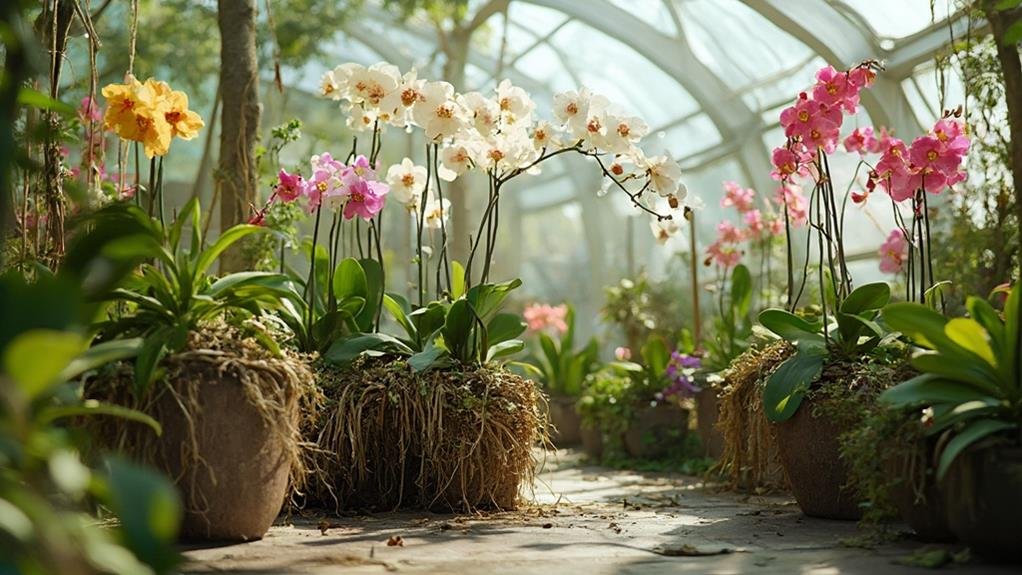
Traditional pots can limit the growth and health of your orchids in several ways. First, they often restrict airflow to the roots, leading to poor oxygen circulation. Orchids thrive in environments that allow their roots to breathe, so when you use traditional materials, you're setting your plants up for stress.
Additionally, these pots typically hold too much moisture, which increases the risk of root rot. Since you're nurturing these beautiful plants for others to enjoy, it's crucial to guarantee they get the right balance of water and air.
Moreover, the weight of traditional pots can make it challenging to move your orchids around for ideal light exposure. When you're dedicated to serving your community with vibrant blooms, you want to easily adjust their positioning.
Finally, traditional pots often lack drainage holes, which can lead to waterlogging. This negatively impacts the health of your orchids and the joy they bring to those who admire them.
Benefits of Alternative Materials
When you switch to alternative materials for your orchid pots, you'll notice improved drainage properties that prevent overwatering.
These materials also enhance root aeration, allowing your orchids to breathe better and thrive.
Ultimately, using the right materials can lead to healthier plants and more vibrant blooms.
Improved Drainage Properties
Many professional growers are discovering that alternative materials for orchid pots offer markedly improved drainage properties. These materials, such as mesh pots, ceramic, or even biodegradable options, help excess water flow away quickly, preventing root rot and other moisture-related issues.
When you opt for these alternatives, you create an environment that encourages healthy root growth, which ultimately leads to thriving orchids.

You'll find that pots made from materials like plastic mesh or clay have larger drainage holes, allowing water to escape more efficiently than traditional pots. This means you can water your orchids without worrying about over-saturation. As a result, your plants can absorb water as needed, thriving without the threat of standing water below the surface.
Using these improved drainage options not only fosters healthier plants but also makes your caregiving easier. You won't have to constantly check for water retention or deal with the aftermath of soggy roots.
Embracing alternative materials can greatly enhance your orchid-growing experience, enabling you to serve others with vibrant, flourishing plants that are sure to impress.
Enhanced Root Aeration
Alternative materials for orchid pots not only improve drainage but also greatly enhance root aeration. When you choose pots made from materials like terracotta, wood, or breathable fabrics, you're allowing air to circulate freely around the roots.
This airflow is essential for healthy root development, as orchids thrive in environments where their roots can breathe. By opting for these innovative materials, you're not just elevating your orchids' health; you're also creating conditions that encourage stronger growth and vibrant blooms.
Good aeration helps prevent root rot, a common issue that plagues many growers. With healthier roots, your orchids can absorb nutrients more effectively, allowing them to flourish and thrive.
Additionally, these alternative pots often come in various designs that can enhance your display, making your orchids even more appealing to those you serve. You're not just caring for plants; you're nurturing beauty and joy in your space.
Enhanced Drainage Solutions

If you've ever struggled with overwatering your orchids, you're not alone. Many orchid enthusiasts find it challenging to balance moisture levels, which can lead to root rot and unhealthy plants.
To combat this issue, enhanced drainage solutions are becoming increasingly popular among professional growers. These alternatives prioritize effective water management, ensuring your orchids thrive.
One effective solution is using pots with built-in drainage features. These pots allow excess water to escape quickly, preventing soggy conditions.
Additionally, consider using specialized potting mixes that incorporate materials like bark, perlite, or coconut coir, which promote rapid drainage while still retaining enough moisture for your orchids to absorb.
You might also explore using hybrid pots that combine traditional designs with modern drainage technology. These innovations often feature raised bottoms or drainage holes strategically placed to facilitate ideal water flow.
Improved Air Circulation
Orchid enthusiasts understand that improved air circulation is essential for healthy plant growth. When you provide your orchids with proper airflow, you help prevent fungal infections, root rot, and other ailments that can hinder their development.
Traditional pots often trap moisture and create stagnant air, but innovative growing containers promote better ventilation, allowing your orchids to thrive.
By using pots designed for ideal air circulation, you'll notice your orchids developing stronger root systems. These advanced pots feature slotted sides or mesh designs, making it easy for air to flow around the roots, ensuring they receive the oxygen they need.
This not only promotes healthy growth but also encourages your plants to absorb nutrients more effectively.
When you prioritize improved air circulation, you're not just caring for your orchids; you're enhancing their beauty and lifespan. Healthy orchids can produce more blooms and display vibrant colors, making your efforts even more rewarding.
As you adopt these modern pots, you'll find yourself contributing to the overall well-being of your plants, creating a space that showcases the elegance of orchids while serving others in their passion for these exquisite flowers.
Customization for Orchid Varieties
With improved air circulation established as a foundation for healthy orchid growth, the next step is tailoring your growing environment to match the specific needs of different orchid varieties.
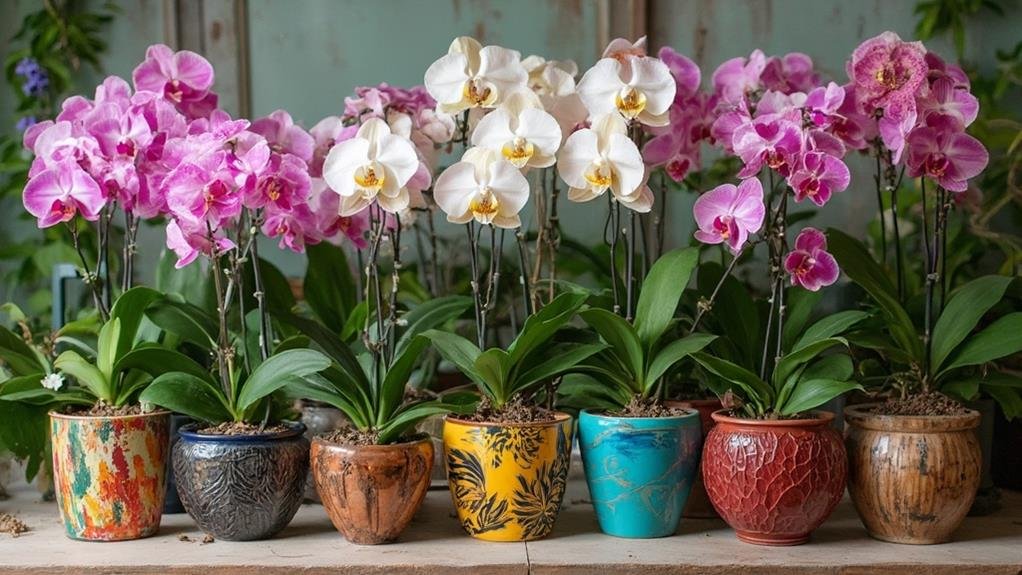
Each type of orchid has unique requirements when it comes to light, humidity, and watering frequency. By customizing your approach, you can guarantee that each variety thrives, which ultimately benefits your community or customers.
For instance, Phalaenopsis orchids prefer bright, indirect light and higher humidity levels, while Cattleya orchids thrive in brighter conditions with drier spells between waterings.
Using adjustable shelving or movable grow lights can help you cater to these specific needs.
Additionally, consider the potting medium. Some orchids prefer bark-based mixes, while others might do better in sphagnum moss or coconut coir.
Choosing the right medium not only supports root health but also boosts overall plant health.
Sustainable Growing Practices
Sustainable growing practices are becoming essential for professional orchid growers who want to minimize their environmental impact while maximizing plant health.
By adopting eco-friendly methods, you can contribute to a healthier ecosystem and provide your customers with high-quality, ethically grown orchids.
One effective approach is using biodegradable pots made from materials like coconut coir or recycled paper. These pots break down over time, enriching the soil rather than contributing to landfill waste.
Additionally, you can employ organic fertilizers and pest control methods, reducing harmful chemicals in your growing environment.
Water conservation is another critical aspect. Implementing drip irrigation systems allows for efficient water use, ensuring that your orchids receive the moisture they need without waste.
You might also consider collecting rainwater, which can be a sustainable and cost-effective solution.
Future Trends in Orchid Cultivation
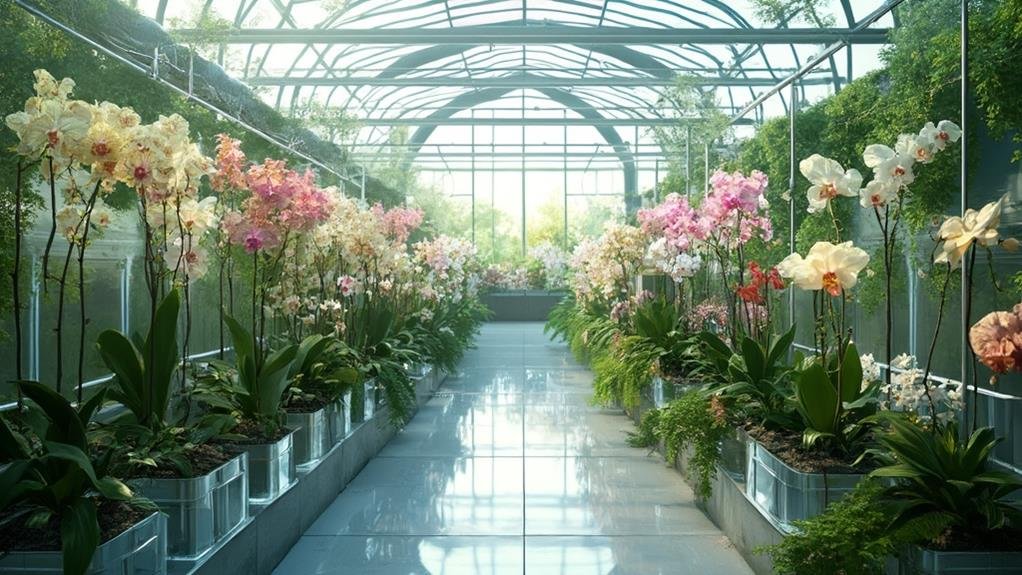
As you explore the future of orchid cultivation, you'll notice a shift towards innovative potting solutions that enhance plant health.
Sustainable growing practices are becoming a priority, ensuring that your methods support the environment.
Plus, advanced hydroponic techniques are gaining traction, allowing you to grow orchids more efficiently and effectively.
Innovative Potting Solutions
Many growers are exploring innovative potting solutions that cater to the unique needs of orchids. Instead of sticking to traditional pots, you might consider using breathable mesh containers, which promote airflow and prevent root rot.
These containers allow excess water to drain while keeping the roots moist, creating the perfect environment for healthy growth.
Another trend is the use of self-watering pots. These pots come equipped with reservoirs that help maintain consistent moisture levels, ensuring your orchids thrive even if you're busy.
This approach allows you to serve your plants better by reducing the risk of over or underwatering.
Additionally, some growers are experimenting with hybrid potting systems that combine various materials, like bark, moss, and perlite.
This mix can enhance aeration and moisture retention, giving your orchids the best of both worlds.
Sustainable Growing Practices
How can growers adapt to a rapidly changing climate while ensuring their orchids thrive? Embracing sustainable growing practices is key.
Start by selecting eco-friendly materials for potting, like biodegradable pots or recycled containers. These options not only reduce waste but also support a healthier environment for your orchids.
Next, consider your water usage. Implementing rainwater collection systems can considerably decrease your reliance on municipal water sources. This practice not only conserves water but also provides your orchids with chemical-free hydration.
Utilizing organic fertilizers is another step towards sustainability. They enrich the soil without harmful chemicals, promoting healthy growth and reducing environmental impact.
Additionally, integrating companion planting can enhance biodiversity, creating a balanced ecosystem that fosters resilience among your orchids.
Lastly, keep an eye on energy consumption. Using energy-efficient grow lights and heating systems can help lower your carbon footprint while still providing ideal conditions for your plants.
Advanced Hydroponic Techniques
Increasingly, growers are turning to advanced hydroponic techniques to elevate their orchid cultivation. These methods allow you to optimize nutrient delivery, maximize growth rates, and create ideal conditions for your orchids.
By using nutrient-rich solutions instead of traditional soil, you can control every aspect of your plants' environment, leading to healthier, more vibrant blooms.
One popular approach is the Nutrient Film Technique (NFT), where a thin film of nutrient solution flows over the roots. This method guarantees your orchids receive constant access to essential elements while preventing waterlogging.
Alternatively, Deep Water Culture (DWC) involves suspending plants in a nutrient solution, promoting rapid root development and increased oxygenation.
You can also explore aeroponics, where roots hang in the air and receive misted nutrients, fostering exceptional growth and minimizing disease risks.
These advanced techniques not only enhance orchid health but also reduce water usage and labor requirements, making them more sustainable.
Frequently Asked Questions
What Materials Are Commonly Used in Alternative Orchid Pot Designs?
You'll often find materials like recycled plastics, wood, and breathable mesh in alternative orchid pot designs. These options promote better air circulation and drainage, ensuring your orchids thrive while being environmentally friendly and innovative.
How Do Different Orchid Species Affect Pot Selection?
Different orchid species require unique pot selections based on their root systems and moisture needs. You'll need to reflect on these factors to guarantee each plant thrives, enhancing your ability to serve fellow plant enthusiasts effectively.
Can Traditional Pots Still Be Used Effectively for Certain Orchids?
Yes, traditional pots can still work for certain orchids, especially those that prefer consistent moisture. Just guarantee you choose the right size and drainage options to keep your plants healthy and thriving in their environment.
What Are the Costs Associated With Switching Pot Types?
Switching pot types can incur costs like purchasing new pots, soil, and possibly adjusting your watering routine. You'll also need to take into account the time spent on repotting and monitoring your orchids' adaptation to their new environment.
How Do Environmental Factors Influence Pot Choice for Orchids?
Environmental factors like humidity, temperature, and light levels greatly influence your pot choice for orchids. Selecting the right pot guarantees proper drainage and airflow, ultimately helping your orchids thrive in specific conditions and promoting healthier growth.
Conclusion
As professional growers shift away from traditional orchid pots, they're embracing innovative solutions that prioritize root health and sustainability. By choosing breathable materials and advanced designs, you can enhance drainage, improve air circulation, and customize care for different orchid varieties. This change not only fosters healthier plants but also aligns with modern eco-friendly practices. Staying ahead of these trends will guarantee your orchids thrive, making your cultivation efforts more rewarding and visually appealing.