
You might find it intriguing how ancient orchids, with their peculiar traits and adaptations, pose questions that even modern science struggles to answer. Despite extensive research on their evolutionary paths, some unique characteristics seem to defy explanation. Their intricate relationships with pollinators and fungi reveal layers of complexity that challenge our understanding of survival in extreme environments. As you explore these mysteries, consider what secrets ancient orchids might still hold and how they could reshape our perspective on biodiversity. What unexpected connections might emerge as we uncover more about these enigmatic plants?
Key Takeaways
- Orchids exhibit unexplained genetic adaptations that do not correlate with their environments, raising questions about their evolutionary mechanisms.
- Fossils reveal ancient orchids' remarkable survival strategies during past extinction events, yet many mysteries about their evolution remain unsolved.
- The complex symbiotic relationships orchids have with fungi for nutrient acquisition highlight ecological interdependencies that are still not fully understood.
- Unique pollination strategies, such as mimicry of insects, showcase intricate interactions that challenge traditional views of plant-pollinator relationships.
- Genetic diversity in orchids leads to vast variations, but the environmental triggers for some traits remain elusive, complicating our understanding of their evolution.
Evolutionary Anomalies of Orchids
Orchids are a fascinating example of evolutionary anomalies that challenge our understanding of plant adaptation. You might be surprised to learn that these exquisite flowers exhibit traits that seem counterintuitive to survival.
For instance, their diverse shapes and colors don't just serve an aesthetic purpose; they're adaptations that help them thrive in various environments.
Consider how some orchids have evolved to mimic the appearance of other plants or even insects. This mimicry isn't just for show; it's a strategic move to attract specific pollinators, ensuring the survival of the species.
You might wonder how these adaptations came to be, given the competitive nature of their ecosystems.
Moreover, orchids often grow in symbiotic relationships with fungi, enhancing their nutrient uptake in nutrient-poor soils.
This partnership exemplifies how collaboration can lead to greater resilience, a lesson we can all take to heart as we seek to serve others.
Unique Pollination Strategies
The fascinating adaptations of orchids extend beyond their evolutionary anomalies to include unique pollination strategies that are nothing short of remarkable. You'll be intrigued to learn how these stunning flowers have developed specific traits to attract their pollinators, ensuring survival while serving the ecosystem.
For instance, some orchids mimic the appearance and scent of female insects, enticing male pollinators to approach. This clever ruse has males attempting to mate with the flower, inadvertently transferring pollen in the process. You can imagine the surprise when they realize their mate is a beautiful blossom!
In other cases, orchids have evolved to produce unique fragrances that specifically attract certain pollinators, like bees or moths. This symbiotic relationship benefits both the plant and the pollinator, as the insects get nourishment, while the orchids secure successful reproduction.

You might also find it fascinating that some orchids rely on environmental factors, like wind or water, to distribute their pollen. Each strategy highlights the intricate relationships within nature, and by understanding these unique pollination methods, you can appreciate how orchids play an essential role in their ecosystems, serving both themselves and the creatures that rely on them.
Ancient Orchid Fossils
When you think about ancient orchids, fossil discovery sites hold fascinating clues about their past.
You'll find that the age and preservation techniques used in these findings reveal much about the evolutionary significance of orchids.
Let's explore how these ancient remnants help us understand the rich history of these remarkable plants.
Fossil Discovery Sites
Fossil discovery sites play a crucial role in unraveling the ancient mysteries of orchids. When you explore these sites, you're stepping into a world where time stands still, revealing the fascinating history of these unique plants. Each site holds potential treasures that can reshape our understanding of orchid evolution, relationships, and adaptations.
As you dig deeper, you may uncover fossils preserved in sediment layers, offering insights into the environmental conditions of the era. By studying these ancient remains, you can help scientists piece together how orchids thrived alongside other flora and fauna.
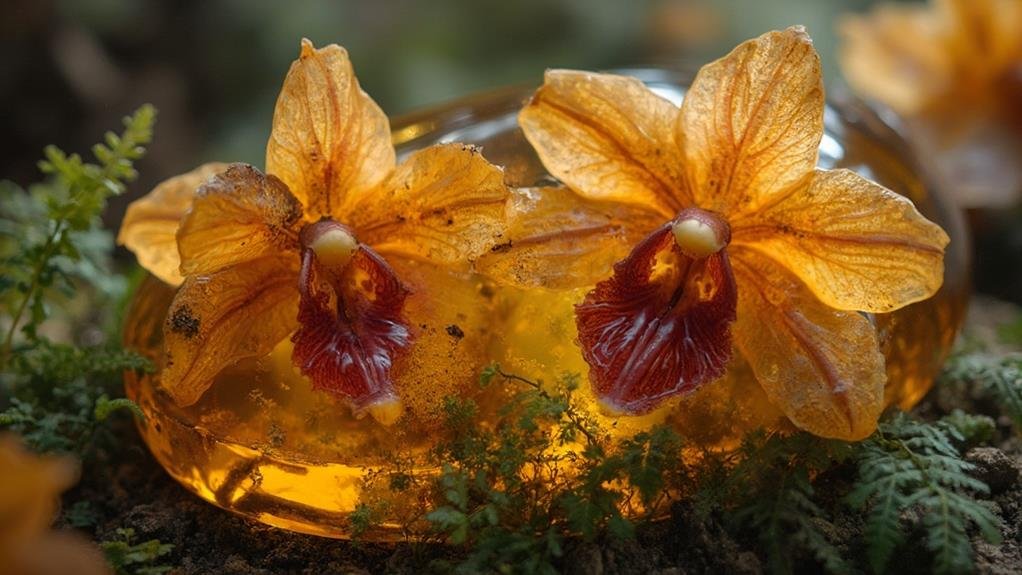
Some notable fossil discovery sites, like the amber deposits in the Dominican Republic, have yielded exquisite specimens that showcase not just the orchids themselves, but also their interactions with insects and other organisms.
Your passion for serving others can extend to these discoveries, as you share knowledge about how orchids adapted over time. By educating communities about these findings, you can inspire conservation efforts that protect both ancient and modern orchid species.
Together, we can appreciate the beauty of orchids and guarantee their legacy continues for generations to come.
Age and Preservation Techniques
Understanding the age and preservation techniques of ancient orchid fossils reveals the intricate tapestry of their history.
These techniques play an essential role in unearthing the secrets of orchids that have flourished for millions of years. You might find it fascinating that paleobotanists employ various methods to date these fossils, such as radiocarbon dating and stratigraphy, helping to pinpoint their age within geological timelines.
Preservation techniques also greatly impact how well these fossils retain their original features. Fossils can be preserved in amber, for instance, which protects delicate structures from degradation.
In some cases, sediments can encapsulate orchids, allowing them to endure through time. It's amazing how these natural processes have enabled us to glimpse into the past, revealing the beauty and complexity of ancient orchids.
Evolutionary Significance of Orchids
Orchids hold a unique place in the evolutionary narrative, showcasing remarkable adaptations that have allowed them to thrive across diverse environments. These stunning flowers exhibit incredible diversity in form, color, and fragrance, which are essential to their survival and reproduction. By attracting specific pollinators, orchids guarantee their genetic legacy continues. This specialization not only enhances their reproductive success but also illustrates the interconnectedness of life.
Ancient orchid fossils reveal clues about their evolutionary journey. You'll find that these fossils date back millions of years, offering insights into how orchids adapted to changing climates. They highlight the resilience of orchids, showing how they survived past extinction events and ecological shifts that wiped out many other species.
Understanding the evolutionary significance of orchids can inspire you to appreciate the delicate balance of ecosystems. By serving others through education and conservation efforts, you can help protect these fascinating plants and their habitats.
Promoting awareness about orchids enhances biodiversity and supports the crucial role they play in their ecosystems. Embracing this knowledge allows you to contribute positively to the ongoing story of orchids and their remarkable journey through time.
Symbiotic Relationships With Fungi
In the intricate web of life, orchids rely heavily on their symbiotic relationships with fungi to thrive. These partnerships are essential for the early stages of an orchid's life, as they depend on the fungi to provide necessary nutrients. When you think of orchids, imagine tiny seeds that struggle to germinate without the assistance of their fungal partners. The fungi break down organic matter, making crucial nutrients accessible and helping orchids establish roots.
As these relationships develop, the fungi also benefit. They gain sugars and other carbohydrates produced by the orchids through photosynthesis. It's a beautiful exchange, showcasing the interconnectedness of nature. By understanding this relationship, you can appreciate the delicate balance required for orchids to flourish.
Additionally, this symbiosis highlights the significance of conserving both orchid species and their fungal partners. When you support local ecosystems, you're not just helping orchids; you're fostering a community that encourages biodiversity.
Genetic Mysteries and Variability
When you explore the world of orchids, you can't help but notice their stunning genetic diversity.
This variability raises intriguing questions about how some orchids adapt in ways that seem almost mysterious.
Understanding these genetic adaptations could reveal secrets about their survival and evolution.
Genetic Diversity in Orchids
Among the most fascinating aspects of orchids lies their genetic diversity, which contributes to the vast array of shapes, colors, and sizes found within this remarkable family of plants. This diversity isn't just visually stunning; it plays a vital role in the survival and adaptability of orchids in various ecosystems.
Each species has a unique genetic makeup that allows it to thrive in specific environments, whether it's the humid rainforest or arid desert. Understanding this genetic variability can help you appreciate how orchids have evolved over time.
It's not merely about beauty; it's a reflection of nature's ingenuity. When you cultivate orchids or share them with others, you're participating in a rich legacy of biodiversity.
Moreover, the genetic differences among orchids can offer insights into their resilience against diseases and environmental changes. By fostering a deeper appreciation for these plants, you're also contributing to conservation efforts.
Supporting genetic diversity in orchids can guarantee that future generations can enjoy their splendor. So, as you engage with these plants, remember that each bloom tells a story of survival, adaptability, and the intricate tapestry of life on Earth.
Unexplained Genetic Adaptations
Genetic adaptations in orchids often leave researchers puzzled, as some variations appear without clear environmental triggers. You might wonder how these beautiful plants can thrive under such diverse conditions, seemingly defying the rules of natural selection.
Some orchids exhibit unique traits that don't seem to correlate with their habitats, suggesting that there's more to their genetic makeup than meets the eye.
For instance, certain species develop striking colors or unusual shapes that attract specific pollinators, even when the surrounding environment doesn't necessitate such adaptations. This raises intriguing questions about the role of genetic mutations and epigenetics in shaping their survival strategies.
Understanding these unexplained genetic adaptations can help you appreciate the complexity of life and the interconnectedness of all species. It's not just about survival; it's about the intricate dance of genes, environment, and evolution.
Adaptations to Extreme Environments
Orchids, known for their beauty and diversity, have developed remarkable adaptations that allow them to thrive in extreme environments. You might be surprised to learn how these incredible plants survive in conditions where many others fail. In arid deserts, for instance, certain orchids have evolved thick, waxy leaves that minimize water loss, enabling them to endure long periods of drought.
In contrast, orchids found in tropical rainforests have adapted to high humidity and low light. They often develop specialized rooting systems that cling to trees, capturing moisture and nutrients from the air. By doing so, they can reach sunlight while avoiding competition on the forest floor.
Some orchids even take advantage of extreme temperatures, whether in high-altitude mountains or scorching lowlands. Their ability to regulate internal temperatures and withstand frost or intense heat showcases their resilience.
These adaptations not only highlight the orchids' survival skills but also remind us of nature's ingenuity. By understanding how orchids manage to thrive in such diverse environments, we can better appreciate the importance of protecting these unique ecosystems and the delicate balance they maintain.
Your role in conservation can help guarantee that these magnificent plants continue to flourish.
Cultural Significance and Myths

Beauty and mystery often intertwine in the cultural significance of orchids across various societies. You'll find that these exquisite flowers symbolize everything from love and beauty to strength and fertility.
In ancient China, for instance, orchids were revered as symbols of integrity and friendship. Their delicate blooms inspired poets and artists, reflecting a deep connection between nature and human emotion.
In the world of the Aztecs, orchids held a more mystical allure. They believed that these flowers could enhance romantic desires, often using them in love potions. This association speaks to the way cultures have woven orchids into the fabric of their myths and customs, emphasizing their role in human relationships.
Even today, you can observe how orchids influence social practices. In many cultures, gifting orchids is a gesture of respect and admiration, showcasing your thoughtfulness.
Whether you're exploring their historical significance or creating new memories around these blooms, orchids invite you to appreciate life's beauty.
Frequently Asked Questions
How Do Orchids Adapt to Urban Environments?
Orchids adapt to urban environments by utilizing available light, finding unique microhabitats, and developing resilience against pollution. You'll notice their vibrant colors and forms thrive, showcasing nature's resilience even amidst concrete and chaos.
What Are the Most Endangered Orchid Species Today?
Today, some of the most endangered orchid species include the Ghost Orchid and the Franklinia. You can help by supporting conservation efforts, spreading awareness, and creating habitats that protect these remarkable plants for future generations.
Can Orchids Survive Without Sunlight?
Orchids can survive without direct sunlight, but they need indirect light to thrive. If you provide them with filtered light and keep their environment humid, they'll likely flourish even in lower light conditions.
How Do Climate Changes Impact Orchid Populations?
Climate changes disrupt orchid habitats, affecting their growth and reproduction. You'll notice shifts in blooming patterns and population declines. Supporting conservation efforts can help protect these delicate plants and guarantee their survival in changing environments.
What Are Common Misconceptions About Orchids?
You might think orchids are all high-maintenance, but many thrive on neglect. Also, not all orchids are exotic; some are quite common. Understanding their diversity can help you appreciate these beautiful plants even more.
Conclusion
As you explore the ancient mysteries of orchids, it's clear these fascinating plants hold secrets that challenge our understanding of evolution. Their unique adaptations, intricate relationships with pollinators and fungi, and unexplained genetic traits highlight the rich tapestry of biodiversity. By investigating these enigmatic aspects, you not only deepen your appreciation for orchids but also recognize the urgent need to conserve their ecosystems. Protecting these remarkable plants guarantees that their mysteries continue to inspire future generations.