
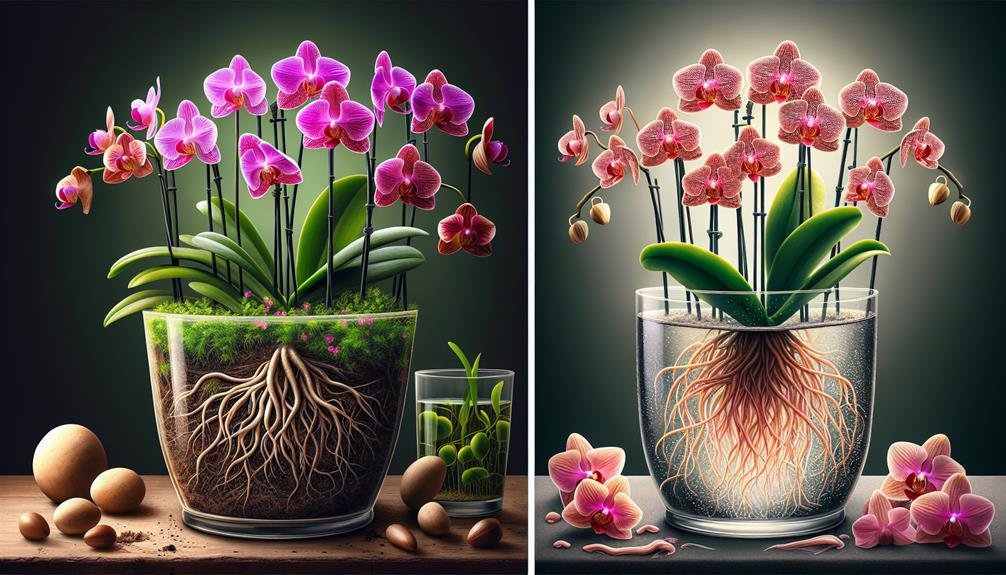
Imagine orchid propagation as a delicate dance between tradition and innovation, where the outcome hinges on the harmony of these two partners.
But what if the traditional steps are causing missteps in the growth of these exquisite flowers?
As you explore the realm of orchid propagation, you may discover that clinging solely to conventional techniques could be holding back the full potential of these plants.
What secrets lie in the shift towards modern methods, and how could they revolutionize the way we nurture these botanical treasures?
The Evolution of Orchid Propagation Techniques
Throughout the history of horticulture, orchid propagation techniques have evolved significantly, adapting to advancements in technology and scientific knowledge. You can trace the journey from the basic division of orchid plants to more sophisticated methods like tissue culture.
In the past, orchid propagation relied heavily on division, where orchid roots or pseudobulbs were separated to create new plants. However, with technological progress, scientists have developed tissue culture methods where orchid cells are grown in a nutrient-rich medium to produce new plantlets efficiently. This technique allows for the propagation of numerous orchids rapidly, ensuring genetic diversity and healthier plants.
As you explore orchid propagation techniques, you'll encounter advancements such as meristem culture, protocorm-like bodies, and synthetic seeds. These innovative methods highlight the continuous evolution in orchid propagation, offering more efficient ways to propagate these exquisite plants. By embracing these modern techniques, you can enhance your success in propagating orchids and contribute to the preservation of these stunning flowering species.
Challenges With Traditional Orchid Propagation
Facing traditional orchid propagation methods poses several challenges for novice horticulturists. One of the main difficulties is the time-consuming nature of these methods. Traditional propagation techniques such as division and seed propagation can take months to years to see successful results, requiring patience and dedication.
Additionally, traditional methods often require a deep understanding of orchid biology and specific environmental conditions, making them complex for beginners to grasp.
Another challenge lies in the lack of precision associated with traditional propagation. The success rates of traditional methods can vary widely, leading to inconsistent results and frustration for those trying to propagate orchids.

Furthermore, traditional techniques may not always produce genetically identical offspring, leading to variations in quality and characteristics among the propagated plants.
Advantages of Modern Orchid Propagation Methods
Modern orchid propagation methods offer efficiency and precision not found in traditional techniques. By utilizing modern techniques such as tissue culture, cloning, and micropropagation, you can propagate orchids with higher success rates and in a shorter amount of time.
Tissue culture allows for the mass production of orchids from a small amount of plant tissue, leading to the rapid expansion of orchid populations. Cloning enables you to replicate desirable orchid traits consistently, ensuring uniformity among propagated plants. Micropropagation allows for the production of orchids under sterile conditions, reducing the risk of contamination and disease transmission.
Additionally, modern methods provide the ability to manipulate growth factors and hormones to promote optimal growth and development. You can control the environment more effectively, ensuring that orchids receive the precise conditions they need to thrive. With modern techniques, you can also bypass the challenges of seed germination and the variability that comes with sexual reproduction in orchids. Embracing modern orchid propagation methods can revolutionize your success in cultivating these beautiful plants.
Innovations in Orchid Propagation Technology
With the continuous advancements in technology, the field of orchid propagation has seen remarkable innovations that are shaping the way orchids are cultivated and multiplied efficiently. One of the most significant advancements is the development of tissue culture techniques, allowing for the production of a large number of orchid plants from a small amount of tissue. This method not only accelerates the propagation process but also helps in the conservation of rare and endangered orchid species.
Furthermore, the use of biotechnology and genetic engineering has enabled scientists to create hybrids with desirable traits such as unique colors, shapes, and fragrances. These innovations have revolutionized the orchid industry by offering a wide range of orchid varieties to enthusiasts and commercial growers.
Moreover, advancements in automation and robotics have streamlined the propagation process, leading to higher efficiency and consistency in orchid production. Automated systems for watering, fertilizing, and monitoring plant growth have reduced labor costs and minimized human error.
Future Trends in Orchid Propagation Research
Looking ahead in orchid propagation research, focus shifts towards exploring innovative techniques for enhancing cultivation and propagation methods. One exciting trend is the integration of biotechnology in orchid propagation. Researchers are delving into genetic modification to improve orchid traits such as disease resistance, flower color, and fragrance. By manipulating genes, scientists aim to create orchid varieties with enhanced commercial value and resilience.
Another emerging trend is the utilization of advanced imaging technologies for studying orchid growth and development. High-resolution imaging techniques like micro-CT scanning enable researchers to observe internal structures of orchid tissues without damaging the plant. This non-invasive approach provides valuable insights into orchid anatomy and physiology, leading to more informed propagation strategies.
Furthermore, the exploration of novel growth substrates and nutrient formulations is gaining traction in orchid propagation research. Scientists are experimenting with sustainable materials and organic supplements to improve orchid growth and reduce environmental impact. By optimizing growing conditions through innovative substrates and nutrients, researchers aim to enhance orchid propagation success while promoting eco-friendly practices in cultivation.
Frequently Asked Questions
Can Orchids Be Propagated Through Tissue Culture Methods?
Yes, orchids can be propagated through tissue culture methods. This modern technique allows for the efficient reproduction of orchids by cultivating plant cells in a controlled environment.
Through tissue culture, orchid propagation success rates can be significantly increased compared to traditional methods.
How Do Environmental Factors Affect the Success of Orchid Propagation?
Environmental factors play a crucial role in orchid propagation success. Factors like temperature, humidity, light, and air quality can impact the growth and development of orchid plants. Ensuring the right balance of these factors is essential for successful propagation.
Proper monitoring and adjustment of these environmental conditions can greatly improve your chances of successfully propagating orchids. Remember to create an optimal environment that mimics the natural habitat of orchids for the best results.
Are There Any Specific Diseases or Pests That Commonly Affect Orchid Propagation?
When propagating orchids, you may encounter common diseases like bacterial or fungal infections that can hinder your success. Pests such as spider mites or aphids can also pose a threat to your orchids.
It's essential to monitor your plants closely, maintain proper hygiene practices, and use appropriate treatments to prevent these issues from affecting your propagation efforts.
What Role Do Hormones Play in Orchid Propagation Success?
Hormones are crucial in orchid propagation success. They help stimulate root growth, encourage blooming, and enhance overall plant development.
By understanding how hormones work, you can optimize the propagation process and increase your chances of success. Proper hormone application at the right stages of growth can significantly improve the health and growth of your orchids.
Experimenting with hormone levels can lead to better outcomes in your propagation endeavors.
Are There Any Ethical Concerns Surrounding Modern Orchid Propagation Methods?
When considering modern orchid propagation methods, ethical concerns may arise. It's essential to explore how these techniques impact the environment, biodiversity, and sustainability.
Conclusion
In conclusion, traditional methods may be hindering orchid propagation success by not fully utilizing modern advancements.
By embracing innovative techniques and technologies, such as tissue culture and genetic manipulation, orchid growers can increase their success rates and produce healthier plants.
It's important to continue exploring new methods in order to improve orchid propagation practices and ensure the longevity of these beautiful and delicate flowers.


