

If you've ever wished to replicate your most prized orchids, you're in for an intriguing opportunity. This revolutionary technique allows you to clone your favorite specimens, preserving their unique beauty and traits with precision. By selecting a healthy donor plant and using the right tools, you can cultivate multiple clones from a single source. But what steps do you need to take to guarantee success, and what common pitfalls should you avoid? Understanding these elements could transform your orchid-growing experience.
Key Takeaways
- Select a healthy donor orchid with a robust stem and multiple nodes for optimal cloning success.
- Use sterilized tools to cut the stem just below a node, minimizing contamination risks.
- Prepare a nutrient-rich growth medium, combining sphagnum moss and perlite for ideal conditions.
- Maintain high humidity and warm temperatures to encourage root development in the clones.
- Monitor for mold or disease, providing care with appropriate light and balanced fertilizer.
Understanding Orchid Cloning
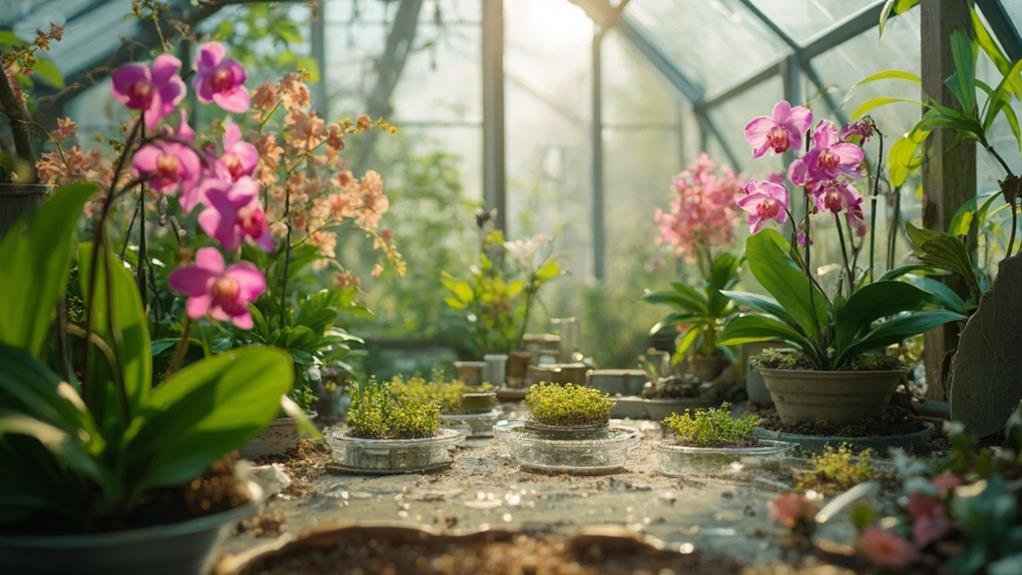
When it comes to understanding orchid cloning, you'll find it's a fascinating process that allows you to replicate these beautiful plants with ease.
Fundamentally, cloning involves taking a part of a parent orchid and encouraging it to grow roots and shoots, resulting in a new plant that's genetically identical to the original. This method not only preserves the unique characteristics of the parent plant but also enables you to share your favorites with friends and fellow gardening enthusiasts.
You might start by selecting a healthy orchid, guaranteeing it has vibrant leaves and robust growth. The most common parts used for cloning are the stems or keikis—small offshoots that sometimes develop on the parent plant.
Once you've chosen your cutting, it's all about creating the right environment for growth. You'll want to maintain humidity and warmth, as these conditions encourage root development and guarantee the young plant thrives.
Essential Tools and Materials
Gathering the essential tools and materials is essential for successful orchid cloning. First, you'll need a clean, sharp scalpel or knife for precise cuts. Sterilizing this tool is important to prevent contamination.
Next, obtain a suitable growth medium, such as agar or a specialized orchid potting mix, to provide nutrients for your clones.
You'll also require containers for your cultures. Small glass jars or Petri dishes work well, ensuring they're sterile before use. A microscope can help you examine your plant tissues closely, but it's optional for beginners.
Don't forget a heat source like a seedling heat mat to maintain ideal temperatures for growth. A spray bottle for misting your cultures helps maintain humidity, which is crucial for healthy development.
Lastly, invest in labels and markers to keep track of your clones. This organization will serve you well as you nurture your growing orchids.

With these tools and materials in hand, you're well on your way to sharing the beauty of your cloned orchids with others. They'll appreciate your dedication and care in bringing these stunning plants to life!
Step-by-Step Cloning Process
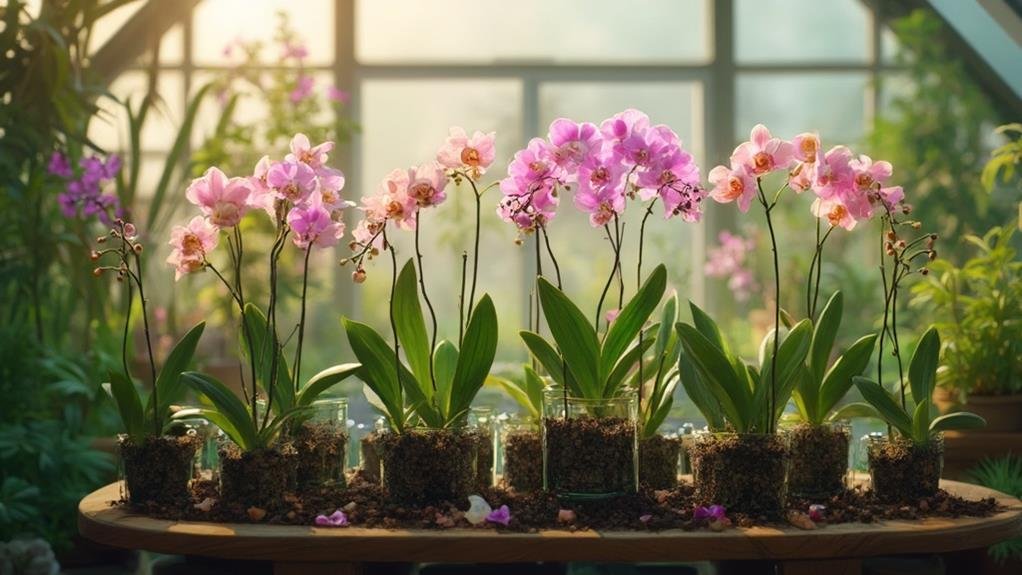
With your tools and materials ready, you can start the cloning process. Begin by selecting a healthy orchid plant as your donor. Choose a stem with a few nodes, as this will increase your chances of successful cloning. Using sterilized scissors, carefully cut the stem just below a node.
Next, prepare your growing medium. Mix equal parts of sphagnum moss and perlite to provide a well-draining environment. Moisten the mixture lightly before placing it into your chosen container.
Now, insert the cut stem into the growing medium, ensuring at least one node is buried. Firm the medium around the stem to offer stability. Cover the container with a plastic bag or a humidity dome to maintain a humid environment, which is essential for root development.
Place your container in a warm, indirect light location. Check the moisture levels regularly, ensuring the medium remains damp but not soggy.
After a few weeks, you should see roots forming. Once your new orchid has established roots, it's ready for transplanting into a pot. Enjoy nurturing your new clone as it grows and flourishes, ready to share the beauty with others!
Tips for Successful Cloning
Successful cloning of orchids requires attention to detail and patience. To increase your chances of success, start by selecting healthy parent plants. Look for vibrant leaves and robust roots, as these traits often indicate a strong genetic foundation. Clean your tools thoroughly before cutting, as this minimizes the risk of contamination.
Once you've taken your cuttings, place them in a sterile medium. Use a nutrient-rich agar or a specialized orchid cloning gel to promote growth. Keep the environment stable—warm temperatures and high humidity are essential for the initial stages.
Don't forget to monitor your clones regularly. Check for signs of mold or disease, which can hinder their development. If you notice any issues, address them promptly.
Lastly, be prepared for setbacks. Not every clone will thrive, and that's perfectly okay. Celebrate the successes, and learn from the challenges. Your dedication to this process not only benefits your collection but also sets a wonderful example for others looking to nurture their green thumbs.
Caring for Cloned Orchids
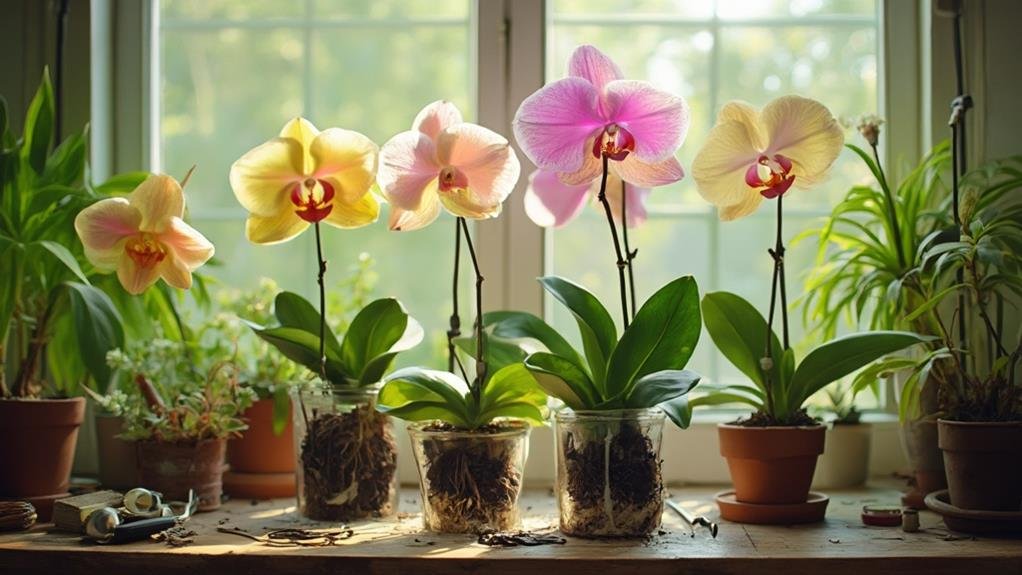
Caring for cloned orchids is essential to guaranteeing their healthy development and eventual blooming. Start by providing a stable environment with consistent humidity and temperature. Orchids thrive in a warm, humid atmosphere, so aim for temperatures between 65°F and 75°F during the day, and slightly cooler at night. Use a humidity tray or a humidifier to maintain moisture levels.
Water your cloned orchids carefully. They prefer their roots to dry out slightly between watering, so check the potting medium. When you do water, thoroughly soak the medium but avoid letting the plants sit in water, as this can lead to root rot.
Feed your orchids with a balanced fertilizer every two to four weeks during the growing season. This gives them the nutrients they need to flourish. Pay attention to any signs of stress, such as yellowing leaves or wilting, and adjust your care accordingly.
Lastly, guarantee adequate light. While orchids enjoy bright, indirect light, avoid direct sunlight, which can scorch their leaves.
Frequently Asked Questions
Can I Clone Orchids From Hybrid Varieties?
Yes, you can clone orchids from hybrid varieties! Using techniques like tissue culture or keiki propagation, you can share your favorite hybrids with others, ensuring they enjoy the beauty and uniqueness of your prized plants.
How Long Does the Cloning Process Take?
The cloning process typically takes a few weeks to a couple of months, depending on the method you use. You'll need patience as the plants develop, but the results can be truly rewarding.
Is Cloning Orchids Legal in My Area?
You should check your local regulations regarding cloning orchids. Many areas allow it, but some restrictions might apply. It's best to consult with local agricultural departments or horticultural societies for accurate information tailored to your region.
Will Cloned Orchids Have the Same Fragrance as Originals?
Cloned orchids typically retain the same fragrance as the originals, since they share identical genetic material. You'll find joy in knowing your clones can offer the same delightful scent, enhancing your orchid collection for others to appreciate.
Can I Clone Multiple Orchids at Once?
Yes, you can clone multiple orchids at once. Just guarantee you've got enough materials and space for each one. It's a great way to share beauty and joy with friends and fellow orchid enthusiasts!
Conclusion
By mastering this revolutionary orchid cloning technique, you can effortlessly preserve the unique beauty of your favorite plants. You'll enjoy the satisfaction of nurturing multiple clones from a single specimen, all while ensuring their genetic traits remain intact. With the right tools, careful attention, and a little patience, you'll be rewarded with a thriving collection of cloned orchids. So, get started today and watch your garden flourish with the stunning blooms of your cherished hybrids!