

When it comes to caring for your orchids, you might think that the best tools come with a hefty price tag. However, you can create effective DIY solutions that not only save you money but often outperform those expensive options. For instance, a simple homemade watering system can regulate moisture levels perfectly, while repurposed household items can provide essential support for your plants. Curious about other cost-effective strategies that can elevate your orchid care? You might be surprised at how easy it is to transform everyday materials into powerful gardening allies.
Key Takeaways
- Create a slow-watering system using a plastic bottle with holes for consistent moisture without overspending on expensive watering tools.
- Repurpose an old watering can by adding a cloth or sponge for a gentle drip irrigation solution that saves money.
- Utilize bamboo stakes for strong, eco-friendly support, outperforming costly commercial stakes while promoting healthy orchid growth.
- Make homemade insecticidal soap with mild dish soap and water to effectively manage pests without the expense of commercial pesticides.
- Craft a DIY drip irrigation system using PVC pipes or old garden hoses, ensuring efficient watering at a fraction of the cost.
Homemade Potting Mix Recipes
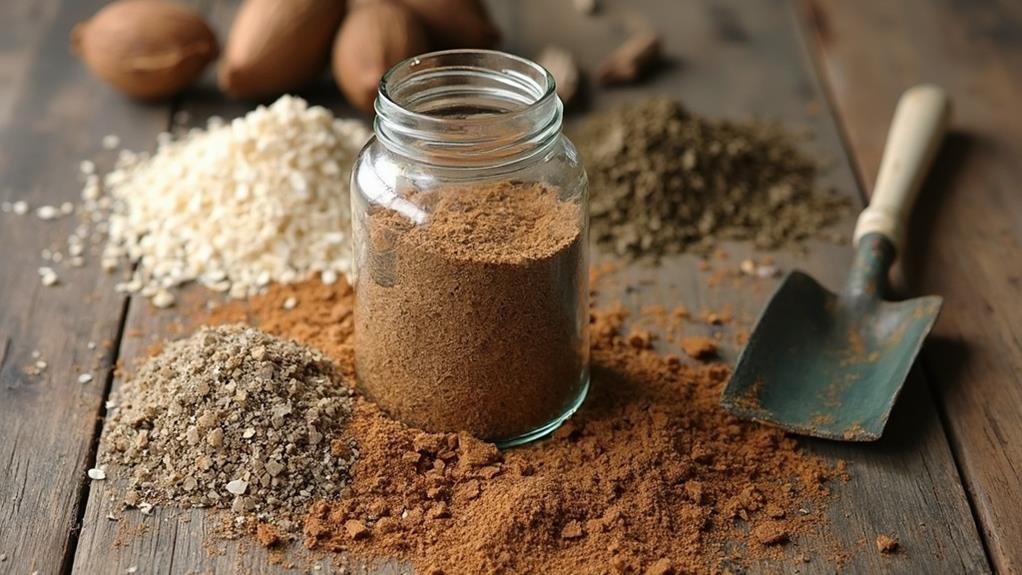
Creating the perfect potting mix for your orchids can greatly impact their growth and health. When you make your own mix, you're not only ensuring quality but also tailoring it to meet your orchids' specific needs.
Start with a base of fir bark or orchid bark, providing excellent drainage and aeration. You can mix in perlite or coarse sand to enhance drainage further, which helps prevent root rot.
Next, consider adding sphagnum moss for moisture retention. This component keeps the mix from drying out too quickly, ensuring your orchids have consistent access to water.
You might also include a bit of charcoal, which helps filter impurities and keeps the mix fresh.
To serve your orchids best, remember that different species might prefer slightly different recipes. Research the needs of your specific orchids and adjust your mix accordingly.
You'll find that creating your own potting mix not only saves money but also gives you a sense of pride in nurturing these beautiful plants. By investing time in making the perfect mix, you're ultimately enhancing the lives of your orchids, allowing them to thrive and flourish beautifully.
Cost-Effective Watering Solutions
Watering your orchids effectively doesn't have to drain your wallet. You can create cost-effective watering solutions that not only save you money but also guarantee your orchids thrive.
One simple method is to use a plastic bottle with small holes poked in the cap. Fill the bottle with water, screw on the cap, and place it upside down in your orchid pot. This allows for slow, consistent watering, giving your orchids the moisture they need without over-saturating the roots.
Another great option is to repurpose an old watering can. By adding a piece of cloth or sponge to the spout, you can create a gentle drip system that mimics rain. This method reduces waste and helps you control the amount of water your orchids receive.

If you're feeling crafty, consider making a DIY drip irrigation system using inexpensive materials like PVC pipes or even old garden hoses. This method can be tailored to suit your specific growing conditions and can water multiple orchids at once.
With these cost-effective watering solutions, you're not just saving money; you're also providing the care your orchids deserve.
Happy gardening!
DIY Orchid Fertilizer Options
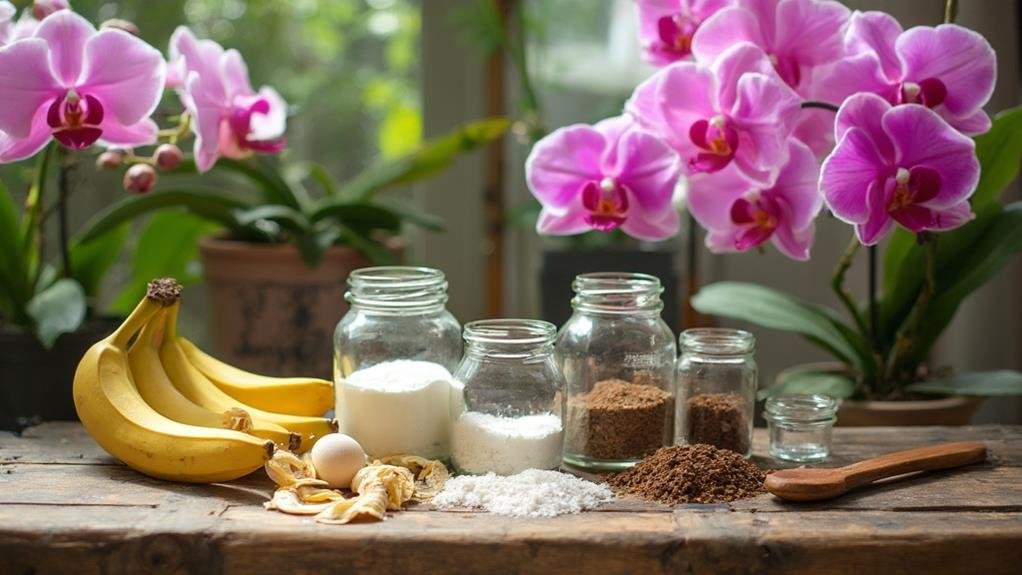
Regularly providing your orchids with the right nutrients is crucial for their growth and blooming. You don't need to spend a fortune on commercial fertilizers; simple DIY options can be just as effective.
One easy solution is to create a banana peel fertilizer. Just chop up a few banana peels, soak them in water for a few days, and then dilute the mixture before using it on your orchids. The potassium in the peels supports root development and flower production.
Another option is using eggshells. Rinse and dry the shells, then crush them into small pieces. Mix these into your potting medium or steep them in water to create a calcium-rich fertilizer. This not only nourishes your orchids but also promotes a healthy growing environment.
You can also try coffee grounds. Used grounds are an excellent source of nitrogen. Just sprinkle a thin layer on the potting medium, and your orchids will benefit from the slow release of nutrients.
Creative Support Systems
As your orchids thrive with the right nutrients, providing them with adequate support is just as important for their growth.
You can create effective support systems using materials you likely already have at home. For instance, bamboo stakes aren't only strong but also eco-friendly. Simply cut them to size and tie your orchid stems gently but securely.
Another great option is using repurposed pantyhose or soft fabric strips. They're flexible and won't damage the delicate stems, making them perfect for providing gentle support.
You can even craft a trellis from a recycled plastic container or an old wire hanger. Just reshape the wire into a suitable frame and place it in the pot for your orchids to climb.
If you're feeling crafty, consider using a cardboard tube, like those from paper towels, to create a lightweight, vertical support. Just cut it to your desired height and secure it in the pot.
Easy Pest Control Methods
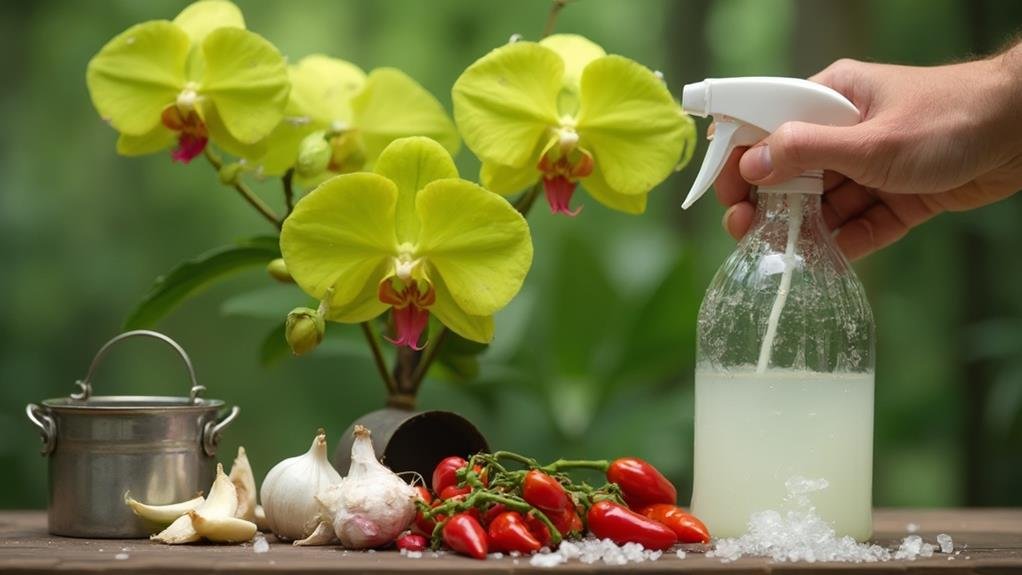
While pests can be a nuisance for your orchids, addressing them doesn't have to be complicated or costly. You can use simple, effective methods that not only save money but also protect your beautiful plants.
Start with a homemade insecticidal soap. Mix a few drops of mild dish soap in a spray bottle filled with water. Spray this solution on the affected areas, targeting pests like aphids and spider mites. This method is gentle enough for your orchids yet lethal for unwanted guests.
Another effective option is neem oil. It's a natural pesticide that disrupts the life cycle of pests. Just dilute it with water and a few drops of soap, then spray it on your orchids, focusing on the undersides of leaves where pests often hide.
Lastly, encourage beneficial insects like ladybugs in your garden. They feast on pests and help keep populations in check.
Frequently Asked Questions
What Common Household Items Can I Use for Potting Orchids?
You can use items like old plastic bottles for drainage, kitchen sponges for aeration, and even coffee grounds as a natural fertilizer. These household items can make potting orchids easier and more sustainable for everyone.
How Often Should I Repot My Orchids Using DIY Methods?
You should repot your orchids every one to two years, especially when you notice roots outgrowing their pot or the potting mix breaking down. Keeping them healthy guarantees they thrive and bloom beautifully for others to enjoy.
Can I Use Tap Water for My DIY Watering Solutions?
You can definitely use tap water for your DIY watering solutions, but it's best to let it sit for 24 hours first. This helps chlorine evaporate, making it safer for your orchids and their roots.
What Are the Signs of Over-Fertilizing Orchids?
You'll notice signs of over-fertilizing orchids when leaves turn yellow or develop brown tips. Stunted growth and poor blooming are also common. Adjust your feeding routine to keep your orchids healthy and thriving.
How Do I Properly Clean My DIY Orchid Tools?
To properly clean your tools, rinse them with warm water and mild soap. Scrub any residue off, then soak in a diluted bleach solution for disinfecting. Rinse thoroughly and let them air dry before storing.
Conclusion
By using DIY orchid tools, you can nurture your plants without breaking the bank. Homemade potting mixes, cost-effective watering solutions, and DIY fertilizers not only save you money but also promote healthier growth. Creative support systems, like bamboo stakes, and easy pest control methods guarantee your orchids thrive. Embrace these simple, budget-friendly strategies, and watch your orchids flourish while enjoying the satisfaction of crafting your own solutions. Your orchids will thank you for the extra care!