
If you've ever wished you could expand your orchid collection without the long wait or high cost, you might be intrigued by an unconventional technique that's gaining attention among enthusiasts. This method involves a surprisingly simple process that allows you to take a small part of your existing orchid and multiply it effectively. You might be wondering what this trick is and how it works, but the real magic lies in the details of execution. Stay with me, and you'll discover how to transform your gardening experience overnight.
Key Takeaways
- Utilize tissue culture propagation to create multiple new disease-free orchids from a small piece of the parent plant.
- Master the keiki propagation method by encouraging baby plants to grow on your existing orchids for easy expansion.
- Division method allows you to separate mature orchids into smaller sections, effectively doubling your collection.
- Ensure ideal growing conditions and proper care to promote rapid growth of new orchids in your collection.
- Share your propagation knowledge with others, fostering community and enhancing your orchid-growing experience.
Understanding Orchid Propagation
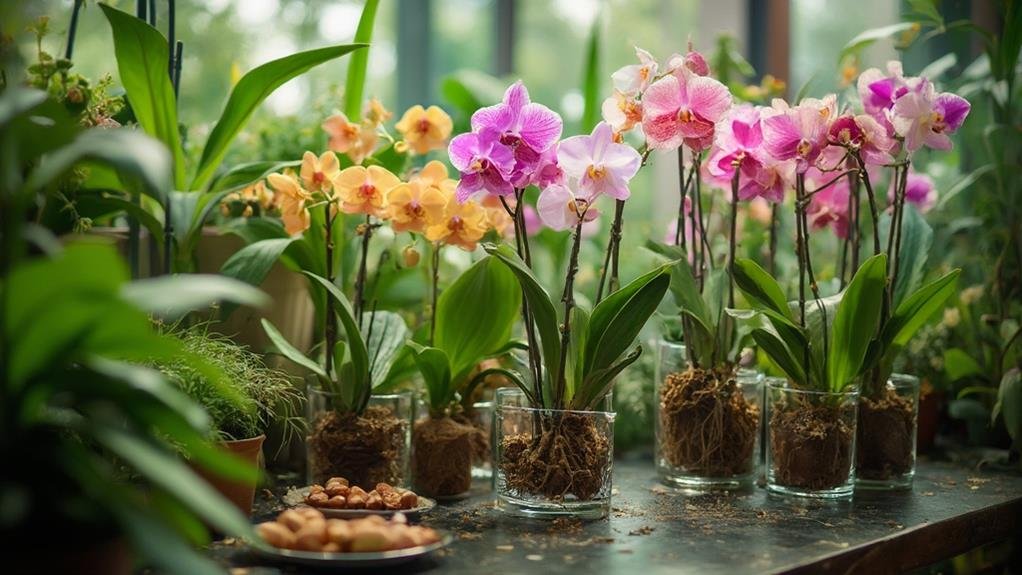
Understanding orchid propagation is key to expanding your collection effectively. It's not just about growing more plants; it's about sharing the joy of orchids with others. When you explore propagation, you learn various methods to create new plants from your existing ones, allowing you to gift or trade orchids with fellow enthusiasts.
One popular technique is division, where you separate a mature plant into smaller sections, each with roots and growth points. This method not only increases your collection but also helps rejuvenate older plants.
Another method is keiki propagation, where you encourage a baby plant, or keiki, to grow on a parent orchid. This can be a rewarding way to nurture new life and share it with friends.
Don't forget about seed propagation, though it requires more patience and specific conditions. Understanding the unique needs of each orchid type will arm you with the knowledge to thrive.
As you master these techniques, you empower yourself to share your love of orchids, enriching your community while doubling your collection. Embrace the joy of propagation, and watch your passion flourish!
The Secret Technique Revealed
One of the most exciting ways to expand your orchid collection is through a secret technique that many enthusiasts swear by: tissue culture propagation. This method allows you to create multiple new plants from a single orchid, guaranteeing you can share your passion with friends and family.
By using a small piece of the parent plant, you can cultivate new orchids in a controlled environment. This technique not only helps you double your collection overnight, but it also guarantees that the new plants are disease-free and genetically identical to the original.
It's like giving a gift that keeps on giving—a chance for others to enjoy the beauty of orchids too!
You'll find that tissue culture propagation can be a rewarding experience. As you learn and grow, you can share your knowledge and techniques with fellow orchid lovers, helping them expand their collections as well.

Imagine the joy of teaching someone else how to propagate their very own orchids!
Required Materials and Tools
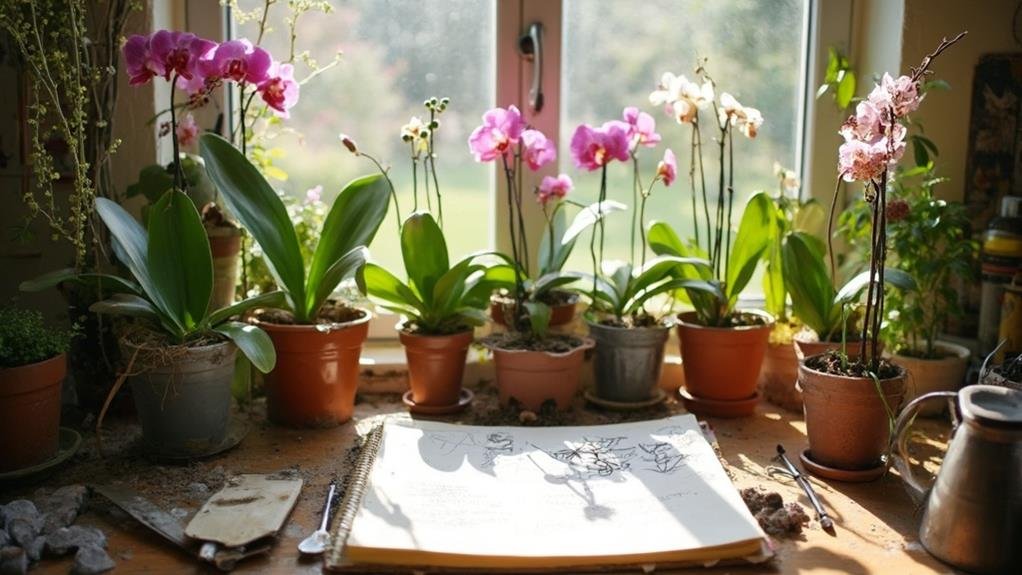
What do you need to kickstart your tissue culture propagation journey? First, gather a clean, flat workspace.
You'll need sterilized glass containers or jars to house your orchid tissue. A scalpel or sharp knife is essential for cutting your plant materials, so make sure it's sterile to avoid contamination.
Next, you'll require a nutrient-rich medium, like agar or a commercial orchid tissue culture medium. This provides the necessary nutrients for your orchids to grow.
You'll also need plant hormones such as auxins and cytokinins to encourage rooting and growth.
Don't forget about a pH meter or pH strips to verify your medium is balanced. Additionally, a pressure cooker or autoclave is vital for sterilizing your tools and media.
For lighting, a grow light can help simulate the ideal conditions for your orchids to thrive.
Finally, some plastic wrap or lids for your containers will help maintain humidity during the initial growth phase.
With these materials and tools in hand, you're ready to begin your exciting journey to double your orchid collection and share the beauty of these incredible plants with others!
Step-by-Step Guide
Now that you've gathered your materials, it's time to explore propagation techniques that can help you expand your orchid collection.
You'll also want to understand the ideal growing conditions to guarantee your new plants thrive.
Let's get started with these essential steps!
Propagation Techniques Explained
Orchid propagation can be an exciting journey for plant lovers looking to expand their collection. You'll find that there are several effective techniques to help you get started.
One popular method is division. To do this, carefully remove the orchid from its pot and gently separate the root clumps, ensuring each division has at least three pseudobulbs. Re-pot them in fresh orchid mix, and you're on your way!
Another technique is using keikis, which are baby orchids that grow on the parent plant. If you spot a keiki with roots at least two inches long, you can cut it off and pot it in its own container. Just make sure to keep it moist while it establishes itself.
You might also want to explore the method of seed propagation, though it's more complex. This involves using sterile conditions and a suitable growing medium, so it's best for those who are experienced.
Whichever method you choose, remember that patience is key. With these propagation techniques, you'll be sharing your thriving orchid collection with friends in no time!
Happy propagating!
Ideal Growing Conditions
Creating the perfect environment for your orchids is essential for their health and growth.
Start by selecting a bright location, ideally near a window where they can receive filtered sunlight. Direct sunlight can scorch their leaves, so use sheer curtains if needed.
Next, maintain a consistent temperature. Most orchids thrive in temperatures between 65°F and 75°F during the day and slightly cooler at night. Avoid placing them near drafts or heat sources.
Humidity is another vital factor. Orchids love humidity levels around 50-70%. If your home is dry, consider using a humidifier or placing a tray of water with pebbles beneath the pots, ensuring the pots don't sit directly in the water.
Water your orchids thoroughly but allow the potting mix to dry out slightly between waterings. This prevents root rot.
Tips for Success
Success in expanding your orchid collection hinges on a few key practices that can make all the difference.
First, always choose healthy orchids from reputable sources. Healthy plants are more likely to thrive and produce new growth. When you bring them home, place them in a spot with bright, indirect light to help them adjust.
Next, pay attention to watering. Orchids prefer their roots to dry out somewhat between waterings, so check the potting medium regularly. You can also mist the leaves to maintain humidity, especially during dry seasons. This simple act can promote healthier foliage and encourage blooming.
Fertilization is essential, too. Use a balanced orchid fertilizer every couple of weeks during the growing season, and cut back in the winter. This helps provide the nutrients your orchids need to flourish.
Common Mistakes to Avoid
When expanding your orchid collection, it's easy to overlook some common pitfalls that can hinder your progress. One major mistake is overwatering. Orchids thrive in a well-draining medium, and soggy roots can lead to rot. Make sure you're letting the potting mix dry out slightly between waterings.
Another mistake is ignoring light conditions. Orchids need bright, indirect light to flourish. Placing them in a dark corner can stunt their growth. Take the time to find the right spot where they can soak up the right amount of light.
Many new collectors also underestimate the importance of proper potting. Using the wrong size pot can restrict root growth. Opt for a pot that provides a snug fit without cramping the roots.
Lastly, don't rush the fertilizing process. New orchids need time to acclimate before you start feeding them. Too much fertilizer too soon can cause more harm than good.
Caring for New Plants
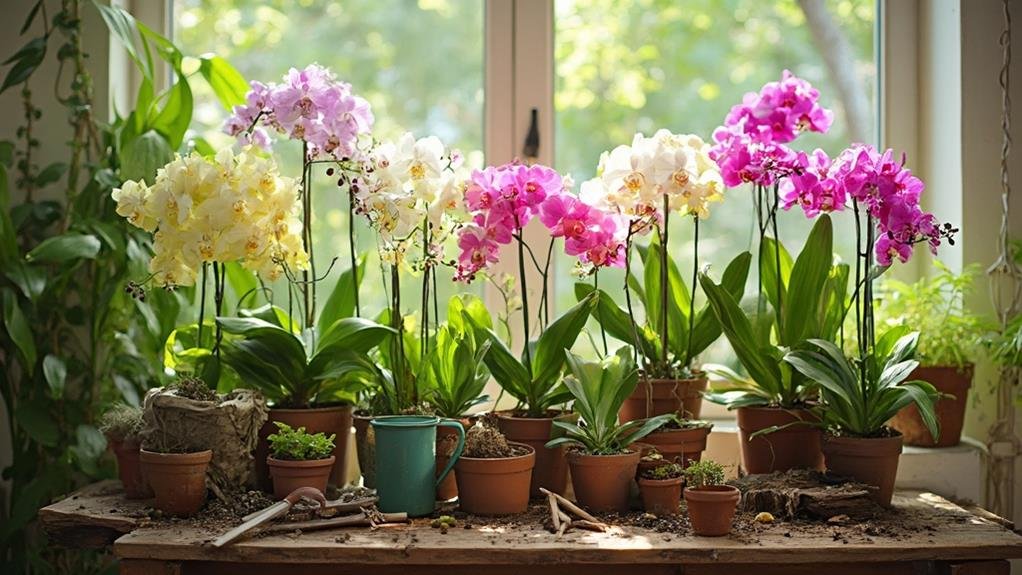
When you bring home new orchids, understanding their watering needs is essential for their survival.
You'll also want to pay attention to their light requirements to guarantee healthy growth.
Let's explore the best practices for keeping your new plants thriving.
Watering Techniques Explained
Proper watering is essential for maintaining healthy orchids, especially when you're introducing new plants to your collection. Start by evaluating the potting medium; orchids thrive in well-draining materials. Overwatering is a common mistake, so verify the pot has adequate drainage holes. When you water, use room-temperature water to avoid shocking the roots.
A good rule of thumb is to water once a week, but this can vary based on humidity and temperature. Stick your finger about an inch into the potting mix; if it feels dry, it's time to water. When you do, water thoroughly until it drains out of the bottom. This encourages healthy root growth and prevents rot.
Consider using distilled or rainwater instead of tap water, as chemicals in tap water can harm your orchids. If you're unsure, it's better to err on the side of underwatering rather than overwatering.
Light Requirements Overview
Understanding light requirements is essential for the health of your orchids, especially as you expand your collection. Each type of orchid has specific lighting needs, and getting it right can make all the difference in their growth and blooming.
Most orchids thrive in bright, indirect light. Placing them near a window with filtered sunlight is usually ideal. You want to avoid direct sunlight, which can scorch their leaves.
If your leaves turn yellow, it's a sign they're getting too much light, while dark green leaves may indicate they need more.
For those of you with limited natural light, consider using grow lights. These can provide the right spectrum for photosynthesis, ensuring your orchids get the care they need. Remember, it's not just about quantity of light, but quality, too.
As you nurture your new plants, observe their responses to light. Adjust their placement based on how they're thriving.
Frequently Asked Questions
Can I Use This Method on All Orchid Species?
You can't use this method on all orchid species. Different orchids have unique needs, so it's crucial to research each type. Tailoring your approach will help you nurture them effectively and guarantee they thrive.
How Long Does It Take for New Orchids to Grow?
New orchids typically take about 6 to 12 months to grow and bloom, depending on the species and care provided. Patience is key, so give them the attention they need for ideal growth.
Are There Any Risks Involved in This Technique?
Yes, there are risks involved in any technique. You might face issues like root rot or disease if you rush the process or neglect proper care. Always prioritize your orchids' health to guarantee successful growth.
Will This Affect the Health of My Existing Orchids?
Yes, this technique can affect your existing orchids. If not done carefully, you might introduce stress or disease. Always monitor their condition and provide proper care to guarantee they stay healthy during the process.
Can I Apply This Trick to Other Plants?
Yes, you can apply this technique to other plants, but take care to research their specific needs. Each plant has unique requirements, so adjust your approach accordingly to guarantee healthy growth and thriving results.
Conclusion
By using tissue culture propagation, you can effortlessly double your orchid collection overnight. This innovative technique not only gives you healthy, disease-free plants but also allows you to share your passion with fellow enthusiasts. With the right materials and a little patience, you'll be on your way to cultivating a thriving orchid garden that showcases your dedication and care. So, embrace this method and watch your collection flourish like never before! Happy propagating!