
You might have heard about Force Blooming, a technique that's sparked debate among scientists and horticulturists alike. It involves applying specific energies to stimulate growth, claiming to enhance efficiency and reduce waste. While its potential benefits are intriguing, the method isn't without its critics, who question its scientific basis and ethical implications. As you consider the arguments for and against this approach, you may wonder what the real impact is on both plants and practices. Understanding the nuances could change how you view this controversial method.
Key Takeaways
- Force Blooming enhances efficiency in systems by applying targeted energy and forces to stimulate desired responses in materials or processes.
- The method has historical roots in community connection and empathy, evolving to include modern technology and diverse perspectives.
- Nutrient management strategies and light exposure methods are crucial components for successful implementation in plant growth.
- Despite its benefits, Force Blooming faces criticism for lack of scientific validation and potential ethical concerns regarding its application.
- Expert opinions suggest patience and observation are key for effective use, emphasizing the importance of understanding plant needs.
What Is Force Blooming?

Force blooming is a technique used primarily in various fields of science and engineering to enhance the effectiveness of certain processes. You might find it particularly valuable when seeking to improve outcomes in areas like manufacturing, materials science, or even environmental engineering.
Fundamentally, force blooming involves applying targeted energy or forces to stimulate a desired response in materials or systems, creating a more efficient and effective result.
When you utilize force blooming, you're not just looking for immediate gains; you're aiming to create long-lasting benefits that can serve both people and the environment. This method can lead to better resource management, less waste, and even increased safety in various applications.
For instance, in manufacturing, it can optimize production lines, reducing costs while ensuring higher quality products.
History of Force Blooming
To understand the history of Force Blooming, you should start with the early techniques and practices that laid its foundation.
Over time, these methods evolved, leading to modern adaptations and innovations that enhance their effectiveness.
You'll see how these developments shaped the way Force Blooming is applied today.
Early Techniques and Practices
Although the origins of the Force Blooming method might seem obscure, early practitioners developed techniques that laid the groundwork for its evolution. You might be surprised to learn that these foundational practices focused on connecting with others and fostering a sense of community.
Early users recognized the importance of intention and empathy, using visualization and energy awareness to cultivate a supportive environment.

These practitioners often gathered in small groups, sharing their experiences and honing their skills together. By engaging in mindful breathing and grounding exercises, they learned to channel their energy effectively, which helped them better serve those around them.
You'd notice that these early methods emphasized compassion and the desire to uplift others, making the practice not just about individual growth but about collective well-being.
As they experimented with various techniques, they discovered the power of shared intentions. This collaborative spirit enabled them to enhance their understanding of the Force Blooming method.
You can appreciate how these early techniques laid the foundation for future adaptations, emphasizing connection, support, and the genuine desire to make a positive impact in the lives of others.
Modern Adaptations and Innovations
As the foundational practices of the Force Blooming method evolved, modern adaptations began to take shape, reflecting contemporary needs and societal shifts. These innovations focus on enhancing personal growth while emphasizing community engagement.
You'll find that today's practitioners are integrating technology to streamline the learning process, using apps and online platforms to connect with others who share their commitment to serving others.
Additionally, workshops and seminars now incorporate diverse perspectives, ensuring that the principles of Force Blooming resonate with a wider audience. This approach fosters a sense of belonging and collaboration, allowing individuals to share their experiences and insights.
You can also explore variations that address specific issues, such as mental health or environmental sustainability, demonstrating the method's flexibility and relevance.
Moreover, mentorship programs have emerged, pairing seasoned practitioners with newcomers. This not only nurtures personal development but also cultivates a spirit of giving back.
By embracing these modern adaptations, you can harness the power of Force Blooming to make a meaningful impact in your community, inspiring others to join in the journey of growth and service.
The method continues to thrive, proving its worth in our ever-changing world.
How Force Blooming Works
Force blooming works by leveraging the principles of pressure and flow dynamics to enhance the performance of a system. You'll find that this method focuses on optimizing how energy and resources are distributed within a given framework.
By carefully manipulating the input pressure and adjusting the flow rates, you can create an environment where systems operate more efficiently.
When you apply force blooming, you're fundamentally maximizing the potential of every component involved. This involves identifying key points within the system where pressure can be added or redirected.
As you implement these adjustments, you encourage a more harmonious flow, which can lead to improved outcomes.
One significant aspect is understanding how different elements interact within the system. You'll be observing the feedback loops that emerge from these changes, allowing you to refine your approach continuously.
It's about being responsive to the needs of the system and the people it serves.
In essence, force blooming isn't just a technical maneuver; it's a mindset. It fosters a culture of improvement, ensuring that every effort you make contributes positively to the overall performance and well-being of those you aim to support.
Benefits of Force Blooming
One of the key benefits of force blooming is its ability to greatly boost efficiency in systems across various applications. By implementing this method, you can streamline processes and achieve outcomes that not only meet but exceed expectations.
This efficiency isn't just about speed; it's also about optimizing resources and minimizing waste, allowing you to serve others more effectively.
Additionally, force blooming can enhance collaboration among team members. As systems become more efficient, communication improves, fostering a culture of teamwork.
You'll find that when everyone is on the same page, the overall quality of service provided increases, creating a positive ripple effect in your community.
Moreover, this method encourages innovation. When you eliminate bottlenecks and redundancies, you free up time and energy for creativity.
This newfound capacity allows you to explore new ideas that can further benefit those you serve.
Lastly, the adaptability of force blooming means it can be tailored to fit various environments, making it an invaluable tool for diverse organizations.
Common Techniques Used

To achieve ideal results with the Force Blooming Method, you'll want to focus on a few key techniques.
Temperature regulation, nutrient management, and light exposure are essential strategies that can greatly impact your blooming success.
Let's explore how each of these methods can enhance your process.
Temperature Regulation Techniques
Temperature regulation is essential for maintaining ideal conditions in various environments, whether in agricultural settings or controlled experiments. You can employ several techniques to effectively manage temperature and guarantee peak growth and performance.
First, consider using thermostats and temperature sensors. These devices allow you to monitor and adjust the temperature automatically, making certain that plants or experimental setups remain within the desired range. Additionally, utilizing heating mats or cooling systems can provide more direct control over temperature fluctuations.
Next, insulating your growing areas or labs can greatly help. It minimizes heat loss in colder months and prevents overheating during warmer days. You might also explore the use of shade cloths or reflective materials to manage heat exposure from sunlight.
Incorporating proper ventilation is another key strategy. Adequate airflow keeps temperatures consistent and prevents humidity buildup, which can harm plants or experiments.
Nutrient Management Strategies
Managing nutrient levels is just as important as temperature control for optimizing growth and performance.
You'll want to adopt effective nutrient management strategies to guarantee your plants receive the essential elements they need. Start by conducting regular soil tests to understand nutrient deficiencies or imbalances. This will guide you in selecting the right fertilizers, whether they're organic or synthetic.
Incorporating compost and organic matter can enrich the soil, not only providing nutrients but also improving soil structure and water retention.
You can also use slow-release fertilizers to guarantee a steady supply of nutrients over time, promoting healthier plant growth.
Another key technique is foliar feeding, which allows plants to absorb nutrients through their leaves, providing an immediate boost.
Make sure to apply these solutions during cooler parts of the day to minimize evaporation and maximize absorption.
Light Exposure Methods
When it comes to optimizing plant growth, understanding light exposure methods is essential. You may want to start by considering the duration and intensity of light your plants receive.
Many growers use a technique called photoperiod manipulation, where you adjust light cycles to induce flowering or vegetative growth. For instance, providing 12 hours of light and 12 hours of darkness can trigger blooming in specific plants.
Another common method is using supplemental lighting. If natural sunlight isn't sufficient, adding grow lights can make a significant difference. LED lights are particularly popular due to their efficiency and ability to target specific spectrums of light that plants need.
You might also explore the concept of light distance; the closer the light source, the more intense the exposure. However, be cautious not to burn your plants.
Lastly, consider color temperature. Different light colors can affect plant behavior—blue light encourages vegetative growth, while red light can enhance flowering.
Controversies and Criticisms
Why has the Force Blooming Method sparked such debate among experts? Many practitioners argue that while it shows promise, its lack of rigorous scientific validation raises serious concerns. Critics point out that anecdotal successes often overshadow the need for thorough studies.
You might find that some believe the method could lead to unrealistic expectations for those seeking quick results in personal development or healing.
There's also a significant ethical dimension to reflect upon. Some experts worry that promoting Force Blooming without solid foundations could mislead individuals who genuinely want to serve others. They argue that it may exploit vulnerable populations, creating dependency on unproven techniques rather than fostering self-sufficiency.
Moreover, the method's emphasis on rapid transformation can be seen as superficial. It risks overshadowing the deeper, often slower processes essential for meaningful growth.
When you're thinking about incorporating this method into your practice, it's vital to weigh these concerns carefully. Balancing hope with responsibility guarantees that you're serving others in a way that respects their needs and promotes genuine, lasting change.
Expert Opinions on Effectiveness
Effectiveness remains a central concern among experts evaluating the Force Blooming Method. Many professionals in horticulture acknowledge its potential to enhance the blooming process of various plants. They emphasize that when applied correctly, this method can yield vibrant results and contribute positively to the overall growth cycle.
Experts often point out the importance of understanding plant needs, such as light, water, and nutrients. They argue that the Force Blooming Method isn't a one-size-fits-all solution; rather, it requires careful adjustment based on specific plant types and environmental conditions.
You'll find that expert insights highlight the necessity of patience and observation.
Some specialists advocate for combining Force Blooming with other cultivation techniques, thereby maximizing the benefits. They encourage you to experiment and adapt the method while being mindful of each plant's unique characteristics.
Ultimately, expert opinions suggest that the Force Blooming Method can be effective, but success hinges on your commitment to learning and adjusting as needed. By doing so, you'll not only improve your gardening skills but also provide beautiful blooms for the community you serve.
Best Plants for Force Blooming
Choosing the right plants for the Force Blooming Method can make all the difference in achieving stunning results. You'll want to focus on bulbs that respond well to this technique. Tulips, daffodils, and hyacinths are top contenders; they bloom beautifully and create a vibrant display that's sure to impress.
When selecting your bulbs, consider the blooming time. Early spring varieties can offer a burst of color just when it's needed most. Additionally, amaryllis and paperwhite narcissus are excellent choices for indoor force blooming, as they thrive in controlled environments and produce breathtaking flowers.
Don't forget about the importance of quality. Always choose healthy, plump bulbs from reputable sources to guarantee peak growth. You might also want to experiment with different colors and varieties to create a unique arrangement that serves your guests and enhances your space.
While planning, think about how these flowers will be displayed. Grouping similar plants together can create a striking visual impact, making your efforts in force blooming truly shine.
With the right selection, you'll not only beautify your home but also create a warm and inviting atmosphere for everyone.
Tips for Successful Implementation
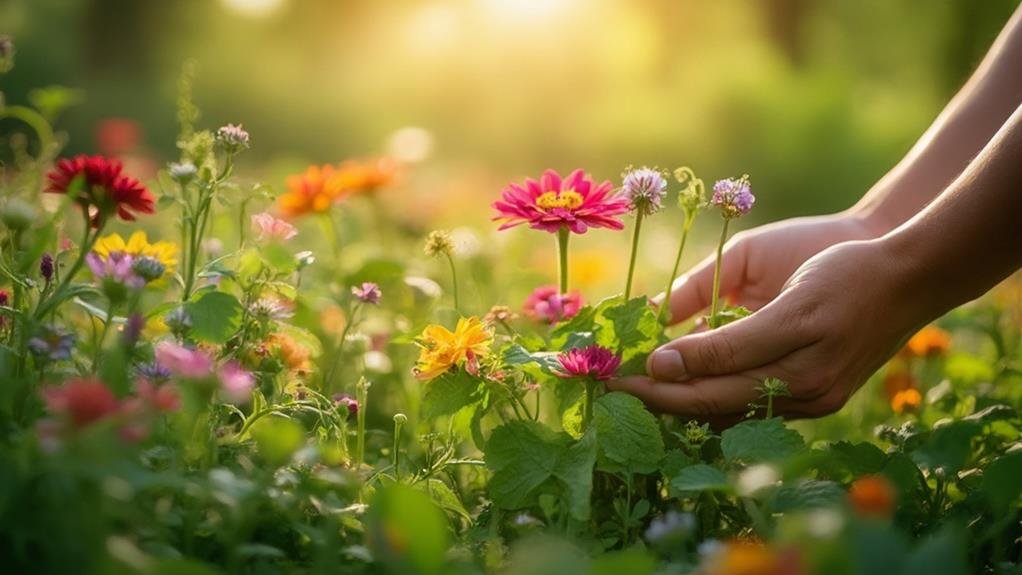
To guarantee successful implementation of the Force Blooming Method, start with proper timing. Choose the right moment in a plant's growth cycle to initiate your process. This assures that the plant responds positively and blooms beautifully.
Next, focus on the environment. Confirm your plants receive adequate light and consistent moisture, as these factors greatly influence their blooming potential.
When you're ready to begin, use gentle techniques. Overdoing it can stress your plants, so handle them with care. Regularly monitor their progress, adjusting conditions as necessary.
Don't forget about nutrition. Providing balanced fertilizers boosts your plants' overall health, enhancing their ability to bloom.
Share your knowledge and experiences with others who are passionate about gardening. By creating a supportive community, you not only help yourself but also uplift fellow gardeners.
Lastly, be patient and observant. Each plant is unique, and some may take longer to respond than others. Celebrate small victories along the way, and remember that your dedication to nurturing these plants fosters a deeper connection with nature.
Frequently Asked Questions
Is Force Blooming Safe for All Plant Species?
Force blooming isn't safe for all plant species. You should consider each plant's unique needs before applying this method. Some might thrive, while others could suffer damage, so always prioritize their well-being.
How Long Does the Force Blooming Process Typically Take?
The force blooming process usually takes a few weeks. You'll notice quick changes in your plants, but patience is key. Keep monitoring their progress, and you'll see the results you're aiming for soon enough.
Can Force Blooming Be Done Indoors?
Yes, you can definitely do it indoors! Just make sure you have enough space and proper ventilation. It's important to create a comfortable environment to help you and others enjoy the process effectively.
What Equipment Is Necessary for Successful Force Blooming?
To successfully bloom plants, you'll need proper lighting, humidity control, and temperature regulation equipment. Consider grow lights, humidifiers, and thermostats to create an ideal environment that encourages vibrant growth and beautiful blooms for your space.
Are There Any Legal Restrictions on Force Blooming?
Yes, there are legal restrictions on certain methods that involve force. You should always check local regulations and guidelines to guarantee you're complying with laws that protect both practitioners and those they aim to serve.
Conclusion
To summarize, Force Blooming offers a unique approach to enhancing growth and efficiency in horticulture. While it has gained traction for its potential benefits, it is crucial to remain mindful of the ongoing debates surrounding its ethical implications and scientific backing. By understanding both its advantages and controversies, you can make informed choices about its application. Embrace the possibilities while prioritizing responsible practices to guarantee a sustainable and effective use of this intriguing technique in your gardening endeavors.