
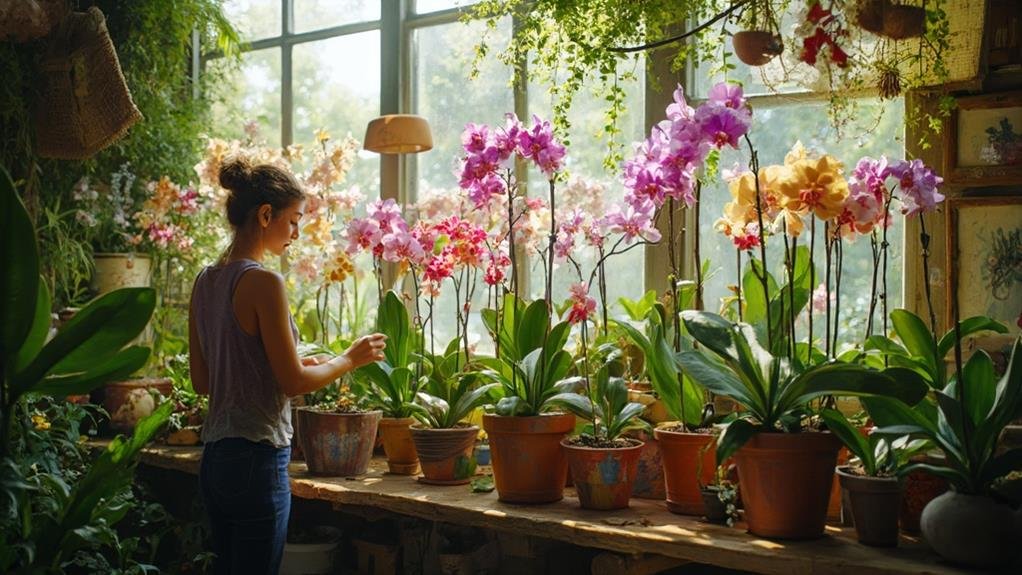
When you're faced with the challenge of moving your cherished orchids, it's easy to feel overwhelmed. But what if there's a method that simplifies the process entirely? By focusing on meticulous packing and temperature control, you can guarantee your delicate plants not only survive the journey but thrive in their new environment. You'll discover essential packing materials and techniques that make all the difference. Curious about how to implement this genius method effectively? Let's explore the steps that will change how you approach moving your orchids forever.
Key Takeaways
- Use sturdy, breathable boxes with ventilation holes to ensure air circulation and protect orchids during transport.
- Wrap pots in soft materials like bubble wrap to cushion and protect leaves and blooms from damage.
- Maintain ideal temperature between 65°F and 75°F using insulated boxes and temperature control packs for stable conditions.
- Secure orchids in boxes with packing materials to prevent movement, and label boxes as fragile and "This Side Up."
- Assess light and humidity conditions in your new home to provide an optimal environment for your orchids post-move.
Understanding Orchid Care
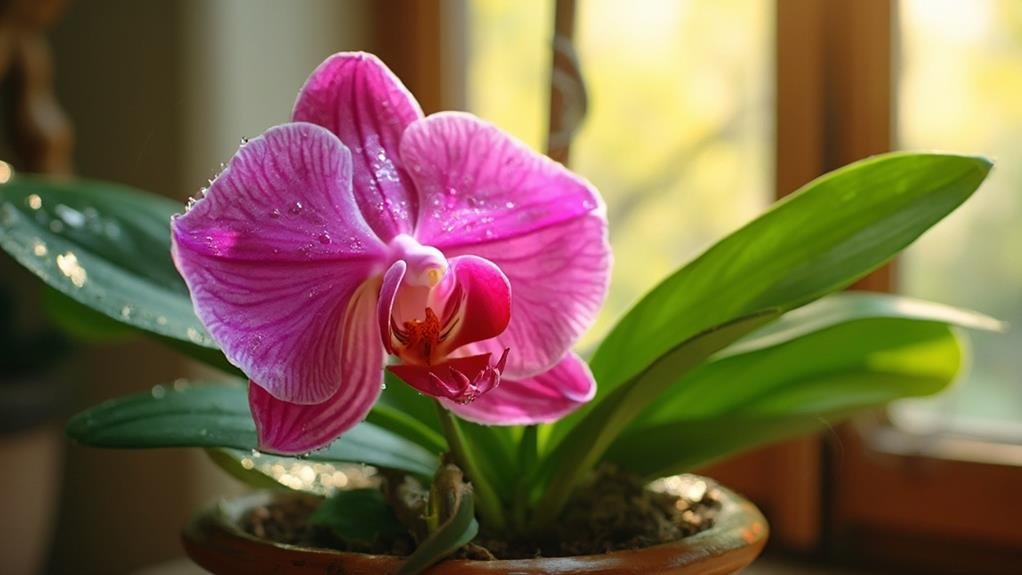
Orchids are stunning plants that can add elegance to any space, but they do require some specific care to thrive. First, you'll want to choose the right location. Orchids love bright, indirect sunlight, so place them near a window that filters light. Avoid harsh, direct sunlight, as it can scorch their delicate leaves.
Next, focus on watering. You don't need to soak your orchids every day; instead, water them thoroughly every one to two weeks. Allow the potting mix to dry out slightly between waterings. Overwatering is one of the most common mistakes, so keep a close eye on the moisture levels.
Humidity is another vital factor. Orchids thrive in higher humidity, so consider placing a humidity tray filled with water and pebbles beneath the pot. This will help maintain the moisture your orchids crave.
Additionally, fertilizing every few weeks with a balanced orchid fertilizer will support their growth and blooming.
Lastly, don't forget to check for pests and diseases regularly. Early detection can save your orchids and help them flourish. By providing the right care, you'll create an environment where your orchids can truly shine.
Preparing for the Move
When it's time to move your orchids, careful planning is essential to guarantee their safety and health. Start by evaluating your orchid collection—check for any signs of stress or disease. If you notice any issues, address them before the move to make sure your plants are in the best possible condition.
Next, consider the timing of your move. Orchids are sensitive to temperature changes, so choose a moving date when the weather is mild. This will help minimize their exposure to extreme conditions.
Additionally, create a detailed plan for transporting your orchids. Decide whether you'll move them yourself or enlist the help of friends or family who understand the importance of handling them with care.
Before packing, familiarize yourself with your orchids' specific needs, as different species may require unique considerations. Gather necessary supplies, like pots, water, and protective materials, to make certain they remain secure during transit.

Essential Packing Materials
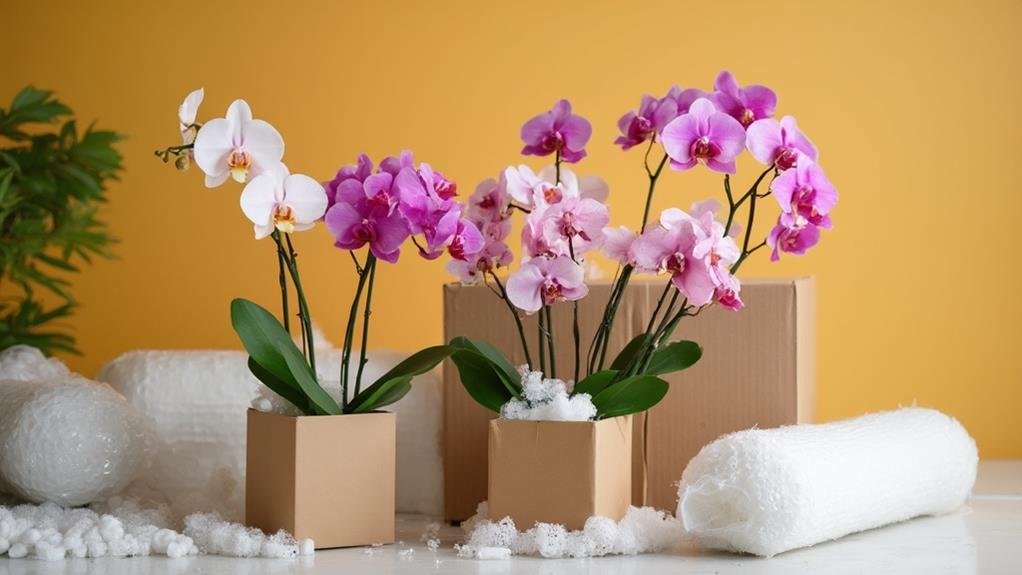
When you're packing your orchids, choosing the right boxes is vital to their safety.
You'll also want to master protective wrapping techniques and consider temperature control solutions to keep your plants healthy during the move.
Let's explore these essential packing materials to guarantee a smooth changeover for your orchids.
Choosing the Right Boxes
Choosing the right boxes is crucial for ensuring your orchids arrive at their new home safely. Start by selecting sturdy, corrugated cardboard boxes that can withstand the weight of your plants and any potential impacts during transport.
It's important to choose boxes that are large enough to accommodate your orchids without cramping them or risking damage to their delicate blooms.
Consider using boxes specifically designed for plants, as they often feature ventilation holes. Good airflow helps minimize moisture buildup, which can lead to mold or rot. If those aren't available, standard boxes will work—just remember to create ventilation by cutting small holes.
Next, think about the number of orchids you're packing. Avoid overloading a single box; it's better to distribute them across multiple boxes. This not only protects your plants but also makes handling easier.
Label each box clearly, indicating its contents and whether it's fragile. This simple step helps everyone involved in the move understand the importance of handling those boxes with care.
Protective Wrapping Techniques
To guarantee your orchids remain safe during the move, using effective protective wrapping techniques is essential. Start by gathering soft packing materials like bubble wrap or foam sheets. These materials act as cushioned barriers, preventing any damage from bumps or jolts during transportation.
When wrapping your orchids, be gentle. Carefully encase each pot, making sure the leaves and blooms are protected. Avoid wrapping too tightly, as this can put undue pressure on delicate stems and petals. If you're dealing with large blooms, consider using tissue paper to add an extra layer of protection without adding bulk.
For extra security, you can place the wrapped orchids inside sturdy cardboard boxes, making sure ample space for air circulation. You might also want to use packing peanuts or crumpled newspaper to fill any gaps within the box, keeping your plants stable.
Label each box clearly to identify the contents and handle with care. By taking these steps, you'll not only protect your beloved orchids but also show consideration for those who may help you during the move.
Your careful packing will guarantee your plants arrive in their new home ready to thrive.
Temperature Control Solutions
As you prepare for your move, consider how temperature fluctuations can affect your orchids. These delicate plants thrive within specific temperature ranges, and sudden changes can cause stress or even damage. To guarantee your orchids remain healthy during the shift, it's essential to use temperature control solutions.
Begin by investing in insulated boxes or thermal wraps. These packing materials help regulate temperature, protecting your orchids from extreme heat or cold. You might also consider adding gel packs for additional temperature stability. Just make sure they're not in direct contact with the plants to avoid any risk of freezing or overheating.
If you're moving during particularly hot or cold weather, plan your moving schedule wisely. Try to minimize the time your orchids spend in transit, keeping them in a climate-controlled vehicle whenever possible.
Lastly, keep a thermometer handy during the move to monitor temperatures inside your vehicle. If it's too hot or cold, make quick adjustments to maintain a comfortable environment for your precious orchids.
Transportation Tips
When you're transporting orchids, proper packaging is essential to keep them safe.
You'll also want to control the temperature to guarantee they stay healthy during the move.
Plus, choosing secure transport options can make all the difference in protecting your precious plants.
Proper Packaging Techniques
Properly packaging orchids is essential for guaranteeing they arrive at their destination in perfect condition. Start by selecting a sturdy, breathable box that allows for air circulation. Lay down a layer of packing material, like bubble wrap or tissue paper, to cushion the orchids.
If you're transporting potted orchids, wrap the pot in plastic to contain moisture while preventing leaks.
Next, secure the orchids in the box. Use additional packing material to fill any gaps, preventing movement during transit. If the flowers have long stems, consider trimming them slightly to avoid breakage. For loose blooms, you can place them in protective sleeves or wrap them individually in soft tissue.
Label the box clearly, indicating that it contains fragile items. Including a "This Side Up" note can help guarantee they're handled correctly.
When sealing the box, use strong tape to reinforce the edges, guaranteeing nothing spills out.
Temperature Control Strategies
Ensuring orchids thrive during transportation goes beyond just packaging; temperature control plays an essential role in their health.
To keep your precious orchids safe, start by checking the temperature forecast for your route. Orchids typically prefer temperatures between 65°F and 75°F. If it's too hot or too cold, consider adjusting your travel plans to avoid extreme conditions.
Using insulated containers can help stabilize the temperature. You might want to place ice packs in a cooler for hot days or use heat packs during colder weather. Just be cautious—don't let the temperature drop below 50°F or rise above 90°F, as these extremes can harm your orchids.
While you're on the road, try to minimize the time your orchids spend in a parked vehicle. It can heat up or cool down quickly, putting your plants at risk.
If you can, set up a climate-controlled environment in your vehicle. Using air conditioning or heating can make a significant difference.
Secure Transport Options
To safely transport your orchids, it's crucial to buckle them in securely during the journey. Start by choosing a sturdy box that offers enough space but isn't overly roomy, as this can lead to unnecessary movement.
Place your orchids upright in the box, guaranteeing they won't tip over. You can use crumpled newspaper or bubble wrap to cushion them, preventing any jolts or bumps from causing damage.
If you're moving a larger collection, consider using plastic bins with lids. This provides extra protection from the elements, especially during unpredictable weather. Always avoid placing heavy items on top of your orchids to prevent crushing.
When you're ready to load them into your vehicle, secure the box in a stable position, like the floor of your car, where they won't slide around. Use seat belts if necessary, treating them like precious cargo.
Lastly, keep the temperature in mind during transport. Avoid leaving your orchids in a hot or cold vehicle for extended periods.
With these tips, you can guarantee your orchids arrive safely, ready to thrive in their new home. Your attention to detail will show your care for these beautiful plants.
Setting Up in Your New Home
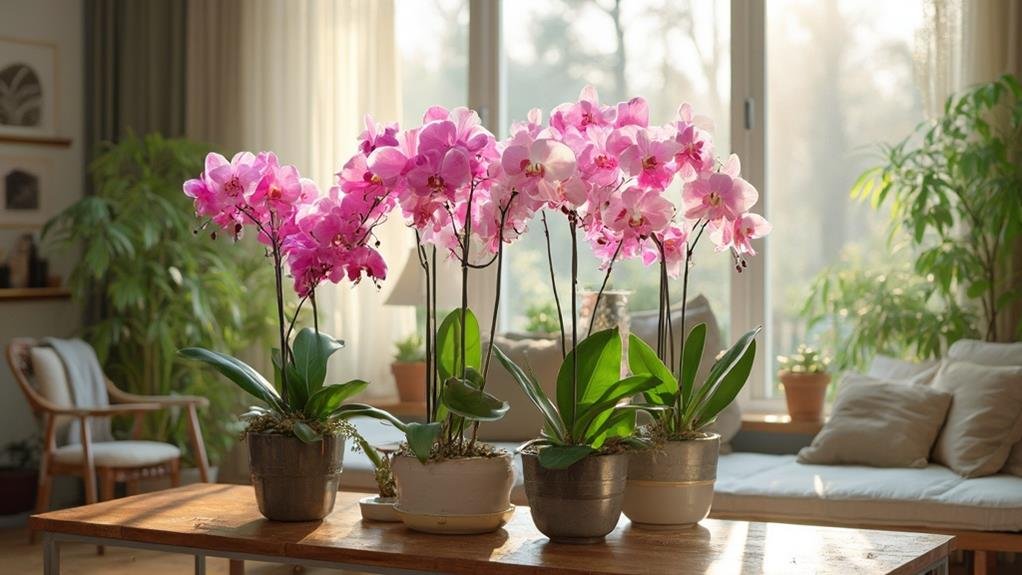
Moving into a new home can feel exhilarating, but it also comes with the challenge of finding the perfect spot for your orchids.
Start by evaluating the light conditions in each room. Orchids thrive in bright, indirect sunlight, so look for places near windows that provide this environment without exposing them to harsh rays.
Next, consider the temperature and humidity levels. Orchids generally enjoy warmth and humidity, so avoid placing them near drafts or heating vents.
If your new home is on the drier side, think about using a humidity tray or a small humidifier to create a more comfortable atmosphere for your plants.
When arranging your orchids, think about accessibility. You want to make sure they're easy to care for and enjoy. A cozy corner in your living room or a well-lit kitchen can be great spots that allow you to admire and tend to them regularly.
Post-Move Orchid Care
After you've settled your orchids into their new spots, the next step is to focus on their care to help them adjust to the changes in their environment.
Start by confirming they receive the right amount of light. Orchids thrive in bright, indirect sunlight, so find a spot that offers this balance.
Next, check the humidity levels. Orchids prefer humidity around 50-70%. If your new home is drier, consider using a humidity tray or a small humidifier to create a more favorable atmosphere.
Watering is vital, too. Let the top inch of soil dry out before watering again, and guarantee proper drainage to prevent root rot.
Monitor the temperature, aiming for a consistent range between 65°F and 75°F during the day. Sudden temperature fluctuations can stress your orchids.
Common Mistakes to Avoid
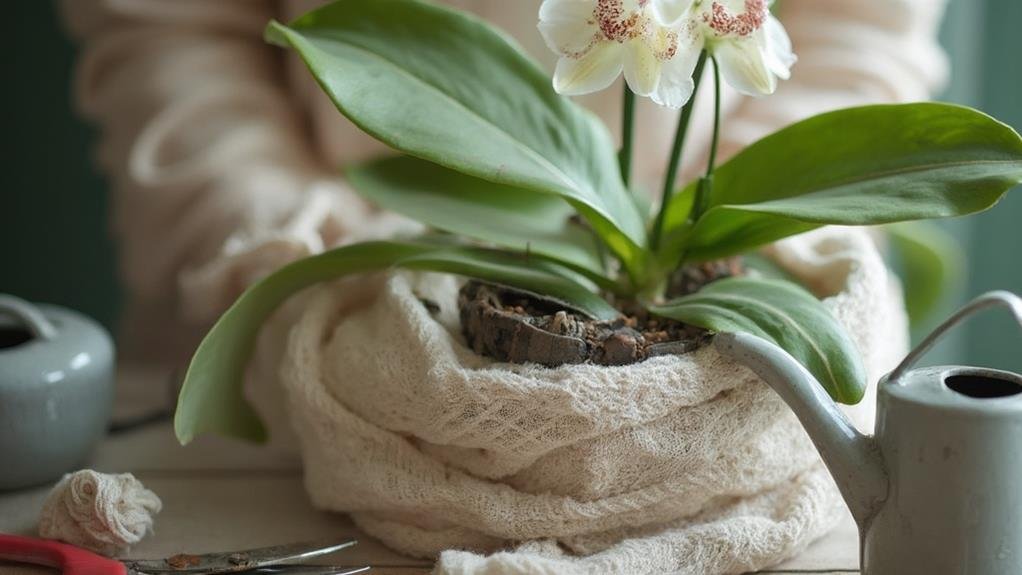
Orchid care can be tricky, and making a few common mistakes can hinder their health and growth. One of the biggest errors is overwatering. Orchids thrive in well-drained conditions, so verify your potting mix isn't soggy. Always check the moisture level before watering; it's better to underwater than overwater.
Another mistake is placing your orchids in direct sunlight. While they enjoy bright light, too much can scorch their leaves. Instead, provide filtered light for ideal growth.
Neglecting to repot your orchids can also lead to problems. Over time, the medium breaks down, affecting drainage and nutrient absorption. Aim to repot every one to two years to keep your orchids healthy.
Don't forget to reflect on temperature and humidity levels as well. Orchids prefer stable environments, so avoid drastic temperature changes or overly dry air.
Lastly, be cautious with fertilizer. Using too much can harm your orchids. A balanced, diluted fertilizer applied during the growing season is best.
Final Thoughts on Moving Orchids
When relocating your orchids, it's important to approach the process thoughtfully. You want to guarantee these delicate beauties thrive in their new environment, so take the time to plan ahead.
First, assess the conditions of your new space—light, humidity, and temperature can vary dramatically.
Before moving, gather the necessary supplies, like pots with drainage holes and fresh potting medium. This preparation allows you to replant your orchids quickly, minimizing stress on the plants. Remember, orchids can be sensitive to changes, so handle them with care.
During the move, protect your orchids from extreme temperatures and jostling. Placing them in a stable, insulated box can help maintain a comfortable environment.
Once you arrive, be mindful of their placement. Position them where they'll receive the appropriate light and airflow, making adjustments as needed.
Lastly, give your orchids extra attention after the move. Monitor their watering needs closely, as they might require less moisture while acclimating.
Frequently Asked Questions
Can I Move Orchids During Winter Months?
You're right to be cautious about moving orchids in winter. If you must, make certain they're properly insulated and protected from cold drafts. Timing and care can help keep them healthy during the changeover.
How Do I Identify the Type of Orchid I Have?
To identify your orchid type, examine its flowers, leaves, and growth patterns. Compare these features with online resources or books. Joining a local orchid society can also help you connect with experts who'll assist you.
What if My Orchids Have Pests Before Moving?
If your orchids have pests before moving, treat them immediately. Use insecticidal soap or neem oil to eliminate infestations. Regularly inspect your plants, ensuring you're providing a healthy environment to prevent future pest problems.
How Do I Acclimate Orchids to a New Environment?
To acclimate your orchids, gradually introduce them to the new environment. Adjust light, humidity, and temperature slowly. Keep an eye on their health, and don't overwater. They'll thrive with your attentive care.
Are There Any Special Permits Needed for Moving Orchids?
When moving orchids, you may need permits depending on your location and the type of orchids. Check local regulations to guarantee you're compliant and avoid any legal issues while transporting your precious plants.
Conclusion
Moving orchids doesn't have to be stressful if you follow these smart strategies. By focusing on careful packing and temperature control, you can guarantee your plants stay healthy during transit. Once you've settled into your new home, take the time to set up your orchids properly and provide the right care post-move. Avoid common mistakes, and you'll enjoy thriving orchids that bring beauty to your new space. With the right approach, your orchids can flourish anywhere!