

If you've ever struggled to keep your orchids alive, you're not alone. Many enthusiasts unknowingly make common mistakes that lead to wilted leaves and drooping blooms. The good news is there's a straightforward trick that can change your orchid care routine for the better. By simply adjusting how you check the moisture levels in your potting medium, you can greatly improve your plants' health. Curious about how this method works and the other tips that can elevate your orchids to their full potential? Let's explore the details further.
Key Takeaways
- Water orchids only when the potting medium is dry an inch below the surface to prevent overwatering.
- Place orchids in bright, indirect sunlight to avoid leaf scorching and promote healthy growth.
- Use pots with drainage holes to ensure proper drainage and prevent root rot.
- Maintain humidity levels between 40-70% through misting or humidity trays for optimal orchid health.
- Fertilize every 2-4 weeks during the growing season with balanced orchid fertilizer for robust blooms.
Understanding Orchid Care Basics
Orchids might seem intimidating, but understanding their care basics can make all the difference.
First, it's vital to choose the right potting medium. Unlike many houseplants, orchids thrive in well-draining materials like bark or sphagnum moss. This allows their roots to breathe and prevents rot. You'll also want to make sure that your pots have adequate drainage holes.
Next, consider light conditions. Orchids prefer bright, indirect light. If you notice leaves turning yellow, they might be getting too much sun. On the flip side, dark green leaves indicate insufficient light. Finding that perfect balance is key.
Watering is another important aspect. It's best to water your orchid once a week but adjust based on your home's humidity. Always allow the water to drain completely. Overwatering can lead to root rot, while underwatering can cause stress.
Lastly, humidity matters! Orchids enjoy a humid environment. You might consider placing a humidity tray or misting them occasionally.
Common Mistakes to Avoid
When caring for your orchid, it's easy to fall into common pitfalls that can hinder its growth. One major mistake is overwatering. Orchids thrive on a specific moisture level, and soggy roots can lead to rot. Always check the potting medium before watering; it should feel dry to the touch.
Another common error is improper lighting. While orchids love bright, indirect sunlight, too much direct sun can scorch their leaves. Make sure to place your orchid in a spot where it receives filtered light.
Fertilizing too often can also be detrimental. Orchids need a balanced fertilizer, but overdoing it can lead to salt buildup and harm your plant. Stick to a schedule of every two to four weeks during the growing season.
Lastly, don't forget about air circulation. Stagnant air can invite pests and diseases, so confirm your orchids are in a well-ventilated area.

The Simple Trick Revealed

For anyone looking to keep their orchids thriving, there's a simple trick that can make all the difference. Instead of sticking to the usual watering schedule, try a more intuitive approach.
Pay attention to your orchid's specific needs by observing its environment. Check the moisture level of the potting medium before watering. If it feels dry an inch below the surface, it's time to hydrate. This way, you're not just going through the motions; you're responding to your plant's unique signals.
Additionally, consider the humidity levels in your home. Orchids love humidity, so misting them or placing a tray of water nearby can help create a more suitable environment. This small change can noticeably enhance their health, allowing you to serve your plants better.
Lastly, make sure to provide them with bright, indirect light. Positioning your orchids near a window with filtered sunlight will help them flourish.
Step-by-Step Implementation
Understanding your orchid's needs is just the beginning; implementing these care strategies is where the real magic happens.
First, choose the right potting mix—something airy that drains well, like a blend of bark and moss. Next, pick a container with drainage holes to prevent root rot.
Water your orchid only when the top inch of the potting mix feels dry. When you do water, give it a good soak until water drains out of the bottom. This guarantees the roots stay hydrated without sitting in excess moisture.
Now, let's talk light. Place your orchid in a spot where it can receive bright, indirect sunlight. Direct sunlight can scorch the leaves, so keep it safe.
Feed your orchid every couple of weeks with a diluted orchid fertilizer during the growing season. This provides essential nutrients while promoting healthy growth.
Lastly, maintain humidity around your orchid. You can achieve this by misting it regularly or placing a tray of water nearby.
Benefits of This Method
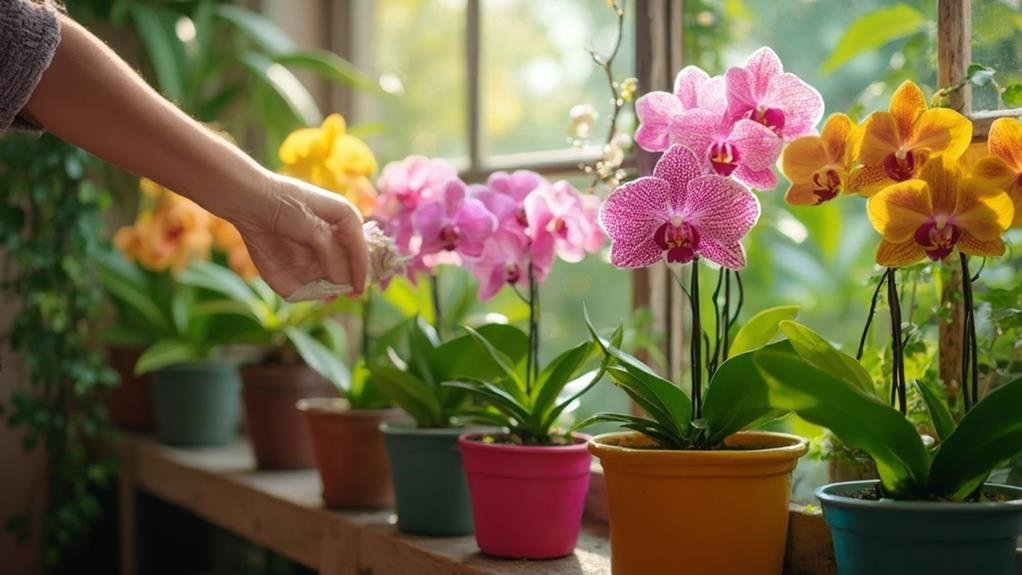
When you adopt this method, you'll notice your orchids thriving longer than ever before.
Plus, you'll spend less time worrying about watering, giving you more freedom to enjoy your plants.
Embracing these benefits can transform your orchid care routine for the better.
Increased Orchid Longevity
Many orchid lovers have discovered that implementing specific care techniques can greatly extend the lifespan of their plants. By adopting a few simple practices, you can guarantee your orchids thrive for years, bringing joy not just to you, but also to those you share them with.
First, focus on proper lighting. Orchids flourish when they receive the right amount of indirect sunlight. This promotes healthy growth and vibrant blooms, enhancing the beauty you can share with friends and family.
Next, prioritize air circulation. Good airflow around your orchids helps prevent mold and fungus, which can harm their health. By creating a well-ventilated environment, you're not only caring for your plants but also contributing to a healthier home atmosphere.
Regularly checking for pests is another crucial step. By addressing any infestations early, you'll prevent damage to your orchids and keep their beauty intact for all to enjoy.
Lastly, consider repotting your orchids every couple of years. Fresh potting medium supports root health and longevity, guaranteeing your plants remain vibrant and lush.
Reduced Watering Frequency
Reducing your watering frequency can markedly benefit your orchids, especially after you've established their ideal growing conditions. By allowing the roots to dry out slightly between waterings, you're mimicking their natural habitat, where they thrive in fluctuating moisture levels. This approach not only prevents overwatering but also encourages healthier root development.
When you water less frequently, you promote a stronger root system. Healthy roots absorb nutrients more effectively, which translates into vibrant blooms and lush foliage.
Plus, less water means you're reducing the risk of root rot, a common orchid killer.
You'll also find that your orchids become more resilient over time. They learn to adapt to their environment, making them less susceptible to stress. This adaptability means you can enjoy longer-lasting beauty in your plants.
Additionally, reducing your watering frequency gives you more time to focus on other aspects of orchid care, like monitoring light and humidity.
It's a win-win situation! By serving your orchids in this way, you're fostering a thriving ecosystem that reflects your dedication and love for these enchanting plants. Embrace this method, and watch your orchids flourish!
Real-Life Success Stories
You won't believe the amazing transformations these orchids have gone through with just a few simple care techniques.
Many plant lovers have turned their struggling plants into thriving beauties, all by following straightforward steps.
Let's explore some inspiring success stories that prove you can do it too!
Thriving Orchid Transformations
Orchids, often seen as delicate and finicky plants, can undergo remarkable transformations when nurtured with care and knowledge. You might be surprised to hear about the incredible journeys these beautiful flowers take in the hands of dedicated caregivers.
Take, for instance, a friend who inherited a wilting orchid from her grandmother. Instead of giving up, she researched its specific needs and adjusted its watering schedule and light exposure. Within months, the once droopy leaves perked up, and vibrant blooms erupted, filling her home with color and joy.
Another inspiring story involves a local community center that transformed a neglected orchid collection into a thriving display. Volunteers banded together, sharing their expertise and resources. By learning from one another, they not only revived the plants but also fostered a sense of community.
These real-life success stories remind you that with the right techniques and a little patience, orchids can flourish. Your efforts can bring these stunning plants back to life, inspiring others to appreciate their beauty and resilience.
Simple Care Techniques
Five simple care techniques can make all the difference in your orchid's health and energy.
First, make certain your orchid gets the right light. Place it near a window where it gets bright, indirect sunlight. Too much direct sun can scorch its leaves.
Second, water your orchid correctly. Instead of following a strict schedule, check the potting medium. When it's dry an inch down, it's time to water. This prevents overwatering, which can lead to root rot.
Third, use a balanced fertilizer every couple of weeks during the growing season. This gives your orchid the nutrients it needs to thrive.
Fourth, maintain humidity. Orchids love moisture! Consider placing a humidity tray beneath the pot or misting the leaves regularly.
Finally, repot your orchid every one to two years. This refreshes the growing medium and gives the roots room to expand.
These simple techniques have transformed countless orchids, turning them from wilting plants into vibrant displays.
When you serve your orchid's needs, you'll witness the joy and beauty it brings to your space. Your dedication will surely be rewarded with stunning blooms!
Maintaining Long-Term Orchid Health
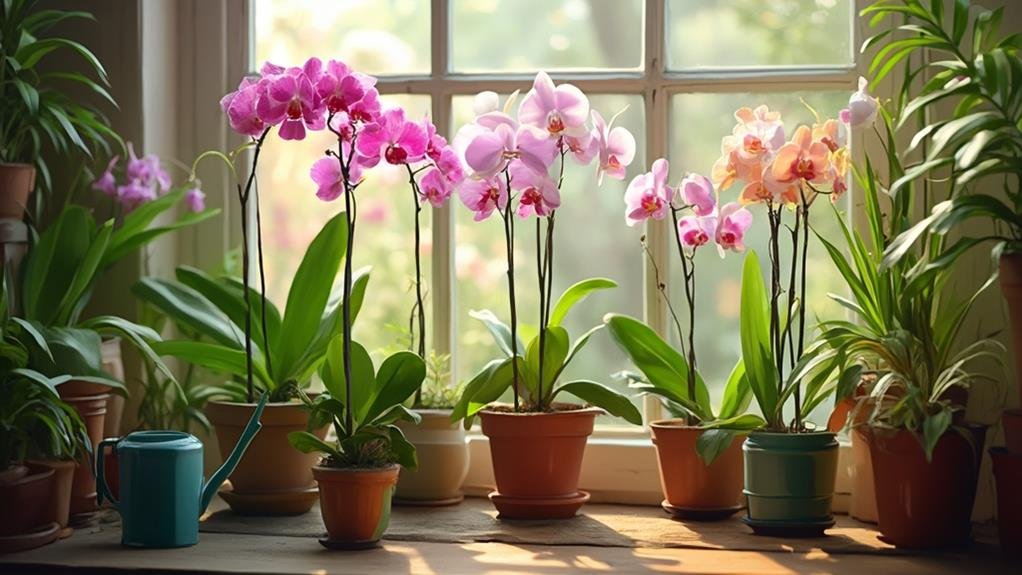
A healthy orchid can thrive for years with the right care and attention. To maintain long-term health, you'll want to guarantee your orchid receives adequate light. Place it in a spot where it gets bright, indirect sunlight, avoiding harsh afternoon rays.
Watering is essential, but it's about finding the right balance. Allow the potting medium to dry slightly between waterings. Stick your finger about an inch into the soil; if it feels dry, it's time to water.
Make sure the pot has drainage holes to prevent root rot.
Fertilizing every few weeks during the growing season helps nourish your orchid. Use a balanced orchid fertilizer, following the instructions carefully. During the dormant phase, reduce feeding.
Humidity plays a significant role in your orchid's health. Aim for 40-70% humidity. You can achieve this by misting the leaves or placing a humidity tray under the pot.
Frequently Asked Questions
Can I Use This Trick for Other Houseplants?
You can definitely apply that trick to other houseplants. Each plant has its unique needs, but the general care principles often translate well. Just pay attention to specific requirements for ideal results.
How Often Should I Apply This Method?
You should apply this method every two weeks to see consistent results. Adjust the frequency based on your plants' response, ensuring they thrive while you nurture their growth and beauty. Keep observing and refining your approach!
Is This Trick Suitable for All Orchid Species?
This trick's generally suitable for many orchid species, but it's best to check specific care needs. Each type has unique requirements, so adapting your approach will help guarantee your orchids thrive beautifully and healthily.
What Tools Do I Need for This Trick?
To successfully care for your orchids, you'll need a few essential tools: pruning shears, a moisture meter, orchid potting mix, and a spray bottle for misting. These will help you nurture them effectively.
Can I Combine This Method With Fertilizers?
Yes, you can combine this method with fertilizers. Just make sure you're using a balanced fertilizer and apply it appropriately. This way, you'll enhance your orchids' health while ensuring they thrive beautifully.
Conclusion
By checking the moisture level before watering, you're setting your orchids up for success. Remember, letting the top inch of the potting medium dry out mimics their natural environment, leading to healthier roots and vibrant blooms. Combine this simple trick with the right light and humidity, and you'll create the perfect conditions for your orchids to thrive. With a bit of care and attention, you'll never have to worry about killing another orchid again!