
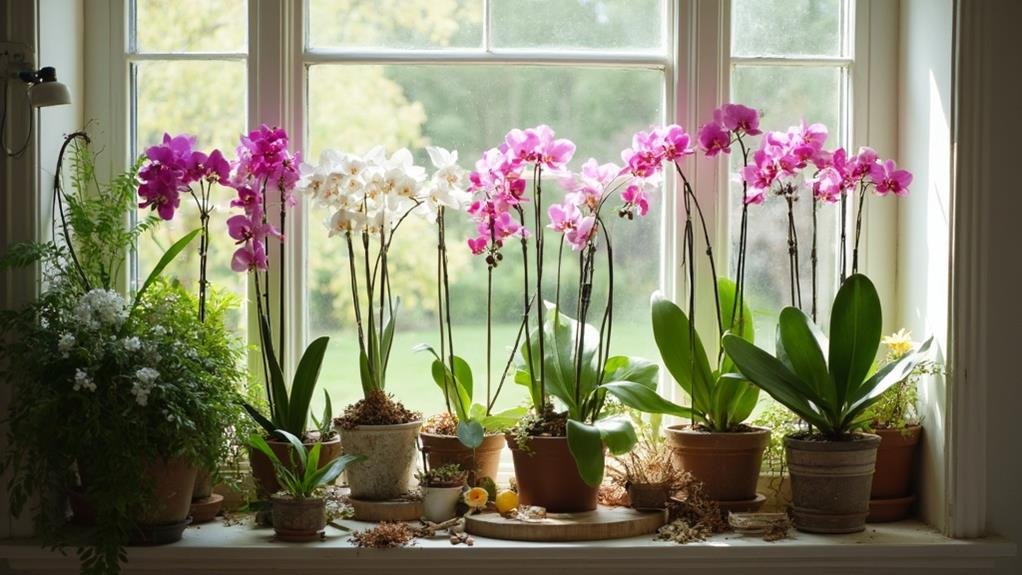
You might be surprised at how much money you're spending on orchid supplies when simple, cost-effective alternatives can meet your plants' needs just as well. By understanding your specific orchid type, you can create tailored care strategies that don't empty your wallet. Imagine utilizing recycled materials for potting and whipping up your own potting mix instead of relying on pricey pre-made options. What if homemade fertilizers and natural pest control methods could not only save you money but also enhance your orchids' health? The possibilities are worth exploring, especially when it comes to transforming your gardening approach.
Key Takeaways
- Identify your orchid type for specific care requirements, reducing the need for unnecessary supplies.
- Create your own potting mix using affordable materials like fir bark, moss, and perlite.
- Use recycled containers as pots, ensuring they have drainage holes to save money.
- Make homemade fertilizers with common household items like banana peels and Epsom salt for cost-effective nutrition.
- Utilize natural pest control methods, such as essential oils and DIY sprays, to avoid expensive pesticides.
Understand Your Orchid's Needs
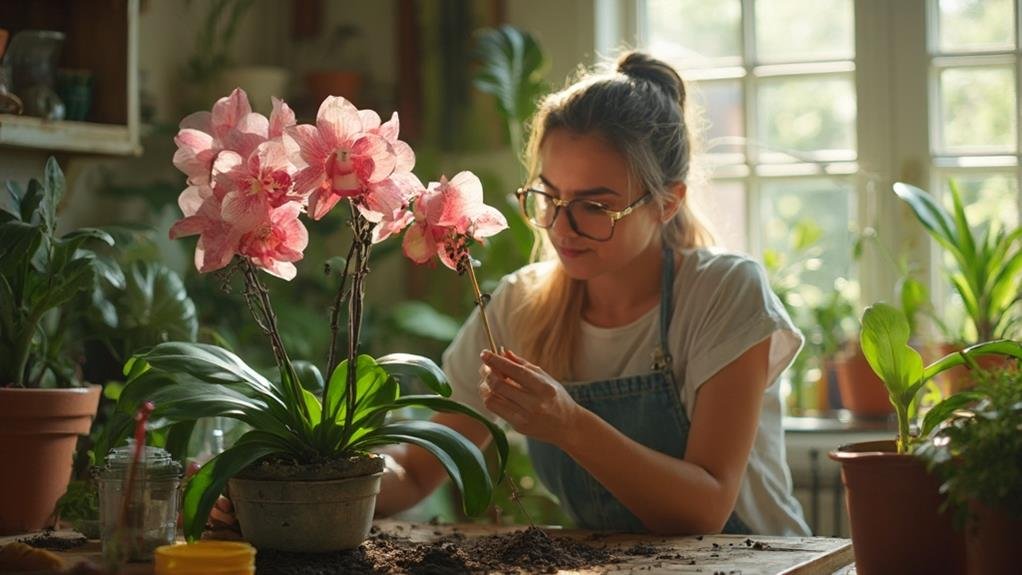
To thrive, orchids require specific care tailored to their unique needs. Understanding these needs is essential for you to provide the best possible environment for your plants.
Start by determining the specific type of orchid you have, as different varieties have distinct light, temperature, and watering requirements. For instance, Phalaenopsis orchids love bright, indirect light, while Cattleyas thrive in more direct sunlight.
Next, pay attention to humidity levels. Orchids generally prefer humidity between 40% and 70%. If your home is dry, consider using a humidity tray or misting your plants regularly.
Watering is another vital aspect; overwatering can lead to root rot, while underwatering can cause dehydration. Typically, watering once a week is a good rule of thumb, but always check the moisture level first.
Lastly, be mindful of fertilization. Using a balanced orchid fertilizer can promote healthy growth and blooming.
Affordable Potting Options
When you're looking for budget-friendly potting options for your orchids, consider using recycled materials for pots.
You can also create your own potting mix, which not only saves money but allows you to customize the blend for your plants' needs.
Let's explore some simple and effective ideas to help you get started.
Recycled Materials for Pots
Using recycled materials for pots is a smart and eco-friendly way to cultivate your orchids without breaking the bank. By repurposing items you already have, you not only save money but also contribute to a sustainable lifestyle that can inspire others in your community.

Consider using old plastic containers, tin cans, or even glass jars. Just make sure to create drainage holes to prevent waterlogging, which can harm your orchids.
You might also explore using wooden crates or pallets, which can add a rustic charm to your garden while being functional.
Another great option is to use old colanders or mesh baskets. These materials allow for excellent airflow, ensuring your orchids thrive.
Plus, it's a wonderful conversation starter when you share your creative potting solutions with fellow orchid enthusiasts.
DIY Potting Mix
Creating your own potting mix can be just as rewarding as finding recycled materials for pots. By mixing your own ingredients, you can tailor the blend to suit your orchids' specific needs while saving money.
You'll need some basic components: bark, sphagnum moss, perlite, and charcoal.
Start with a base of fir bark, which offers excellent drainage and aeration. Combine one part bark with one part sphagnum moss to retain moisture without suffocating the roots. Add a half part perlite for extra drainage and a quarter part charcoal to help filter impurities and keep the mix fresh.
Mix these ingredients in a clean container, guaranteeing they're well blended. You'll notice how easy it's to create a healthy environment for your orchids. This DIY potting mix isn't just budget-friendly; it's a wonderful way to guarantee your plants thrive.
As you pot your orchids, remember that your efforts serve a greater purpose – sharing the beauty and joy of these remarkable plants with others. Your homemade mix will help your orchids flourish, allowing you to gift vibrant blooms to friends and family.
Happy potting!
DIY Fertilizer Solutions
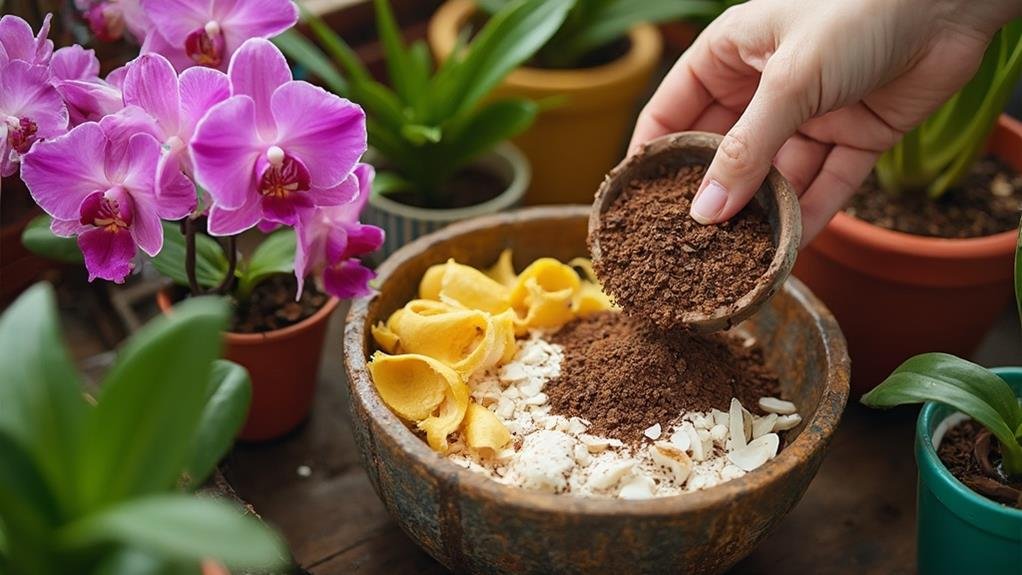
Homemade fertilizer solutions can be a game-changer for your orchids, providing them with the nutrients they need without breaking the bank.
When you whip up your own fertilizers, you're not just saving money; you're also ensuring your plants receive the quality care they deserve.
One simple recipe involves mixing one tablespoon of Epsom salt, one tablespoon of baking soda, and one tablespoon of ammonia in a gallon of water.
This blend offers magnesium, potassium, and nitrogen—essential nutrients for your orchids. Just be sure to dilute it further with water before applying, as you want to avoid over-fertilization.
Another great option is banana peels.
Chop them up and soak them in water for a few days. The potassium from the peels will nourish your plants while adding beneficial microorganisms to the soil.
These DIY solutions allow you to serve your orchids better, fostering healthier growth and vibrant blooms.
Plus, sharing your homemade mixtures with fellow orchid lovers can spread the joy of gardening.
Efficient Watering Techniques
To keep your orchids healthy, mastering efficient watering techniques is crucial. Overwatering is a common mistake that can lead to root rot, so you'll want to adopt a careful approach.
First, assess the potting medium; it should be slightly dry before you water again. Stick your finger about an inch into the bark or moss—if it feels dry, it's time to water.
When you do water, apply it directly to the potting medium rather than the leaves. This method guarantees the roots receive the moisture they need without risking fungal growth on the leaves. Consider using a watering can with a long spout for precision, allowing you to control the flow.
You might also find it beneficial to set a schedule based on your orchids' needs. Most orchids thrive on a bi-weekly watering routine, but factors like humidity and temperature can affect this. Pay attention to your plants and adjust accordingly.
Natural Pest Control Methods
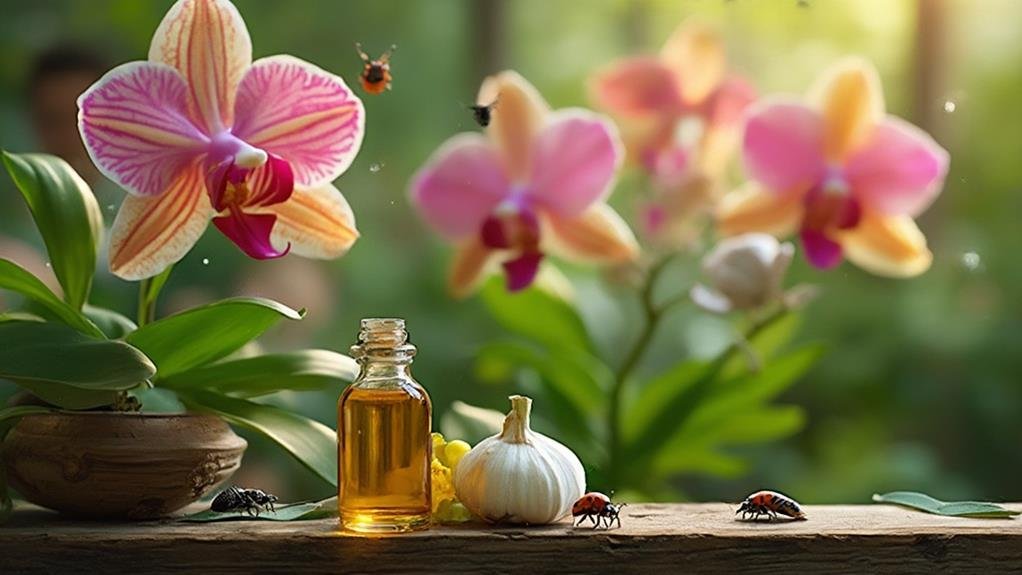
When it comes to keeping your orchids healthy, natural pest control methods can be a game changer.
You can use essential oils as repellents, introduce beneficial insects, or whip up homemade sprays to tackle unwanted pests.
Let's explore these effective strategies to protect your plants without harsh chemicals.
Essential Oils for Repellents
Essential oils can be a powerful ally in your quest for natural pest control. These concentrated plant extracts not only smell delightful but can also deter unwanted pests from your orchids. You can easily create your own repellent blends to protect your plants while being kind to the environment.
Start with essential oils known for their pest-repelling properties, like peppermint, lavender, or eucalyptus. Mix 10-15 drops of your chosen oil with water in a spray bottle. Shake well before each use, and lightly mist your orchids, focusing on the undersides of leaves where pests tend to hide.
Remember to reapply after rain or watering.
You can also consider making a more concentrated version by mixing oils with a carrier oil, like coconut or jojoba, and applying it directly to the soil. This not only helps repel stubborn pests but also nourishes your plants.
Using essential oils for pest control not only helps your orchids thrive but also promotes a healthier garden environment. By sharing your knowledge of these natural methods, you empower others to cultivate their own beautiful, pest-free spaces.
Beneficial Insects to Introduce
While essential oils can effectively repel pests, introducing beneficial insects can take your orchid maintenance to the next level. These tiny allies not only help control pest populations but also promote a healthy ecosystem in your garden.
Consider introducing ladybugs, which are fantastic at munching on aphids and other soft-bodied pests. Lacewings are another excellent choice; their larvae are voracious eaters of mealybugs and spider mites. If you're dealing with thrips, predatory mites can keep them in check.
Before you release these beneficial insects, make sure your orchids are free from harmful pesticides, as these can harm your new helpers.
You'll want to create a welcoming environment by providing plants that offer nectar and pollen, ensuring your beneficial friends stick around.
Homemade Sprays and Solutions
Create your own natural pest control solutions to keep your orchids healthy and thriving. It's not only cost-effective but also a generous way to nurture your plants without harmful chemicals.
A simple recipe is a garlic spray. Blend a few cloves of garlic with water, strain it, and spray it on your orchids to deter pests like aphids and spider mites.
Another effective solution is a soap spray. Mix one tablespoon of mild liquid soap with a quart of water. This creates a gentle spray that suffocates insects without harming your orchids. Just be sure to test it on a small leaf first, as some plants can be sensitive.
You can also try neem oil, a natural pesticide that comes from the seeds of the neem tree. Mix two tablespoons of neem oil with a quart of water and spray on affected areas. This not only controls pests but also promotes plant health.
These homemade sprays not only save you money but also help you care for your orchids in a way that's safe for the environment. Embrace these natural solutions, and you'll be serving your plants and the planet well!
Repurposing Household Items
Repurposing household items can breathe new life into your orchid care routine. Instead of spending money on expensive supplies, look around your home for items that can serve your plants.
For instance, old pots or containers can be transformed into stylish orchid planters. Just make sure they've drainage holes to prevent waterlogging.
You can use kitchen sponges as a moisture-retaining medium. Cut them into small pieces and mix them with bark or coconut coir for a well-draining mix that keeps your orchid's roots hydrated.
If you have a broken umbrella, its fabric can be repurposed into a shade cloth to protect your orchids from harsh sunlight.
Empty spray bottles can become excellent tools for misting your orchids, ensuring they get the humidity they crave.
And don't forget about coffee grounds! They can be sprinkled on the soil to provide nutrients while deterring pests.
Frequently Asked Questions
Can Orchids Thrive in Low-Light Conditions?
Orchids can struggle in low-light conditions, but some varieties adapt better than others. If you choose the right type and provide indirect light, you'll help them thrive and bloom beautifully in your space.
What Are the Signs of Overwatering Orchids?
If you notice yellowing leaves, mushy roots, or a soggy potting medium, your orchids might be overwatered. Cut back on watering, allowing the roots to dry out between sessions to help them thrive again.
How Often Should I Repot My Orchid?
You should repot your orchid every one to two years, or when it outgrows its pot. Check the roots and medium; if they're cramped or deteriorating, it's time for a fresh start.
Are There Specific Orchids That Require Less Care?
Yes, some orchids, like Phalaenopsis and Dendrobium, require less care than others. They thrive with minimal attention and can adapt to various environments, making them perfect for busy individuals who still want to enjoy beautiful blooms.
Can I Use Regular Soil for Orchids?
You can't use regular soil for orchids; it retains too much moisture, which can lead to root rot. Instead, opt for a specialized orchid mix that promotes drainage and aeration, keeping your plants healthy and thriving.
Conclusion
By embracing cost-effective alternatives for your orchids, you can nurture your plants without draining your wallet. Understanding their needs and using recycled materials for potting, along with DIY fertilizers and natural pest control, makes caring for your orchids both affordable and enjoyable. Don't forget to share your creative solutions with others—together, we can build a thriving community of orchid enthusiasts. So, let's cultivate our passion for orchids while keeping our budgets intact!