
If you're looking to elevate your orchid game, you might want to contemplate a few terrarium tips that have even seasoned experts envious. By optimizing humidity levels and choosing the right soil, you can create a thriving environment for your orchids that many overlook. Adding complementary plants not only enhances the aesthetic but also contributes to a self-sustaining ecosystem. However, the real secret lies in the details—like strategic placement and natural elements. Curious about how these adjustments can transform your terrarium and impress onlookers? Let's explore the essential conditions that make a difference.
Key Takeaways
- Choose taller terrariums for improved airflow, ensuring optimal conditions for orchid root health and growth.
- Incorporate a variety of complementary plants like ferns and mosses to create a balanced and thriving ecosystem.
- Maintain humidity levels between 50-70% with regular misting and use of humidifiers to prevent mold.
- Utilize LED grow lights to provide 12-14 hours of bright, indirect light essential for orchid health.
- Regularly inspect for pests and maintain cleanliness to deter infestations and promote healthy orchid growth.
Choosing the Right Terrarium
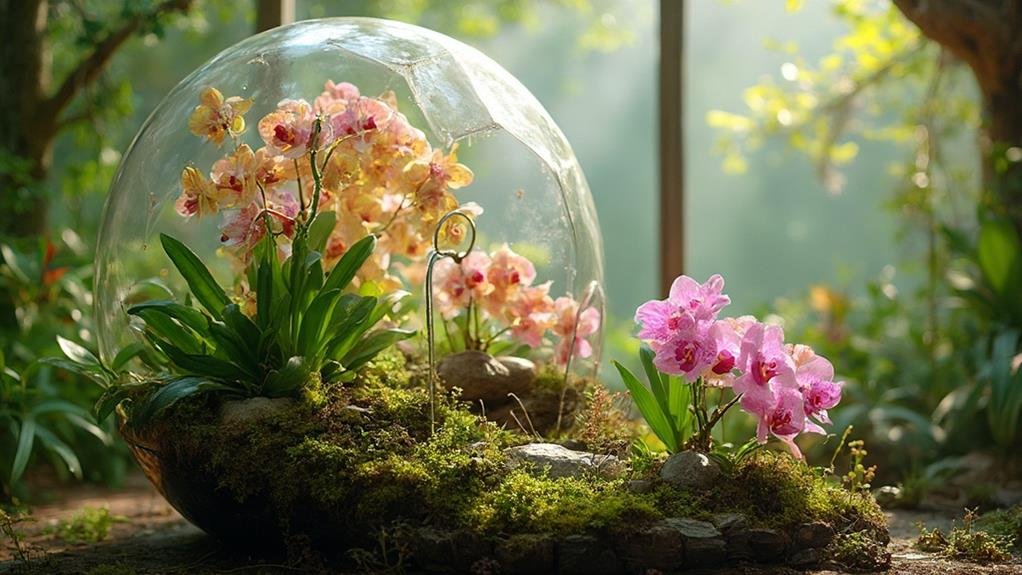
When it comes to growing orchids, selecting the right terrarium is vital for their health and beauty. You want a container that not only showcases those stunning blooms but also creates an environment that promotes growth.
Start by considering the size and shape of your terrarium. A taller option allows for better airflow, which is essential for orchid roots.
Next, think about the material. Glass is a popular choice since it offers clear visibility and helps maintain humidity. Make sure your terrarium has adequate drainage; orchids don't like sitting in water. Look for models with drainage holes or plan to add layers of gravel or charcoal at the bottom to facilitate this.
Lighting is another factor to keep in mind. Orchids thrive in bright, indirect light, so a terrarium that can accommodate a light source or is placed near a window is ideal.
Ideal Orchid Varieties for Terrariums
Orchids can thrive beautifully in terrariums, but not all varieties are suited for this environment. To help your guests appreciate the beauty of orchids in a compact space, consider choosing varieties that adapt well to high humidity and lower light levels.
Phalaenopsis orchids, commonly known as moth orchids, are fantastic choices. They bloom for extended periods and can tolerate the conditions found in terrariums.
Similarly, the Paphiopedilum, or lady's slipper orchid, thrives in the humid atmosphere and adds a unique touch with its distinctive flower shape.
For a more exotic flair, try the Dendrobium variety. These orchids can flourish in terrariums, especially if you maintain adequate humidity.
Additionally, the Oncidium orchids, often called dancing lady orchids, provide vibrant colors and are relatively easy to care for in this setup.

When selecting orchids for your terrarium, always verify they align with the needs of your guests. By providing the right orchid varieties, you'll create an enchanting environment that not only showcases these stunning plants but also serves as a delightful conversation starter.
Essential Terrarium Conditions
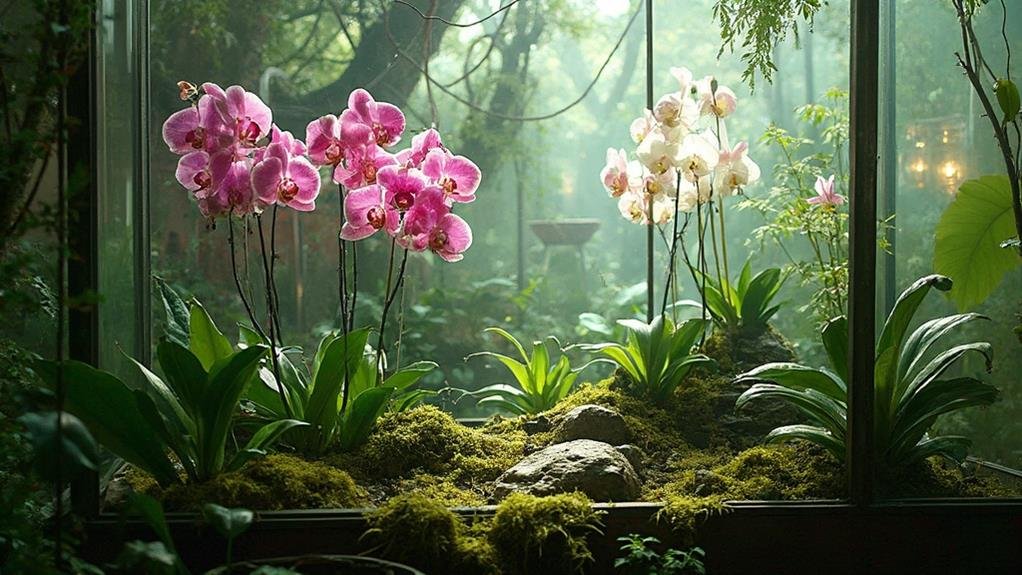
Creating a thriving terrarium for your orchids requires attention to three essential conditions: humidity, light, and airflow.
First, humidity is essential. Orchids thrive in environments with 50-70% humidity. You can achieve this by misting the plants regularly or using a small humidifier. Just be sure to monitor the moisture levels to prevent mold growth.
Next, consider light. Orchids generally prefer bright, indirect sunlight. Position your terrarium near a window, but avoid direct exposure, which can scorch the leaves. If natural light is limited, you might want to invest in grow lights to provide the right spectrum for your orchids.
Finally, airflow is critical for preventing the buildup of stagnant air, which can lead to disease. Make sure your terrarium has adequate ventilation by incorporating small openings or using a breathable lid.
You can also gently fan the air occasionally to keep it circulating.
Designing a Thriving Ecosystem
A thriving terrarium goes beyond just humidity, light, and airflow; it involves cultivating a balanced ecosystem that supports your orchids' health. To achieve this, you'll want to select a variety of plants that complement each other. Incorporating ferns, mosses, or small tropical plants can create a harmonious environment, providing beneficial interactions among species.
Consider the layout carefully. Place taller plants towards the back and shorter ones in front to guarantee each plant gets adequate light. This strategic arrangement promotes air circulation and prevents overcrowding, allowing each orchid to flourish.
Additionally, include natural elements like rocks, driftwood, or activated charcoal, which can help with drainage and filtration. These components not only enhance aesthetics but also provide hiding spots for beneficial microorganisms that contribute to a healthier ecosystem.
Pay attention to the soil composition, too. A well-draining mix rich in organic material will support root health while creating a microhabitat for beneficial fungi and bacteria.
This collaboration among various plants and organisms encourages a self-sustaining environment, guaranteeing your orchids thrive and flourish, while also creating a beautiful display for all to admire.
Maintaining Humidity and Light
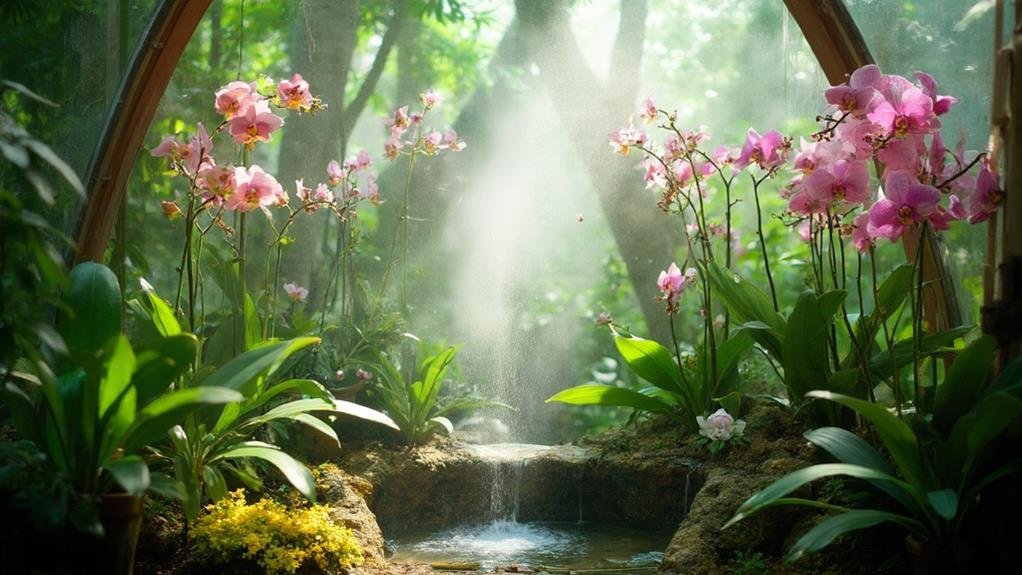
To keep your orchids thriving, you need to maintain the right humidity levels and light conditions.
Understanding their specific needs will help you monitor these factors effectively.
Let's explore how to create the perfect environment for your orchids to flourish.
Ideal Humidity Levels
Maintaining the right humidity levels is essential for your orchids' health, especially during the warmer months. Orchids thrive in humidity levels between 40% and 70%. To achieve this, consider placing a humidity gauge in your terrarium. Regularly check the levels and make adjustments as needed.
To boost humidity, you can use a shallow tray filled with water and pebbles. As the water evaporates, it creates a humid microclimate. Alternatively, misting your orchids with water every few days can also help, but be careful not to overdo it—too much moisture can lead to fungal issues.
You might also want to invest in a humidifier, especially if you live in a dry climate. This can help maintain consistent humidity without constant monitoring. Remember to provide good air circulation as well, as stagnant air can hinder your orchids' growth.
Lastly, grouping your orchids together can create a mini-ecosystem, where the collective transpiration raises humidity levels. By creating an ideal environment, you're setting the stage for lush, vibrant blooms that will truly impress those around you.
Light Requirements Explained
Understanding your orchids' light requirements is essential for their overall health and growth. Orchids thrive in bright, indirect light, so placing them near a window with filtered sunlight is ideal. Avoid direct sunlight, as it can scorch their leaves and stunt their development.
If you notice your orchids stretching toward the light, it's likely they're not getting enough.
To serve your orchids best, consider using grow lights if natural light is insufficient. LED grow lights can mimic the spectrum of sunlight and provide the necessary intensity without overheating your plants. Aim for about 12-14 hours of light per day, adjusting based on the specific needs of your orchid species.
Additionally, keep an eye on the color of your orchid leaves. Dark green leaves typically indicate low light, while yellowing leaves suggest too much light.
Striking the right balance will help your orchids flourish and reward you with beautiful blooms.
Monitoring Conditions Effectively
After ensuring your orchids receive the right amount of light, the next step is monitoring their environmental conditions, particularly humidity. Orchids thrive in a humid environment, so aim for 50-70% humidity levels. You can achieve this by misting your plants regularly or placing a shallow dish of water near them. A hygrometer can be a handy tool to help you keep track of the humidity levels in your terrarium.
When it comes to light, you'll want to strike a balance. Too much can scorch your orchids, while too little can stunt their growth. Regularly check your plants for signs of distress, like yellowing leaves or wilting flowers. Adjust your light source as needed, ensuring your orchids get bright, indirect light for ideal growth.
Lastly, don't forget about air circulation. Good airflow prevents mold and pests, which can harm your orchids. You might consider using a small fan to gently circulate air in your terrarium.
Troubleshooting Common Issues
While growing orchids in a terrarium can be a rewarding experience, you might encounter some common issues along the way. One frequent problem is the presence of mold or fungus. If you notice this, reduce humidity by improving ventilation and allowing your terrarium to dry out slightly between waterings.
Another concern is yellowing leaves, which often indicates overwatering. Check the potting medium; if it's soggy, hold off on watering until it's dry to the touch. Conversely, if leaves turn brown and crispy, it could signal underwatering or excessive light. Adjust your watering schedule and consider relocating your terrarium to a shadier spot.
Pest infestations can also occur, so regularly inspect your orchids for signs of trouble. If you spot pests, treat them with insecticidal soap or neem oil.
Lastly, keep an eye on flower health. If blooms drop prematurely, examine your humidity and temperature levels. Ensuring proper conditions can help you enjoy a thriving orchid collection while serving others with your beautiful creations.
With a little troubleshooting, you'll be well on your way to nurturing your orchids successfully.
Frequently Asked Questions
Can I Use Regular Potting Soil for Orchids in Terrariums?
You shouldn't use regular potting soil for orchids in terrariums. It retains too much moisture, which can lead to root rot. Instead, opt for a well-draining orchid mix to keep your plants healthy and thriving.
How Often Should I Fertilize Orchids in a Terrarium?
You should fertilize orchids in a terrarium every two to four weeks during the growing season. Use a diluted orchid fertilizer, and remember to adjust based on your specific orchid's needs and growth conditions.
What Size Terrarium Is Best for Orchids?
For orchids, a terrarium size of at least 10 gallons works best. It provides ample space for growth and airflow. Make certain it's tall enough for the orchids' height, promoting healthy development and vibrant blooms.
Are There Any Toxic Plants to Avoid in My Terrarium?
Yes, you should avoid toxic plants like oleander, foxglove, and azaleas in your terrarium. They can harm pets and humans. Always check plant toxicity before adding them to create a safe, welcoming environment for everyone.
How Do I Propagate Orchids in a Terrarium Setting?
To propagate orchids in a terrarium, cut healthy stems with aerial roots, place them in a humidity-rich environment, and guarantee they get indirect light. Keep the substrate moist, and watch for new growth!
Conclusion
By following these terrarium tips, you can create an impressive environment that'll make even the most seasoned orchid experts envious. Choose the right plants, maintain ideal conditions, and design a balanced ecosystem to help your orchids thrive. Don't forget to monitor humidity and light levels regularly. With a little effort and attention, you'll cultivate a stunning terrarium that showcases your orchids' beauty and health, turning your space into a mini paradise. Happy gardening!