
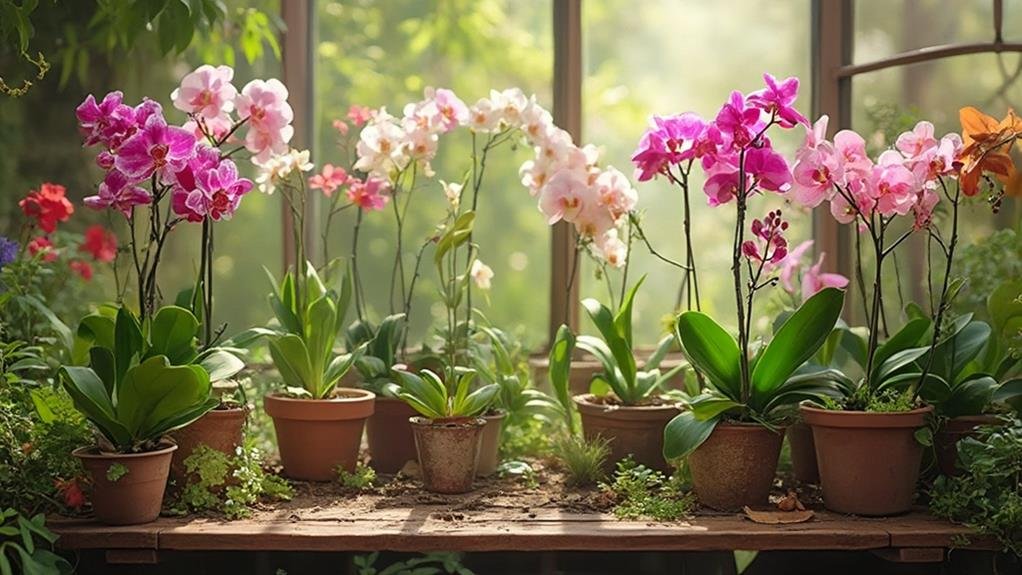
If you're looking to care for your orchids without breaking the bank, you might be surprised to learn about a budget hack that professional growers often frown upon. By using common household items, you can enhance your orchid's health and reduce costs considerably. Imagine mixing regular potting soil with perlite or repurposing kitchen scraps for nutrients. But what's the catch? This resourceful approach may challenge the norms upheld by industry experts. Understanding the implications and benefits of this method could change how you view orchid care forever.
Key Takeaways
- Mixing regular potting soil with perlite or bark creates a cost-effective potting medium that promotes drainage without the need for expensive orchid mixes.
- Repurposing kitchen scraps, like coffee grounds, enriches soil with nutrients, reducing reliance on commercial fertilizers.
- Using boiled vegetable or egg water provides essential nutrients while saving on fertilizer costs, benefiting both plants and the environment.
- Household items like wooden skewers for staking or old containers for drainage can enhance orchid care without the need for specialized products.
- Sharing these budget-friendly hacks encourages resourcefulness and community support, challenging the profit-driven practices of professional growers.
Understanding Orchid Needs
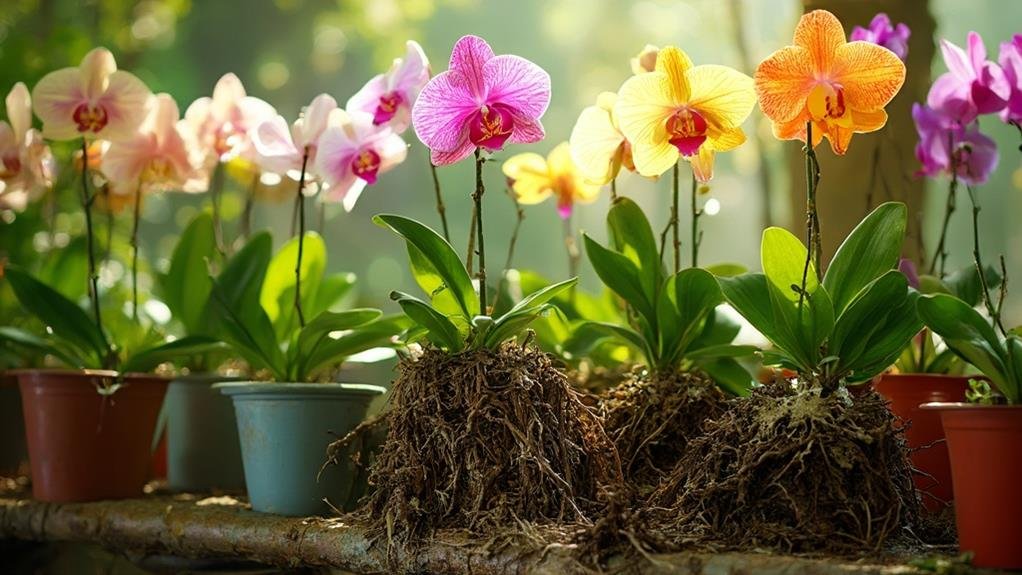
When you're diving into the world of orchids, it's vital to understand their unique needs to keep them thriving. These stunning plants require specific light, temperature, humidity, and watering conditions to flourish.
First, identify the type of orchid you have, as each species has its preferences. Most orchids thrive in bright, indirect light, so choose a spot that offers ample sunlight without burning the leaves.
Humidity plays an important role, too. Orchids generally prefer environments with 40-60% humidity. If you live in a drier climate, consider using a humidity tray or a humidifier to create a suitable atmosphere.
Watering is another significant aspect. Orchids like their roots to dry out slightly between waterings, so check the potting medium's moisture level before adding more water. Remember, overwatering is a common mistake that can lead to root rot.
Fertilizing during the growing season helps nourish your orchids. Use a balanced fertilizer every two weeks to support healthy growth.
The Costly Mistakes to Avoid
Many orchid enthusiasts make costly mistakes that can hinder their plants' growth and health. One common error is overwatering. Orchids thrive in well-draining conditions, and soggy roots can lead to rot. Instead, check your plant regularly and water only when the potting medium is dry.
Another mistake is neglecting humidity levels. Orchids often need a humid environment to flourish, so consider using a humidity tray or a misting system.
Don't forget about lighting, either. Placing your orchids in direct sunlight can scorch their leaves, while too little light can stunt their growth.
Fertilizing too much or too little can also create problems. Use a balanced orchid fertilizer, but follow the recommended schedule. It's better to err on the side of caution.

The Budget-Friendly Hack
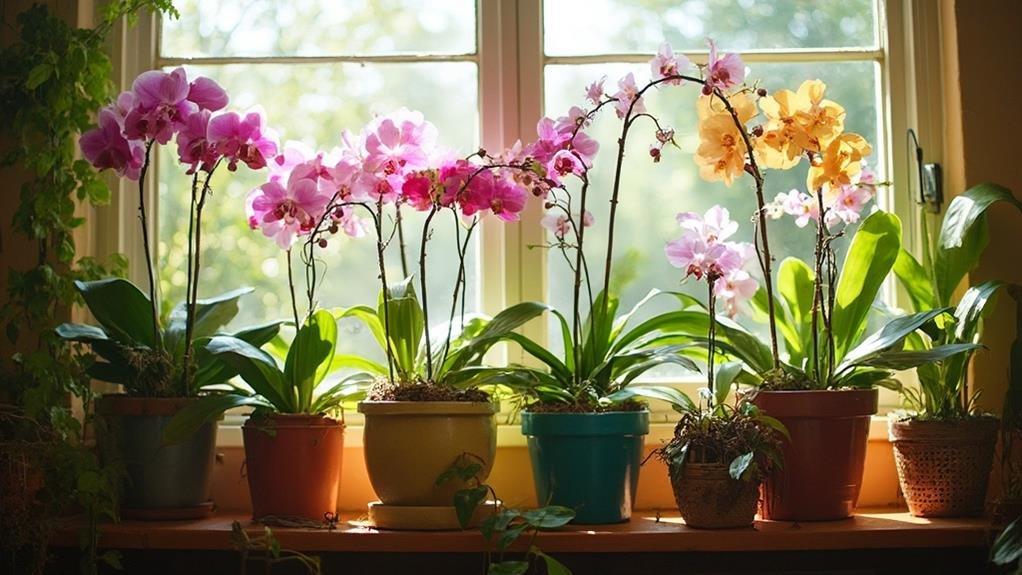
A simple budget-friendly hack can transform your orchid care routine without breaking the bank. Instead of splurging on expensive fertilizers and specialized orchid pots, consider using household items you already have.
For instance, instead of buying orchid-specific potting mix, try mixing regular potting soil with perlite or bark. This combination provides excellent drainage, which orchids love, while saving you money.
Next, when it comes to feeding your orchids, consider using leftover kitchen scraps. Coffee grounds can be a great addition to your plant care; just sprinkle a little on the soil. It helps to provide nutrients while reducing waste.
Additionally, using water from boiled vegetables or eggs can enrich the soil without any cost.
Benefits of This Method
Using household items for your orchid care not only saves money but also offers several benefits that enhance your gardening experience. First, you'll find that many common items, like coffee grounds or eggshells, provide essential nutrients that promote healthy growth. This natural approach helps you cultivate your orchids while reducing chemical use, which is better for the environment and your home.
Moreover, reusing and recycling everyday items fosters creativity and resourcefulness. You'll discover new ways to care for your plants that you mightn't have considered before. This sense of innovation can be incredibly rewarding and gives you a deeper connection to your gardening practice.
Additionally, using these methods allows you to share your knowledge with friends and fellow plant lovers. By demonstrating how to care for orchids with simple household products, you're not only helping them save money but also nurturing their passion for gardening. You'll inspire others to adopt eco-friendly practices, creating a positive ripple effect in your community.
Ultimately, this method enriches your gardening journey while making a meaningful impact on those around you. Embrace the benefits, and watch your orchids thrive!
Tips for Successful Implementation
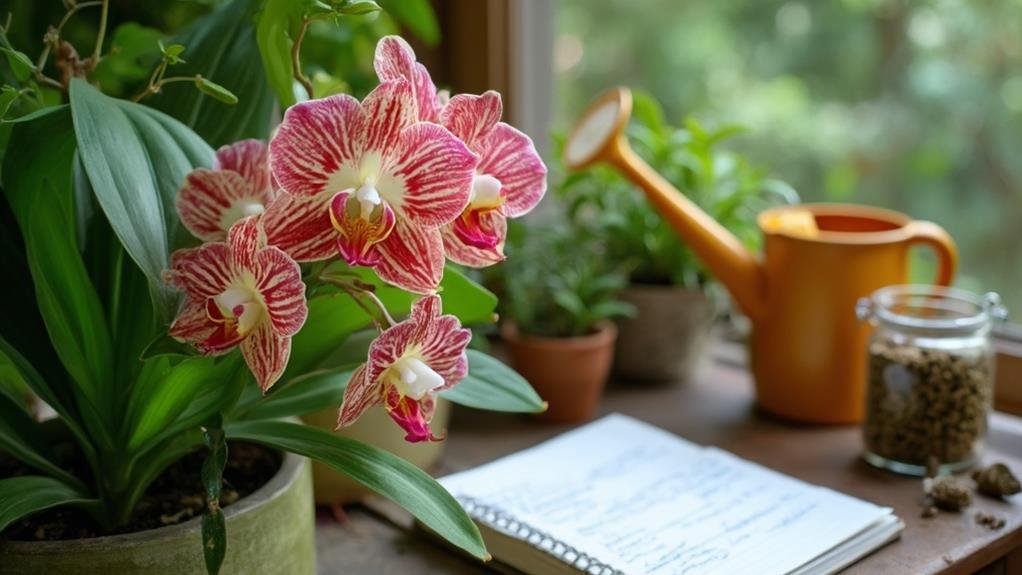
To successfully implement these budget-friendly orchid care methods, start by evaluating what items you already have at home. You might be surprised by the pots, containers, or even kitchen tools that can be repurposed for your orchids.
Look for items like wooden skewers for staking or old containers that can serve as drainage solutions.
Next, prioritize your orchids' needs—light, water, and nutrients. Position your orchids in areas that receive bright, indirect sunlight, and keep an eye on their watering schedule.
Remember, overwatering is a common mistake, so let the potting medium dry out a bit between waterings.
Once you've established a routine, consider sharing your successes with friends or family. You might inspire someone else to care for orchids while building a supportive community around plant care.
Don't hesitate to exchange tips, cuttings, or even share your homemade fertilizer recipes.
Frequently Asked Questions
Can This Hack Be Used on All Orchid Species?
Not all orchid species respond the same way to hacks. You'll need to research specific needs for each type. Experimenting carefully can help you find what works best for your orchids, ensuring they thrive beautifully.
How Often Should I Apply This Budget Hack?
You should apply this budget hack every two to four weeks, depending on your orchids' response. Keep an eye on their growth and adjust the frequency to guarantee they're thriving and looking their best.
Are There Any Risks Associated With This Method?
Yes, there are risks. You might over-fertilize, leading to root burn or nutrient imbalances. It's important to monitor your plants closely, adjusting your approach to guarantee they thrive without any adverse effects.
Can I Combine This Hack With Other Fertilization Techniques?
Sure, you can definitely combine this hack with other fertilization techniques. Just guarantee you monitor your orchids closely, adjusting as needed to prevent over-fertilization and maintain a healthy growing environment for them.
Is This Method Safe for Novice Orchid Growers?
Yes, this method's safe for novice orchid growers. Just pay attention to your plants' needs and adjust accordingly. With a bit of practice, you'll nurture beautiful orchids while learning valuable care techniques along the way.
Conclusion
By embracing this budget orchid hack, you can cultivate beautiful orchids without breaking the bank. You'll not only save money but also discover a more creative and sustainable way to care for your plants. Remember, it's about understanding your orchids' needs and using what you have at home to nourish them. So, ditch the pricey fertilizers and give your orchids the love they deserve with these simple yet effective methods. Happy gardening!