
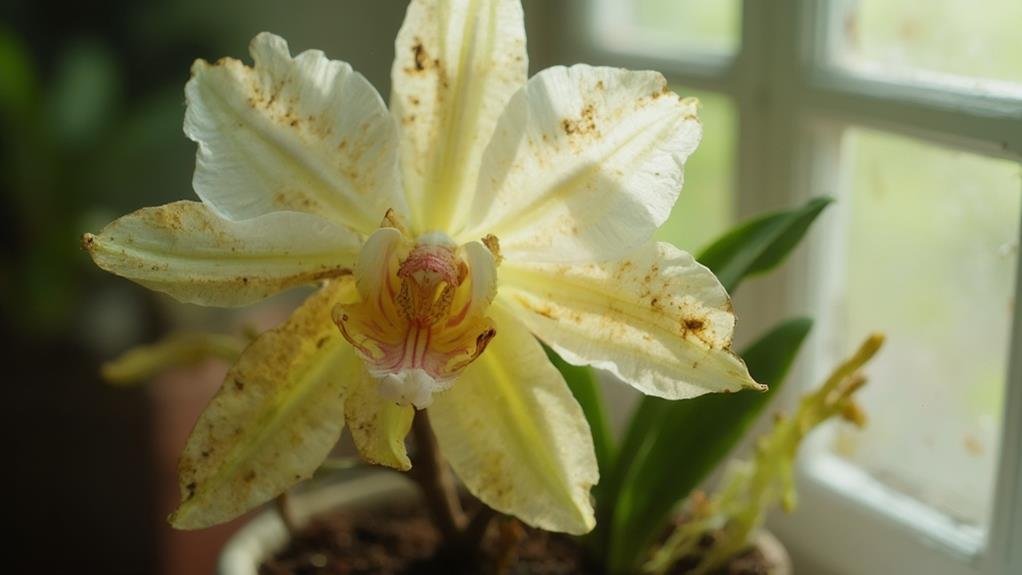
When you notice your orchid's leaves drooping or wilting, it's not just a sign of a long day; it could mean something deeper is amiss. Yellowing or browning foliage might suggest you've overwatered or placed it in too much sunlight. If the growth seems stunted, it could signal a need for repotting or insufficient light. Each of these signs points to potential distress, but that's just the beginning. Understanding these indicators can be crucial for your plant's health, and there are even more subtle clues you should be aware of.
Key Takeaways
- Drooping or wilting leaves indicate care issues; check for proper watering and light conditions.
- Yellowing or browning foliage signals stress; assess for overwatering, direct sunlight, or pests.
- Stunted growth suggests insufficient light or pot size; consider repotting and improving light exposure.
- Poor flowering or fading blooms result from improper watering or inadequate sunlight; ensure consistent temperature and nutrient support.
- Unpleasant odors or mold indicate overwatering; replace soggy potting medium and ensure proper drainage.
Drooping or Wilting Leaves
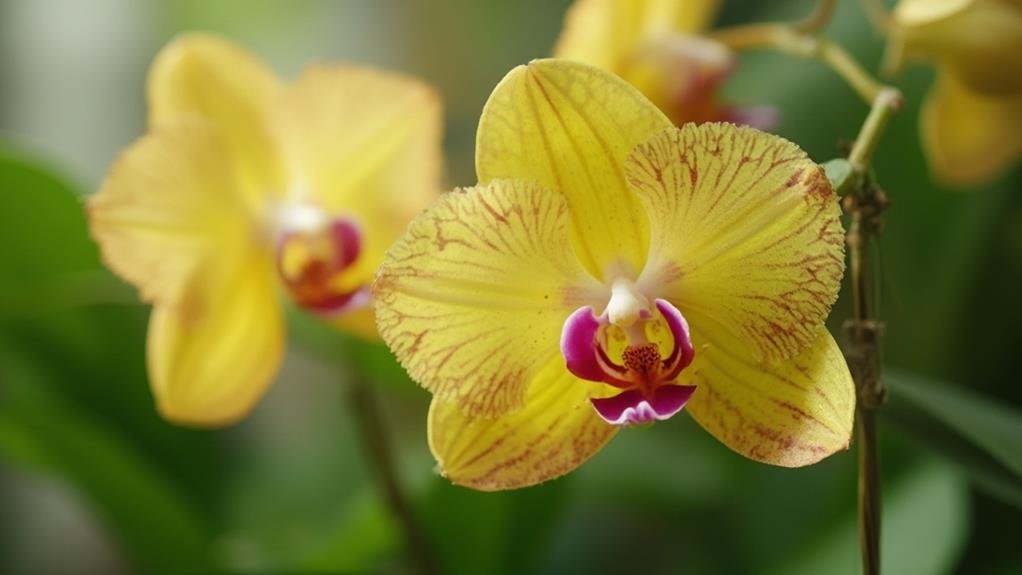
Drooping or wilting leaves are often the first signs that your orchid isn't happy. When you notice these changes, it's vital to take action promptly. Orchids thrive on care, and their leaves can reflect their overall well-being. If they're drooping, it might indicate that your plant is either too dry or too wet. Check the potting medium: it should be moist but not soggy.
You can also look at the light conditions. Orchids need bright, indirect sunlight to flourish. If they're not getting enough light, their leaves might droop as they reach for more. On the other hand, too much direct sunlight can scorch them, leading to wilting.
Temperature plays an important role too. Orchids prefer a stable environment, ideally between 65°F and 75°F during the day. Sudden temperature changes can stress them out, causing their leaves to droop.
When you notice these signs, remember that your orchid is communicating its needs. By addressing the watering, light, and temperature, you'll help restore its health.
With your attentive care, your orchid can bounce back and continue to brighten your space.
Yellowing or Browning Foliage
If you notice your orchid's leaves turning yellow or brown, it's another clear sign that something's off. This change in color often indicates stress, and it's crucial to pay attention to the underlying causes.
First, check your watering routine. Overwatering is a common culprit, leading to root rot, which can manifest as yellowing leaves. On the other hand, if the plant is too dry, it might also react by browning its foliage.
Next, consider the light conditions. Orchids thrive in bright, indirect light, and too much direct sunlight can scorch their leaves, resulting in brown patches. If you've recently moved your orchid, it might be adjusting to a new light environment.
Temperature fluctuations can also contribute to unhappy foliage. Orchids generally prefer consistent temperatures, so keep them away from drafts or extreme heat sources.

Lastly, inspect for pests or diseases, as these can weaken your orchid and cause leaf discoloration.
Stunted Growth
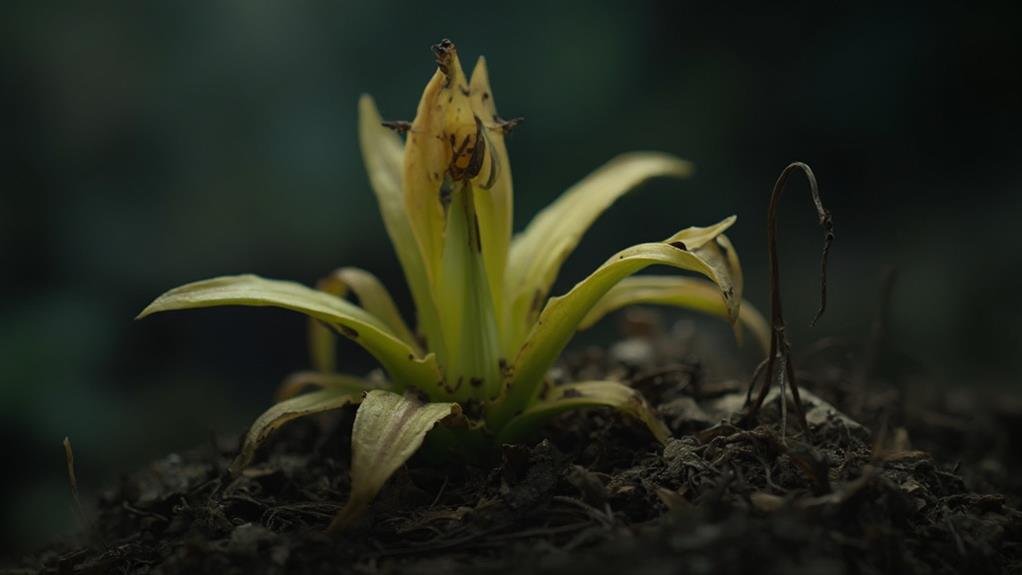
When your orchid's growth seems to stall, it's time to dig deeper into potential issues. Stunted growth is often a sign that your orchid isn't receiving the care it needs.
First, check the pot size. If your orchid has outgrown its container, it may lack the space to develop roots, leading to a halt in growth. Repotting into a slightly larger pot with fresh, well-draining medium can work wonders.
Next, consider the light conditions. Orchids thrive in bright, indirect light. If your plant's not getting enough light, its growth will slow. Try moving it to a brighter location, but avoid direct sunlight that can scorch its leaves.
Watering habits also play an essential role. Overwatering or underwatering can both stunt growth. Make certain the potting medium dries out slightly between waterings, and make sure your pot has proper drainage.
Lastly, check for pests or disease. Infestations can sap your orchid's energy, stunting its growth. Regularly inspect your plant for any signs of trouble, and act quickly if you notice anything unusual.
Poor Flowering or Fading Blooms
Experiencing poor flowering or fading blooms can be disheartening for any orchid enthusiast. When you notice your orchid isn't producing vibrant flowers or the blooms are wilting, it's essential to assess its needs. Often, these symptoms signal that your orchid isn't thriving as it should.
First, check the light conditions. Orchids typically need bright, indirect sunlight. If they're not getting enough light, their blooms may suffer.
Next, consider your watering routine. Overwatering or underwatering can stress your plant, leading to poor flowering. Make certain you're allowing the potting medium to dry out slightly between waterings.
Temperature also plays a significant role. Orchids prefer a consistent temperature range, usually between 65°F and 75°F. Sudden swings can cause blooms to fade.
Additionally, verify you're using the right fertilizer. A balanced, water-soluble orchid fertilizer can provide essential nutrients and encourage healthy flowering.
Lastly, inspect the potting medium. If it's breaking down or compacted, it mightn't provide adequate drainage, affecting your orchid's health.
Unpleasant Odors or Mold

Unpleasant odors or mold can indicate that your orchid is facing serious issues, often linked to improper care. If you notice a musty smell or see mold growing on the potting media, it's essential to act quickly. This could suggest overwatering, which creates a damp environment that fosters mold growth and can lead to root rot.
To serve your orchid better, first, check the potting medium. If it's soggy, it's time for a change. Replace it with a fresh, well-draining mix to help your orchid breathe and thrive.
Confirm the pot has adequate drainage holes to prevent water from pooling at the bottom.
Next, inspect the roots. Healthy roots should be firm and greenish-white, while unhealthy ones may appear brown and mushy. Trim away any damaged roots to promote new growth.
Frequently Asked Questions
How Often Should I Water My Orchid for Optimal Health?
You should water your orchid every 1-2 weeks, depending on its environment. Check the potting medium; if it feels dry, it's time to water. Always guarantee proper drainage to keep your orchid thriving.
What Type of Potting Mix Is Best for Orchids?
For orchids, a well-draining potting mix is essential. You'll want to use a blend of bark, sphagnum moss, or perlite. This mix promotes healthy root growth and prevents water retention, keeping your orchid thriving.
Can I Use Tap Water for My Orchids?
You can use tap water for your orchids, but it's best to let it sit for 24 hours first. This allows chlorine to dissipate, making it gentler on your beautiful plants. They'll appreciate the care!
How Much Sunlight Do Orchids Need Daily?
Orchids thrive in bright, indirect sunlight for about 12 hours daily. You'll want to place them near a window with filtered light, ensuring they're not exposed to harsh direct sunlight, which can harm their delicate leaves.
What Common Pests Should I Watch for on Orchids?
Watch for common pests like aphids, mealybugs, and spider mites on your orchids. They can damage your plants by sucking sap. Regularly check your orchids to catch infestations early and keep them healthy and thriving.
Conclusion
By keeping an eye out for these early warning signs, you can help your orchid thrive. Drooping leaves, yellowing foliage, stunted growth, poor flowering, and unpleasant odors are all signals that your plant needs attention. Addressing these issues promptly can make a world of difference in your orchid's health and happiness. Remember, a little observation and care go a long way in ensuring your orchid flourishes. Don't wait—tend to your plant's needs today!