

If you've noticed your indoor orchids struggling to thrive, it might be time to reconsider your approach to the greenhouse effect. Many plant enthusiasts underestimate how essential warmth, humidity, and light are for these delicate flowers. Without the right conditions, you could be setting yourself up for wilted leaves and missed blooms. Have you checked your temperature and humidity levels lately? Understanding these factors could be the key to revitalizing your orchids and releasing their full potential. Let's explore what you might be overlooking.
Key Takeaways
- Insufficient humidity levels below 40% can lead to wilting and stress in orchids; aim for 50-70% humidity for optimal growth.
- Overwatering is a common mistake that causes root rot; ensure the potting medium dries slightly before watering again.
- Inadequate light, either too much direct sunlight or not enough indirect light, can hinder orchid growth and blooming.
- Temperature fluctuations outside the ideal range (65°F-75°F) can stress orchids, affecting their overall health and flowering.
- Poor air circulation can lead to mold and root rot; ensure proper ventilation for a healthy growing environment.
Understanding the Greenhouse Effect

The greenhouse effect is like a cozy blanket for your indoor orchids, trapping warmth and moisture to create an ideal environment for growth. When you understand this concept, you can better cater to your orchids' needs.
Fundamentally, the greenhouse effect occurs when sunlight enters your space, warming the air and surfaces. This heat gets trapped, preventing those precious temperatures from dropping too low.
To nurture your orchids, you'll want to replicate this effect. Start by selecting a location that receives bright, indirect sunlight. A south or east-facing window usually works best.
Keep the humidity levels up, ideally between 50% and 70%, to mimic their native tropical habitats. You can achieve this by placing a humidity tray with water near your plants or misting them regularly.
Common Mistakes in Indoor Care
When caring for your indoor orchids, it's easy to make a couple of common mistakes that can harm their health.
Overwatering is a frequent issue, and improper lighting can also lead to poor growth.
Let's explore how to avoid these pitfalls and keep your orchids thriving.
Overwatering Issues
Overwatering is one of the most common mistakes you can make in indoor orchid care. It might seem like a good idea to keep the soil consistently moist, but orchids thrive in slightly dry conditions.
When you water too much, the roots can become waterlogged, leading to root rot. This not only harms your orchids but can also create a breeding ground for pests and diseases.

To avoid overwatering, check the potting medium regularly. Stick your finger about an inch into the soil; if it feels dry, it's time to water. If it's still damp, hold off for a few more days.
Make sure your pots have proper drainage holes to allow excess water to escape. Remember, it's always better to underwater than to overwater.
You'll also want to take into account the environment. Factors like humidity and temperature can affect how quickly your orchids dry out.
Don't rush the watering process; your patience will benefit these beautiful plants. By serving your orchids with the right amount of water, you'll help them flourish and bring joy to your space.
Your care will make a significant difference in their health and beauty.
Improper Lighting Conditions
Many indoor orchid enthusiasts overlook the importance of proper lighting, which can lead to poor growth and unhealthy plants. Each orchid species has unique lighting needs, and understanding these can greatly improve your success.
For instance, some orchids thrive in bright, indirect light, while others prefer shadier spots. Positioning your plants too close to a window can scorch their delicate leaves, while placing them too far away can stunt their growth.
Make sure you're using sheer curtains to filter harsh sunlight, creating a gentle glow that nourishes without harming. Regularly rotating your orchids can also help, as this encourages even growth and prevents them from leaning towards the light source.
Using artificial grow lights can be a great alternative if natural light is limited. Select fluorescent or LED lights designed for plants, and keep them on for about 12-14 hours a day.
Temperature Control for Orchids

To keep your orchids thriving, you'll need to maintain an ideal temperature range, typically between 65°F and 75°F during the day.
Be mindful of temperature fluctuations, as these can stress your plants and affect their growth.
Knowing how to regulate their environment will help guarantee your orchids flourish.
Ideal Temperature Range
Maintaining the ideal temperature range is essential for your orchids' health and vigor. Most orchids thrive in temperatures between 65°F and 75°F during the day, while nighttime temperatures should ideally drop to around 60°F to 65°F. This slight variation mimics their natural environment and encourages healthy growth.
When you provide this temperature range, you help your orchids develop strong roots and vibrant blooms. If your orchids are exposed to temperatures consistently outside this range, they may struggle to flourish, leading to lackluster growth or even failure to bloom.
To achieve the right conditions, consider using a thermometer to monitor the temperature accurately. Place your orchids in a location where they're shielded from direct drafts, heaters, or air conditioning vents, as sudden changes can stress them.
If necessary, you can use heating mats or fans to help maintain consistent temperatures.
Temperature Fluctuation Effects
Temperature fluctuations can greatly impact your orchids' health and blooming potential. When you expose your orchids to sudden changes in temperature, you risk stressing the plants, which can lead to poor growth and even death.
Maintaining a stable environment is key to nurturing them. Orchids thrive best within a specific temperature range, typically between 65°F and 75°F during the day and slightly cooler at night.
If you notice your orchids drooping or developing yellow leaves, it might be a sign that they're struggling with temperature swings. To serve your orchids well, consider placing them in a room with consistent temperatures, avoiding drafts from windows or air conditioning.
Use thermometers to monitor their environment and adjust heating or cooling systems as needed. If you can't maintain the ideal temperature range, you might consider using heating mats or fans to create a more controlled climate.
Importance of Humidity Levels
When it comes to caring for indoor orchids, humidity levels play an essential role in their health and vigor. Orchids thrive in environments with higher humidity, ideally between 40% to 70%. If the air is too dry, your orchids can become stressed, leading to issues like wilting, leaf drop, or even death.
To maintain ideal humidity, consider grouping your orchids together. This creates a microenvironment where moisture can circulate more effectively. You can also use humidity trays filled with pebbles and water. As the water evaporates, it raises the humidity around your plants.
Regular misting is another simple method, but be careful not to overdo it, as excessive moisture can lead to fungal issues.
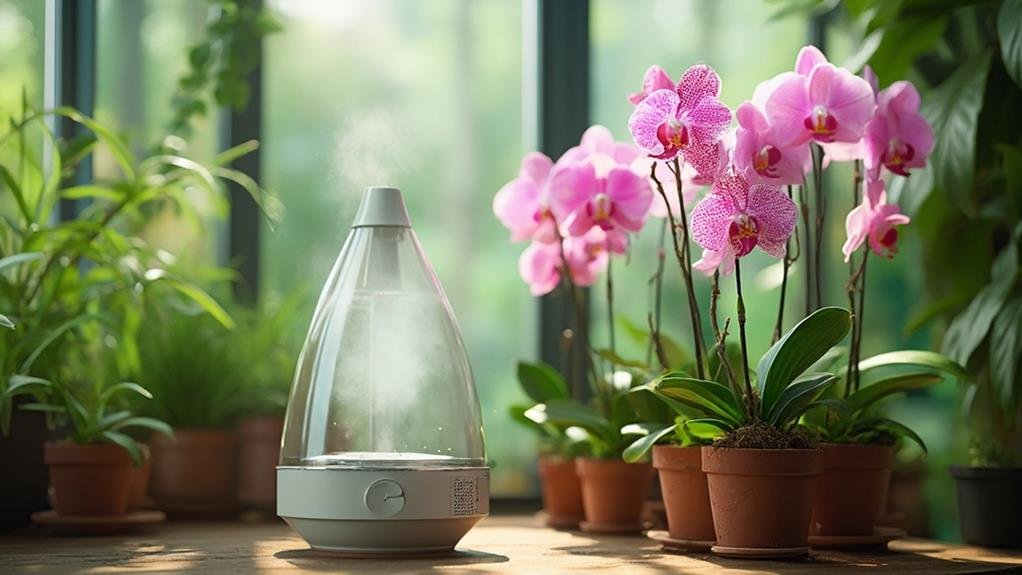
If you live in a particularly dry climate or during winter months, a humidifier can be a game-changer. Just remember to monitor humidity levels using a hygrometer to verify you're hitting that sweet spot.
Light Requirements for Healthy Orchids
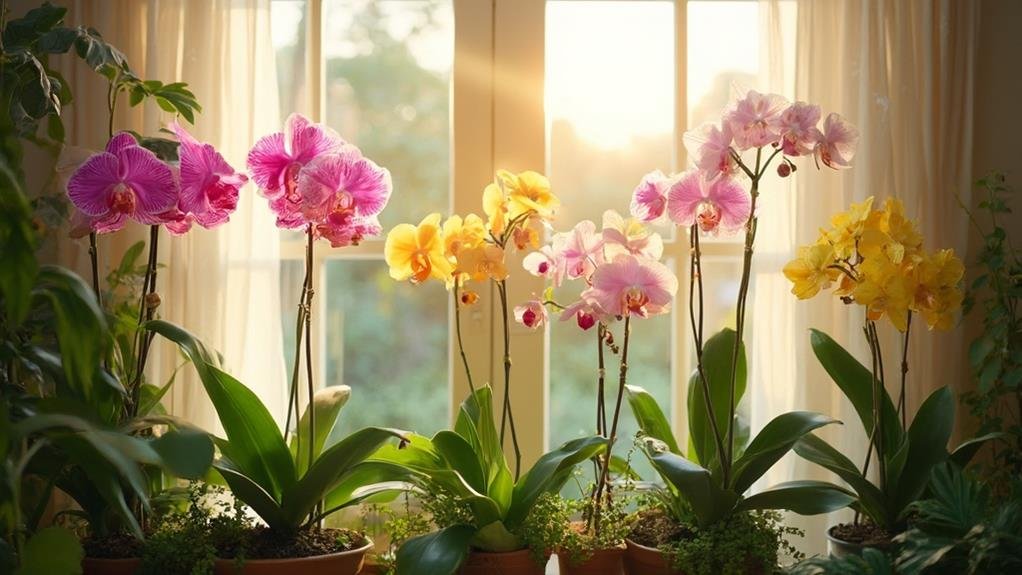
Providing the right light is essential for healthy orchids, as these beautiful plants thrive in bright, indirect sunlight.
You'll want to place your orchids near a window with filtered light, avoiding direct sun exposure that can scorch their delicate leaves. South or east-facing windows are often ideal, but if the light feels too harsh, consider using sheer curtains to soften it.
Pay attention to your orchids' behavior. If they lean toward the light, they may need more of it. Yellowing leaves can indicate too much sun, while dark green leaves might suggest they're not getting enough.
Rotate your plants occasionally to guarantee even growth and prevent them from bending toward the light source.
You'll also benefit from adjusting the light levels according to the seasons. During winter months, your orchids might require a little more light due to shorter days.
Using grow lights can be a helpful alternative if natural light is limited.
Ventilation and Air Circulation
Proper ventilation and air circulation are essential for your orchids' health. Without enough fresh air, your orchids can suffer from stagnant conditions, leading to mold and root rot. Make it a priority to guarantee that the air around your plants is moving freely.
Position your orchids in an area where they can benefit from natural breezes, or consider using fans to help circulate air. Just be careful not to place them in direct drafts, as that can stress them out.
You can also invest in a hygrometer to monitor humidity levels; orchids thrive in environments with 40-70% humidity.
If you notice yellowing leaves or a decline in blooming, check your ventilation. Sometimes, simply moving your orchid to a more open space can make a world of difference.
Rotate your pots occasionally to guarantee all sides receive adequate airflow.
Soil and Potting Considerations
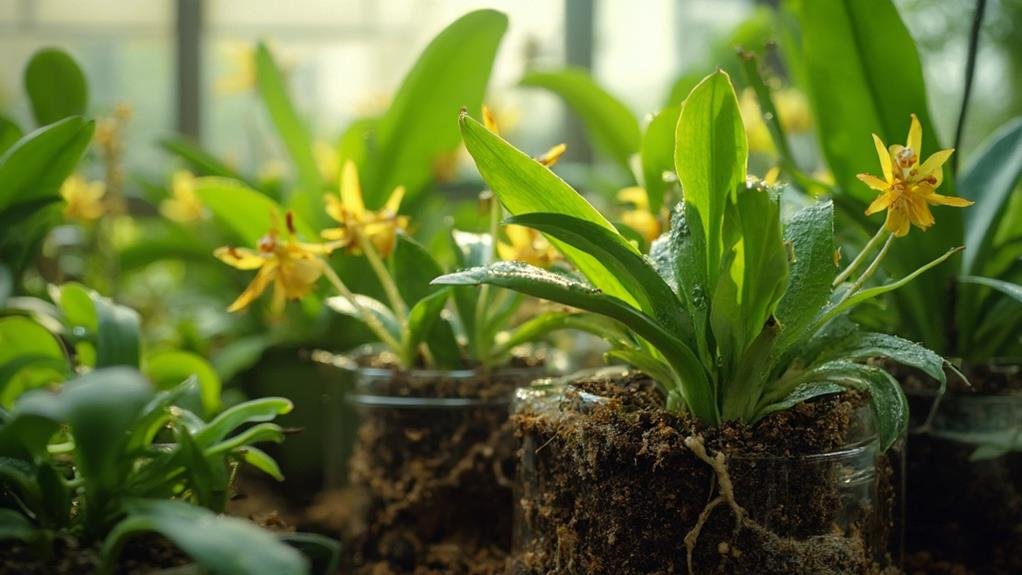
Air circulation isn't the only factor that affects your orchids' health; the right soil and potting choices play a significant role too.
When selecting soil, aim for a well-draining mix specifically designed for orchids. These mixes often contain materials like bark, perlite, or sphagnum moss, which help provide the aeration and drainage your orchids crave.
When it comes to potting, choose pots with drainage holes to prevent water from pooling at the bottom. An appropriate pot size is crucial; too large can lead to excessive moisture retention, while too small can restrict root growth.
Consider using a clear pot to monitor root health—healthy roots should appear white or green, indicating they're thriving.
Lastly, remember that repotting is an essential practice. Orchids benefit from being repotted every one to two years, as this refreshes the growing medium and gives roots more space.
If you're dedicated to the well-being of your orchids, investing time in soil and potting choices will guarantee they flourish, bringing beauty and joy to your indoor space.
Signs of Stress in Orchids
Orchids can be resilient, but even these hardy plants can show signs of stress when their environment isn't ideal. As a caregiver, it's crucial to recognize these signs early to help them thrive. One of the most noticeable indicators is wilting leaves. If your orchids' leaves appear limp or droopy, they might be lacking water or suffering from root issues.
Another sign to watch for is discoloration. Yellowing leaves could suggest overwatering, while browning tips might indicate underwatering or exposure to harsh conditions. You should also pay attention to any unusual spots or marks on the leaves, which could point to pests or diseases.
If you notice a lack of blooming or stunted growth, it's a clear signal that your orchids are stressed. They may not be getting enough light or nutrients.
Best Practices for Thriving Orchids
To keep your orchids thriving, you'll want to create an ideal environment that addresses their specific needs. Start by choosing the right potting mix—something that offers excellent drainage, like a blend of bark, sphagnum moss, and perlite. This will keep the roots healthy and prevent rot.
Light is essential for orchids. Place them where they can receive bright, indirect sunlight. If you notice leaves turning yellow, they might be getting too much sun. Conversely, dark green leaves could signal insufficient light.
Watering is another key factor. Water your orchids when the top inch of the mix feels dry. Be careful not to overwater; it's better to underwater than to drown them. Make sure your pots have drainage holes.
Humidity plays a significant role too. Orchids thrive in humidity levels of 50-70%. If your home is dry, consider using a humidity tray or a room humidifier.
Frequently Asked Questions
Can I Use Tap Water for My Orchids?
You can use tap water for your orchids, but be cautious. It often contains chlorine and minerals that may harm them. Let it sit out for 24 hours to reduce chemicals before watering.
How Often Should I Fertilize My Indoor Orchids?
You should fertilize your indoor orchids every two to four weeks during their growing season. Adjust the frequency based on their response to nutrients, ensuring you're nurturing them for vibrant blooms and healthy growth.
What Pests Are Common on Indoor Orchids?
Common pests on indoor orchids include aphids, mealybugs, spider mites, and scale. You'll want to regularly inspect your plants, keeping an eye out for any signs of these pests to guarantee your orchids thrive.
Can Orchids Thrive in Low-Light Conditions?
Orchids can struggle in low-light conditions, but certain varieties tolerate it better. You'll need to monitor their health closely, providing enough indirect light, and adjusting care to keep them thriving despite those challenging conditions.
How Do I Repot an Orchid Safely?
To repot an orchid safely, gently remove it from its pot, shake off old media, trim any dead roots, and place it in fresh orchid mix. Water lightly and provide indirect sunlight for recovery.
Conclusion
To sum up, understanding the greenhouse effect is essential to keeping your indoor orchids healthy and thriving. By avoiding common mistakes, maintaining proper temperature and humidity, and providing adequate light, you'll create the perfect environment for your plants. Don't forget about ventilation and soil considerations, as they play a crucial role too. Keep an eye out for signs of stress, and with these best practices, you'll enjoy vibrant blooms and lush greenery in your home.