

If you're struggling to keep your orchids thriving, you're not alone. Many enthusiasts overlook the importance of humidity, which plays an essential role in their health. By exploring simple yet effective techniques, like creating a microclimate around your plants, you can greatly improve their growing conditions. But what specific methods and tools make the biggest difference? Understanding these key strategies could be the turning point for your orchid care routine.
Key Takeaways
- Group orchids together to create a microclimate that enhances humidity levels effectively.
- Utilize humidity trays filled with water and pebbles for a low-effort humidity boost.
- Incorporate small humidifiers to maintain consistent humidity levels in the environment.
- Regular morning misting helps provide moisture without the risk of overnight excess.
- Monitor humidity with hygrometers to ensure levels remain within the ideal 40%-70% range.
Understanding Orchid Humidity Needs

When it comes to keeping your orchids thriving, understanding their humidity needs is vital. Orchids generally prefer humidity levels between 40% and 70%. If you want your orchids to flourish, you need to create an environment that mimics their natural habitat, which often includes tropical elements.
Different orchid species have varying humidity requirements, so it's important to research the specific needs of the types you're caring for. You might notice that your orchids' leaves can give you clues about their humidity levels. If they're curling or turning brown, it's a sign they might be too dry. On the other hand, if you see mold or fungus, that could indicate excessive moisture.
To serve your orchids best, consider placing them in a location with good air circulation while still providing the humidity they crave. Regularly misting your orchids can help, but be careful not to overdo it.
You want to strike a balance that keeps both you and your orchids happy. By understanding and meeting their humidity needs, you're setting the stage for vibrant blooms and healthy growth.
Effective Humidity-Boosting Techniques
Creating the right humidity levels for your orchids can be easily achieved with a few effective humidity-boosting techniques.
One great method is to group your orchids together. By placing them close, you'll create a microclimate that helps maintain higher humidity around them.
Another simple technique is to use a humidity tray. Fill a shallow tray with pebbles and add water, ensuring the water level is below the pot's base. As the water evaporates, it'll naturally increase the humidity around your plants.
Misting your orchids can also be beneficial, but do it wisely. Lightly mist your orchids in the morning to give them moisture without creating excess humidity overnight, which could lead to mold.
Consider incorporating a small humidifier in the room where you keep your orchids. This device can consistently provide the right humidity levels, ensuring your orchids thrive.

Lastly, you can place a bowl of water near your orchids. As the water evaporates, it'll add moisture to the air.
With these techniques, you're well on your way to creating a lush environment that supports healthy, vibrant orchids.
Innovative Tools for Humidity Control

To effectively manage humidity levels for your orchids, consider utilizing innovative tools designed specifically for this purpose.
Humidity meters are essential; they provide real-time feedback on moisture levels, allowing you to adjust your environment promptly. Look for models with alerts that notify you when humidity dips below ideal levels, so you can take immediate action.
Another fantastic tool is the ultrasonic humidifier. These devices create fine mist, increasing humidity without saturating the air. You'll find them useful in maintaining a consistent environment, particularly during dry months.
Pair your humidifier with a hygrometer for precise monitoring.
If you prefer a natural touch, consider humidity trays filled with water and pebbles. This simple setup can enhance humidity levels around your orchids without much effort.
Adding a few decorative stones can even make it visually appealing, serving as a conversation starter for fellow orchid enthusiasts.
Common Mistakes to Avoid
Maintaining the right humidity for your orchids can be a delicate balance, and avoiding common mistakes is vital for their health. One error you might make is overwatering. While orchids do thrive in humid environments, too much water can lead to root rot. Always check the potting medium before watering.
Another mistake is neglecting air circulation. Stagnant air can foster mold and mildew, so guarantee your orchids have enough airflow. You can achieve this by placing them in a well-ventilated space or using fans.
Don't overlook the importance of the right humidity level. Orchids typically prefer humidity levels between 40% and 70%. If you find your environment is too dry, consider using a humidifier or placing a tray of water with pebbles under the pot.
Lastly, don't forget to monitor your orchids closely. Changes in leaves or blooms can signal humidity issues. By being attentive, you can adjust conditions before problems arise.
These small adjustments can make a significant difference, guaranteeing your orchids thrive and flourish, allowing you to share their beauty with others.
Long-Term Care for Healthy Orchids
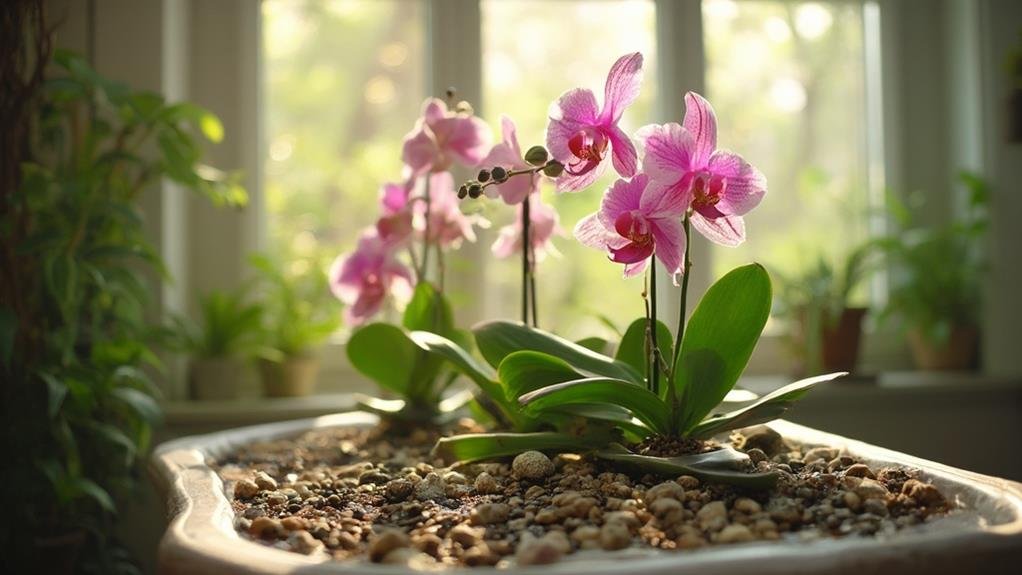
Long-term care for your orchids involves a commitment to their unique needs, guaranteeing they remain vibrant and healthy for years to come.
To truly serve these beautiful plants, start by understanding their specific light requirements. Most orchids thrive in bright, indirect sunlight, so be mindful of their placement.
Next, focus on watering. Orchids prefer to dry out slightly between waterings, typically every 1-2 weeks. Check the potting medium—if it feels dry to the touch, it's time to water. Use room-temperature water and guarantee proper drainage to prevent root rot.
Fertilizing is also essential. Use a balanced orchid fertilizer every month during the growing season. This nourishes your plants and encourages blooming.
Humidity plays a significant role too. Aim for 40-60% humidity; if your home is dry, consider using a humidity tray or misting them occasionally.
Frequently Asked Questions
Can I Use Tap Water for My Orchids' Humidity Needs?
You can use tap water for your orchids, but it's best to let it sit for 24 hours first. This helps chlorine dissipate, creating a healthier environment for your beautiful plants to thrive.
How Often Should I Check Humidity Levels for My Orchids?
You should check humidity levels for your orchids at least once a week. Keeping a consistent eye on their environment helps you adjust conditions quickly, ensuring your orchids thrive and continue to bring joy to others.
Are There Specific Orchids That Require Less Humidity?
Yes, some orchids thrive in lower humidity, like the Cattleya and Dendrobium. You'll find them easier to care for if your environment's drier. Just guarantee they still get adequate light and air circulation!
What's the Ideal Room Temperature for Optimal Humidity?
For ideal humidity, you'll want to maintain a room temperature between 65°F and 75°F. This range encourages moisture retention, creating a comfortable environment for your plants to thrive and flourish beautifully in your care.
Can Humidity Levels Affect Orchid Blooming?
Yes, humidity levels greatly affect orchid blooming. When you maintain higher humidity, your orchids thrive, producing more vibrant flowers. You should monitor and adjust humidity to create the ideal environment for their stunning blooms.
Conclusion
By implementing these humidity hacks, you can create the perfect environment for your orchids to thrive. Grouping your plants, using humidity trays, and incorporating small humidifiers are all effective strategies to maintain those essential moisture levels. Remember to avoid common mistakes and guarantee good air circulation for ideal growth. With a little effort, you'll enjoy vibrant blooms and healthy plants year-round. Embrace these techniques, and watch your orchids flourish like never before!