

If you've ever struggled to keep your orchids blooming consistently, you might want to contemplate the night-time trick that can make a significant difference. By simply adjusting the temperature and light conditions at night, you can create an environment that encourages these delicate flowers to thrive. It's all about understanding their natural rhythms and providing the right cues. But before you rush to make changes, there are common pitfalls to avoid that could undermine your efforts. Discovering these could be the key to your success.
Key Takeaways
- Ensure a 10-15 degree Fahrenheit temperature drop at night to stimulate blooming processes in orchids.
- Provide complete darkness for several hours at night to trigger growth hormones necessary for flowering.
- Maintain humidity levels around 40-60% during the night to support overall orchid health and blooming potential.
- Regularly check potting medium moisture, allowing slight drying between waterings to prevent root rot.
- Consistently follow a routine for temperature, light, and humidity to promote healthy growth and blooming cycles.
Understanding Orchid Needs
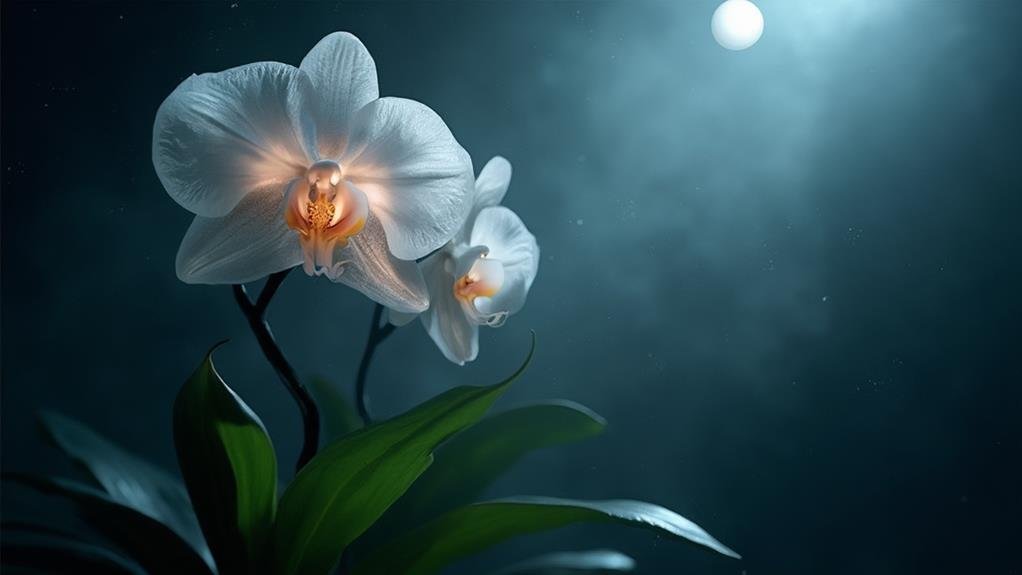
Orchids have specific needs that can sometimes feel overwhelming, but understanding them is key to successful cultivation.
First, you'll want to pay close attention to their watering requirements. Orchids generally prefer to dry out slightly between waterings, so check the potting medium regularly. When you do water, make sure to give them a good soak, allowing water to drain completely.
Light is another critical factor. Orchids thrive in bright, indirect sunlight, so positioning them near a window can help. However, be cautious of direct sunlight, which can scorch their leaves.
Temperature plays a crucial role too. Most orchids enjoy a stable environment, ideally between 65°F and 75°F during the day and slightly cooler at night.
Lastly, humidity is essential for your orchids' health. Aim for a humidity level of around 40-60%. You might consider using a humidity tray or misting them occasionally.
The Importance of Night Conditions
Creating the right night conditions for your orchids is fundamental for their overall health and blooming potential. Orchids thrive on a balance of light and darkness, and nighttime plays a significant role in this equation. When the sun sets, they need a period of rest to recover from the day's energy expenditure. If you neglect these nighttime conditions, you risk compromising their growth and flowering cycles.
During the night, temperatures should drop slightly to mimic their natural habitat. This temperature fluctuation helps to stimulate their physiological processes, encouraging blooming. Additionally, maintaining humidity levels is critical. Orchids appreciate a humid environment, and nighttime can be an opportunity to create that ideal humidity without the stress of daytime heat.
You'll also want to make sure your orchids receive complete darkness for several hours. This darkness triggers important growth hormones that promote flower development.
Implementing the Night-Time Trick

To maximize the benefits of night-time conditions for your orchids, implement a simple trick that can enhance their blooming potential.

Start by ensuring your orchids experience a significant drop in temperature at night. Ideally, aim for a difference of about 10 to 15 degrees Fahrenheit compared to daytime temperatures. You can achieve this by moving them to a cooler area or using fans to circulate the air around them.
Next, consider adjusting the light exposure. Orchids thrive with bright, indirect light during the day but need darkness at night to trigger the blooming process. Make sure to turn off any artificial lights that might interfere with their natural rhythm.
Additionally, maintain humidity levels around your orchids. You can do this by placing a tray of water with pebbles beneath the pots. This will create a humid microclimate that supports their growth.
Lastly, be consistent with this routine. Orchids appreciate stability in their environment, so try to keep the temperature, light, and humidity levels steady.
Common Mistakes to Avoid
While implementing the night-time trick can greatly boost your orchids' blooming potential, it's easy to make some common mistakes that could hinder their growth.
One major error isn't providing enough darkness. If your orchids don't experience a consistent, dark period, they won't trigger the blooming response you're aiming for.
Another mistake is overexposing them to light during the day. While orchids need sunlight, too much direct light can scorch their leaves, stunting their growth. Be cautious about your light conditions and adjust them as needed.
Additionally, avoid inconsistent watering schedules. Orchids thrive on a regular watering routine. If you let them dry out too much or overwater them, you risk damaging their roots.
It's also essential to guarantee proper humidity levels. If your environment is too dry, it can stress your orchids, making them less likely to bloom.
Lastly, don't rush the process. Patience is key—give your orchids time to adapt to the night-time trick.
Tips for Long-Lasting Blooms

Achieving long-lasting blooms with your orchids requires a few key strategies that can make a significant difference.
First, pay attention to light conditions. Orchids thrive in bright, indirect sunlight, so place them near a window that filters the light. Too much direct sun can scorch their leaves, while too little can stunt their growth.
Next, consider your watering schedule. Orchids prefer to dry out slightly between waterings, so check the potting medium. Water them thoroughly, then let them drain completely. Overwatering can lead to root rot, which will impact blooming.
Humidity is also essential. Orchids flourish in a humid environment, ideally around 50-70%. You can increase humidity by placing a tray of water alongside your orchids or misting them regularly.
Additionally, feed your orchids with a balanced fertilizer every two weeks during the growing season. This nourishment can support vibrant blooms.
Lastly, don't forget to prune spent flowers. This encourages new growth and can prolong the blooming cycle.
With these tips, you can create a nurturing environment that guarantees your orchids continue to serve beauty and joy in your space.
Frequently Asked Questions
Can I Use Artificial Light for Night Conditions?
Yes, you can use artificial light to create night conditions. Just guarantee it mimics natural light cycles. This approach helps you maintain a healthy environment for your plants, enhancing their growth and blooming potential effectively.
How Often Should I Water Orchids During Blooming?
You should water your orchids every 5 to 10 days during blooming, ensuring the potting mix dries slightly between waterings. Keep an eye on humidity levels to maintain their health and vibrant blooms.
What Temperature Is Ideal for Night-Time Orchid Care?
For night-time orchid care, you should aim for a temperature between 60°F and 70°F. This range helps your orchids thrive, promoting healthy growth and vibrant blooms. Keep them cozy, and they'll flourish beautifully.
Do Different Orchid Types Require Different Night Treatments?
Yes, different orchid types do require varied night treatments. You should research each variety's specific needs, adjusting temperatures and humidity levels accordingly to guarantee your orchids thrive and bloom beautifully for those you care for.
How Long Do Orchid Blooms Typically Last?
Orchid blooms typically last anywhere from a few weeks to several months, depending on the species and care you provide. By ensuring proper light, water, and nutrients, you can help prolong their stunning display.
Conclusion
By creating the right night-time conditions for your orchids, you can enjoy vibrant, continuous blooms. Remember to maintain that essential temperature drop and provide complete darkness to stimulate growth hormones. Avoid common mistakes, like inconsistent routines, and keep humidity levels high for the best results. With these tips in mind, you'll nurture your orchids to thrive and brighten your space with beautiful flowers all year round. Happy gardening!