
You might think that orchids, with their delicate beauty, are cultivated in pristine conditions, but the truth is far more troubling. Unsustainable farming practices and heavy pesticide use not only jeopardize local ecosystems but also put workers in perilous situations. As demand grows, the consequences ripple out, leading to habitat destruction and endangered species. So, what can you do to guarantee that your appreciation for these flowers doesn't come at a dire cost? Understanding the full scope of the orchid industry's impact is just the beginning of this important conversation.
Key Takeaways
- Heavy pesticide use in orchid cultivation poses serious environmental and health risks, harming wildlife and contaminating waterways.
- Unsustainable harvesting practices threaten orchid species with extinction, exacerbated by habitat destruction and deforestation.
- Labor conditions in the orchid industry are poor, with workers facing long hours, low pay, and unsafe environments.
- The global orchid trade creates economic instability for growers while negatively impacting local ecosystems.
- Consumer choices in purchasing orchids directly influence environmental practices and labor conditions in the orchid industry.
Unsustainable Farming Practices
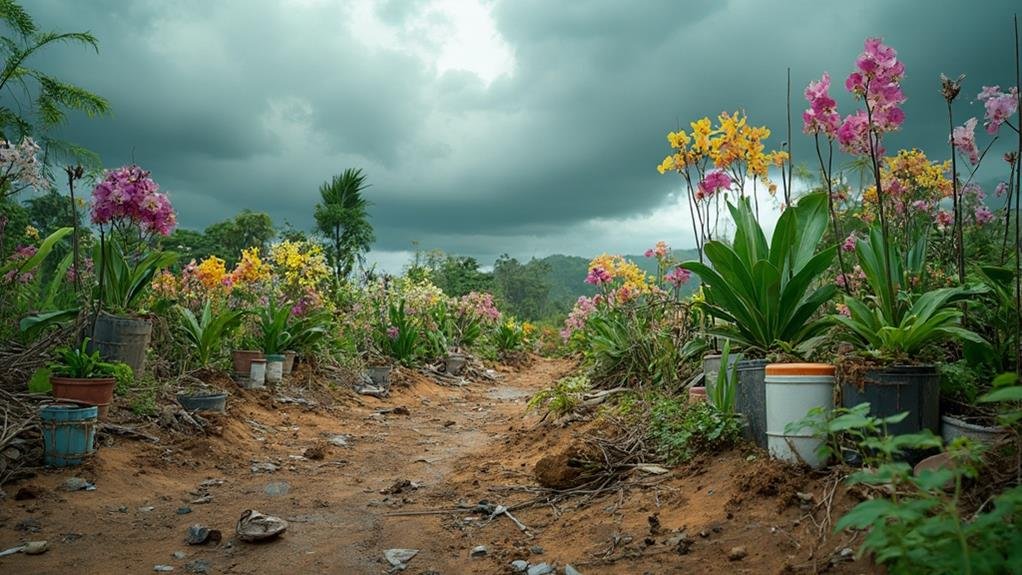
Unsustainable farming practices in the orchid industry are more common than you might think. When you consider how many orchids are cultivated globally, it's alarming to realize that many growers prioritize profit over sustainability. These practices often involve heavy pesticide use and the exploitation of natural resources, which can lead to soil degradation and water scarcity.
You might wonder how these choices affect communities. Unsustainable farming can disrupt local ecosystems, harming both wildlife and the people who rely on these environments for their livelihoods. It's disheartening to see that while some growers might focus solely on maximizing yield, they overlook the long-term consequences of their actions.
As someone who desires to serve others, you can advocate for change by supporting growers who embrace environmentally friendly practices. Look for orchids that come from certified sustainable sources, and share this knowledge with friends and family.
Environmental Impact of Orchids
When you consider the orchid industry, you can't ignore the environmental impact it brings.
Habitat destruction and pesticide use threaten ecosystems, while urgent conservation efforts are needed to protect these delicate plants.
It's essential to recognize how your choices can influence the future of orchids and their habitats.
Habitat Destruction Concerns
The orchid industry, worth billions globally, often overlooks its significant environmental impact, particularly habitat destruction. As you explore your passion for these beautiful plants, it's essential to understand how demand directly affects their natural environments.
Many orchids grow in specific ecosystems, and when collectors or commercial growers source them from the wild, they often strip entire areas of their natural flora. This not only threatens the orchids themselves but also the myriad of species relying on those ecosystems.
You might be surprised to learn that some orchids are at risk of extinction due to this unsustainable harvesting. The land cleared for cultivation further exacerbates the problem, leading to deforestation and loss of biodiversity.

As you consider your involvement in the orchid community, remember that supporting sustainable practices is critical. Choosing to buy from responsible growers who prioritize conservation can help protect these delicate ecosystems.
You have the power to make informed choices that support both the beauty of orchids and the health of our planet. By advocating for responsible sourcing and raising awareness, you can contribute to a more sustainable future for the orchid industry.
Pesticide Usage Risks
In pursuit of vibrant blooms, many orchid growers turn to pesticides, often overlooking the potential risks these chemicals pose to the environment. While pesticides can effectively manage pests, they can also have unintended consequences that affect local ecosystems.
You mightn't realize that these chemicals can leach into soil and waterways, harming beneficial insects, birds, and aquatic life. By using pesticides indiscriminately, you risk creating imbalances in nature.
For instance, beneficial insects, which help control pest populations, may be killed off, leading to even greater pest issues down the line. Additionally, pesticide runoff can contaminate nearby habitats, impacting not only wildlife but also the communities that rely on clean water sources.
As someone who values the well-being of others and the environment, it's crucial to reflect on sustainable alternatives. Integrated pest management (IPM) techniques, like promoting natural predators or using organic solutions, can reduce reliance on harmful chemicals.
Conservation Efforts Needed
As orchid cultivation continues to grow, the urgent need for conservation efforts has never been more apparent. You mightn't realize it, but many beautiful orchid species are now endangered due to habitat loss and over-exploitation.
It's crucial for you to support initiatives that protect these delicate ecosystems and guarantee sustainable practices within the orchid industry.
Getting involved means advocating for responsible sourcing. When you purchase orchids, seek out growers who prioritize conservation and sustainability. By doing this, you not only help protect the environment but also support the livelihoods of local communities that depend on these plants.
You can also educate others about the importance of preserving native orchid species. Share information about the threats they face and encourage your friends and family to care for their plants responsibly.
Participating in local conservation programs or botanical gardens can further amplify your impact.
Every small action contributes to a larger movement. Together, you can make a difference in preserving our planet's biodiversity and guaranteeing that orchids continue to thrive for generations to come.
Your efforts in conservation can help balance the beauty of orchids with the health of our ecosystems.
Labor Conditions in Cultivation

Cultivating orchids often hides a troubling reality beneath its beauty: labor conditions for workers can be harsh and exploitative. Many workers in the orchid industry face long hours, minimal pay, and unsafe working environments. If you're passionate about supporting ethical practices, it's crucial to understand the real cost behind the stunning blooms.
You might be surprised to learn that many laborers, often migrants seeking better opportunities, endure physical strain and lack basic rights. They may work in extreme temperatures without proper breaks or protective gear, putting their health at risk.
Additionally, some farms rely on misleading contracts, trapping workers in cycles of debt and dependency.
By choosing to support fair trade and ethically sourced orchids, you can make a difference. Look for certifications that guarantee workers receive fair wages and safe working conditions. Engaging with reputable vendors who prioritize transparency can help you contribute to positive change in the industry.
Your choices matter. By advocating for the rights of those who cultivate these exquisite flowers, you not only elevate your gardening experience but also support a movement toward dignity and respect for all workers in the orchid industry.
The Role of Pesticides
Pesticides play a significant role in the orchid industry, often used to protect these delicate plants from pests and diseases. While you may appreciate the beauty and elegance of orchids, it's crucial to understand the implications of pesticide use. Many growers rely heavily on these chemicals, believing they're necessary for maintaining healthy crops. However, this reliance can lead to serious environmental and health concerns.
When you support the orchid industry, consider the potential impact of pesticides on workers and local ecosystems. Some growers mightn't follow safety protocols, exposing laborers to harmful substances. This situation can affect not only their health but also the surrounding wildlife and waterways.
As someone who values ethical practices, you can choose to purchase orchids from growers who prioritize sustainable methods. Look for certifications that indicate responsible pesticide use or organic growing practices.
Global Trade and Its Consequences

The global trade of orchids presents a complex web of consequences that ripple through economies and ecosystems alike. As you navigate this vibrant industry, consider how your choices influence not just the beauty of these flowers, but also the lives of those who cultivate them. Many growers, often in developing countries, rely on the orchid trade for their livelihoods.
However, fluctuations in demand can lead to instability, impacting their economic security. Moreover, the environmental ramifications of orchid cultivation can be significant. The demand for exotic varieties often results in overharvesting in their natural habitats, threatening biodiversity.
You mightn't realize that some orchids are at risk of extinction due to unsustainable practices driven by global market pressures. As you appreciate the elegance of these flowers, reflect on the broader implications of your purchasing decisions. Supporting sustainable practices and ethical sourcing can help mitigate negative impacts.
Your awareness and choices can contribute to a more equitable and environmentally friendly orchid industry. By prioritizing responsible trade, you can guarantee that orchids continue to thrive both in beauty and sustainability for generations to come.
Consumer Awareness and Responsibility
When you consider buying orchids, it's essential to recognize the impact your choices have on both the environment and the people involved in their production. Many orchids come from regions where labor practices can be exploitative, and unsustainable farming methods can harm local ecosystems.
By being aware of these issues, you empower yourself to make informed decisions that contribute to positive change.
Before purchasing, take a moment to research the brands or nurseries you're considering. Look for those that prioritize ethical sourcing and sustainable cultivation practices. Supporting growers who treat their workers fairly and use eco-friendly methods not only benefits the planet but also uplifts communities.
You can also advocate for greater transparency in the orchid industry. Share your findings with friends and family, encouraging them to think critically about their own purchases.
Each time you choose to invest in ethically produced orchids, you send a message that you value both the environment and the well-being of others.
Alternatives to Conventional Orchids
Exploring alternatives to conventional orchids can lead you to more sustainable and ethical choices. Consider native orchids, which not only thrive in their natural environments but also support local ecosystems. By choosing these plants, you're helping to preserve biodiversity and encourage local wildlife.
You might also explore the world of sustainable floriculture. Look for growers who practice eco-friendly cultivation methods, such as organic farming or permaculture. These growers prioritize environmental health and often provide you with plants that are free of harmful chemicals, ensuring a safer choice for your home and community.
Another option is to adopt a more minimalist approach to your plant collection. Instead of purchasing multiple orchids, consider investing in a single, high-quality plant that you can nurture over time. This approach not only reduces demand for mass-produced orchids but allows you to develop a deeper connection with your plant.
Lastly, consider supporting local botanical gardens or community initiatives that focus on orchid conservation. By participating in these programs, you contribute to a greater cause while also enjoying the beauty of orchids in a responsible way. Your choices can make a difference!
Frequently Asked Questions
What Types of Orchids Are Most Commonly Affected by These Practices?
You might notice Phalaenopsis, Cattleya, and Dendrobium orchids are commonly impacted. These popular varieties often suffer from unsustainable practices, which can harm their growth and overall health, affecting both beauty and availability for enthusiasts.
Are There Certifications for Sustainably Grown Orchids?
Yes, there are certifications for sustainably grown orchids. Look for labels like Rainforest Alliance or Fair Trade, which guarantee ethical practices. Supporting these certified growers helps promote environmental responsibility and better conditions for those involved in orchid cultivation.
How Can I Identify Eco-Friendly Orchid Suppliers?
To identify eco-friendly orchid suppliers, look for certifications like Rainforest Alliance or Fair Trade. Research their practices online, ask about their sourcing, and prioritize those who emphasize sustainability and ethical growing methods. You'll make a difference!
What Are the Financial Impacts on Local Farmers?
Local farmers often face financial strain due to fluctuating market prices and increased competition. By supporting eco-friendly practices, you can help guarantee their sustainability, boosting their income while promoting a healthier environment for everyone involved.
Are There Any Health Risks Associated With Orchid Pesticides?
Yes, there are health risks associated with orchid pesticides. You could encounter skin irritations or respiratory issues from exposure. It's crucial to use protective gear and follow safety guidelines to minimize these potential health hazards.
Conclusion
The orchid industry's dark side is hard to ignore, and it's up to you to make a difference. By choosing ethically sourced orchids and supporting sustainable practices, you can help protect both the environment and the workers behind these beautiful plants. Your awareness and purchasing decisions can drive change, encouraging growers to adopt better methods. Let's push for a future where orchids thrive without harming the planet or its people—every choice you make counts.