
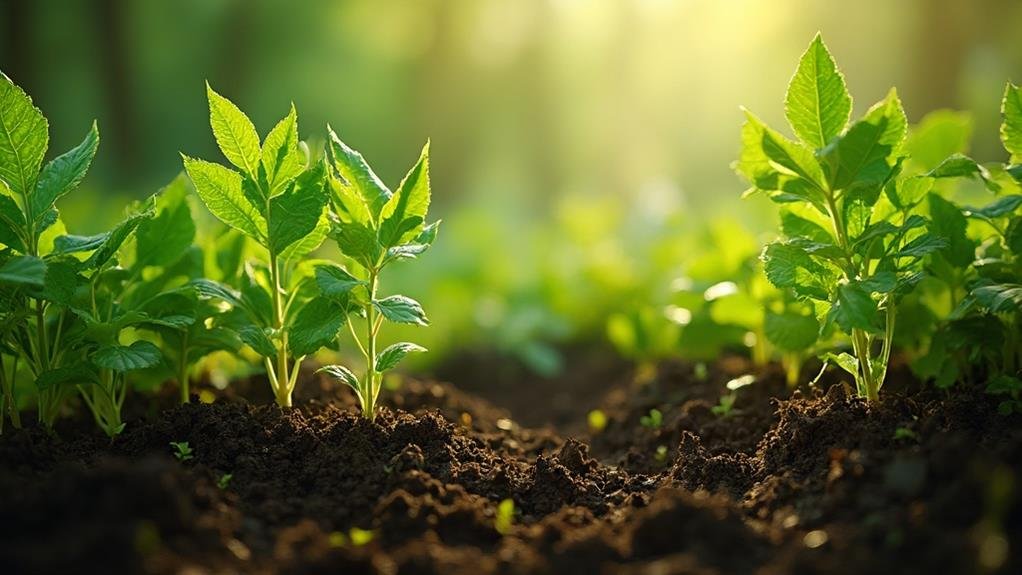
You might think that achieving healthy seedlings requires expensive products and complex techniques, but that's not the whole story. The real secret lies in understanding the soil and creating the right environment for growth. By focusing on organic nutrients and proper moisture, you can cultivate robust plants without breaking the bank. Yet, there are key elements and common pitfalls that even seasoned growers overlook. What if you could reveal the full potential of your seedlings with just a few adjustments? Let's explore how you can transform your gardening approach.
Key Takeaways
- Use high-quality seeds from reputable sources to ensure robust germination and growth potential.
- Maintain optimal soil moisture and avoid overwatering to prevent root rot.
- Gradually acclimatize seedlings to outdoor conditions to minimize transplant shock.
- Implement balanced nutrient intake with both macronutrients and micronutrients for healthy growth.
- Provide adequate light and space for seedlings to develop strong, sturdy structures.
Understanding Seedling Biology
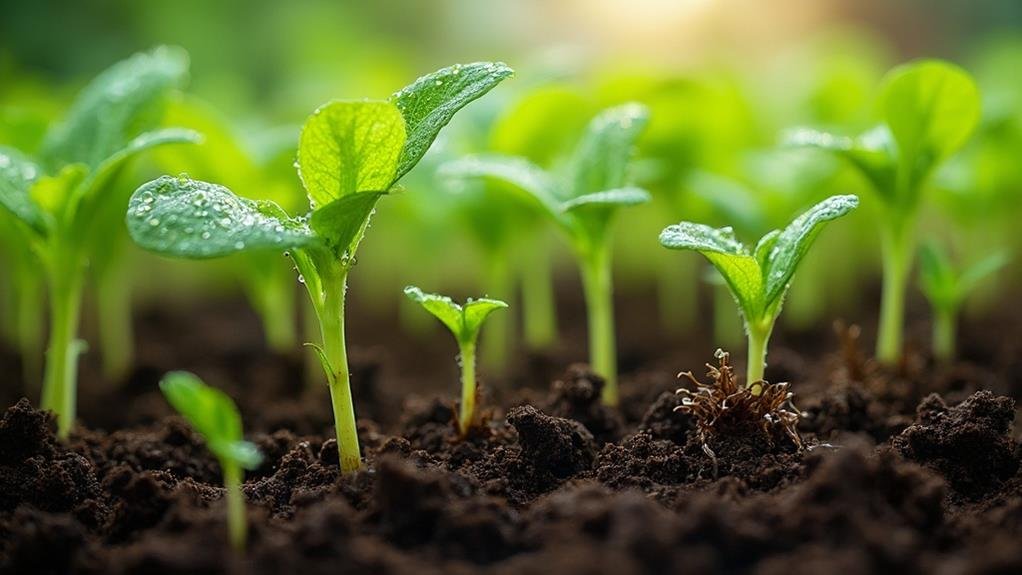
Understanding the intricate biology of seedlings is essential for any grower aiming for a successful crop. When you start with seeds, you're not just planting them in soil; you're igniting a complex process that requires your attention. Each seed holds genetic information that determines its growth patterns and resilience.
As a grower, you need to know that seedlings rely heavily on their cotyledons for initial nourishment. These first leaves act like solar panels, capturing sunlight and photosynthesizing energy.
The shift from seed to seedling involves delicate hormonal changes, where auxins and gibberellins play pivotal roles in root and shoot development.
You'll also want to understand the role of the soil. Healthy microbial life supports nutrient uptake, fostering robust growth.
It's about creating an environment where your seedlings can thrive, and that begins with appreciating their biological needs.
Best Practices for Seed Germination
Successful seed germination is essential for your gardening success, and there are several best practices to guarantee your seeds sprout effectively.
First, choose high-quality seeds from reputable sources. This assures you're starting with the best materials.
Next, pay attention to the planting depth; different seeds have unique requirements, so follow the guidelines on the seed packets.
Moisture is critical during germination. Keep the soil consistently damp but not waterlogged. Using a spray bottle can help maintain the right moisture level without overdoing it.

Additionally, confirm proper temperature; most seeds prefer a warm environment, so consider using a heat mat if your space is chilly.
Light also plays an important role. Once the seeds sprout, they need adequate light to grow strong. If natural light is insufficient, consider using grow lights to give them a boost.
Nutrients That Boost Growth
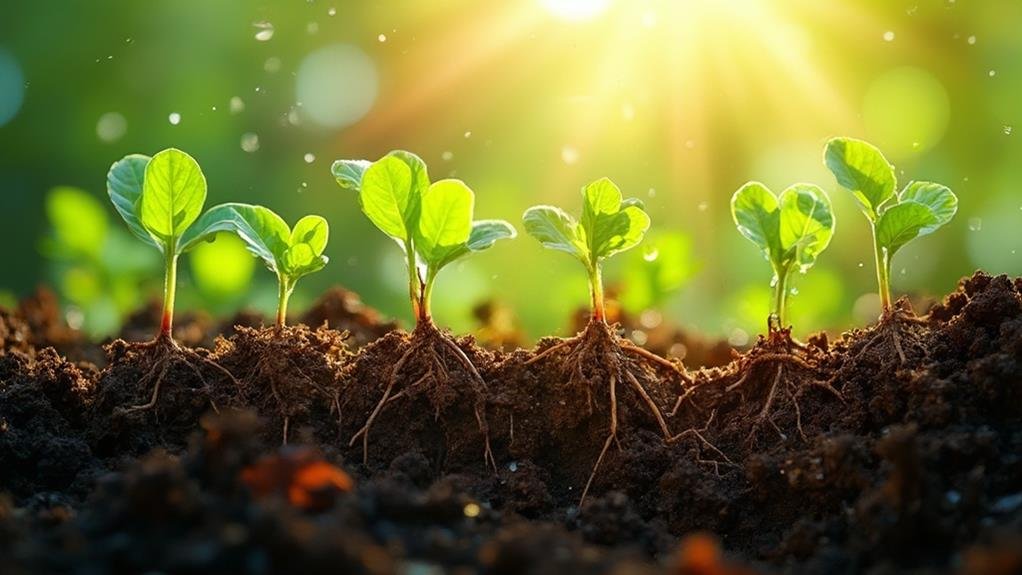
Nutrients are the lifeblood of your plants, fueling their growth and vigor. To guarantee your seedlings thrive, you'll want to focus on the essential macronutrients: nitrogen, phosphorus, and potassium.
Nitrogen promotes lush foliage, helping your plants establish a strong foundation. Phosphorus is essential for root development and flower production, while potassium enhances overall plant health and resilience.
In addition to these key nutrients, don't overlook micronutrients like calcium, magnesium, and iron. Calcium strengthens cell walls, leading to sturdier plants, while magnesium plays a significant role in photosynthesis. Iron is necessary for chlorophyll production, making certain your plants can absorb sunlight effectively.
You can boost nutrient absorption by maintaining ideal soil pH levels, which allows your plants to access these crucial elements.
Using organic fertilizers, like compost or well-rotted manure, will also enrich your soil, creating a nurturing environment for your seedlings.
Common Mistakes to Avoid
While it's easy to get caught up in the excitement of growing seedlings, many common mistakes can hinder your success. One major pitfall is overwatering. It might feel like you're nurturing your plants, but too much water can lead to root rot and stunted growth. Instead, check the soil moisture before watering to verify it's just right.
Another mistake is neglecting light requirements. Seedlings need plenty of light to thrive, so place them in a well-lit area or use grow lights. Insufficient light can cause them to become leggy and weak, making it harder for them to flourish later on.
Don't forget about temperature, either. Extreme fluctuations can stress your seedlings. Aim for a consistent temperature that suits the specific plants you're growing.
Lastly, avoid crowding your seedlings. They need space to grow, so verify they've enough room to expand their roots and absorb nutrients.
Transitioning Seedlings to Outdoors
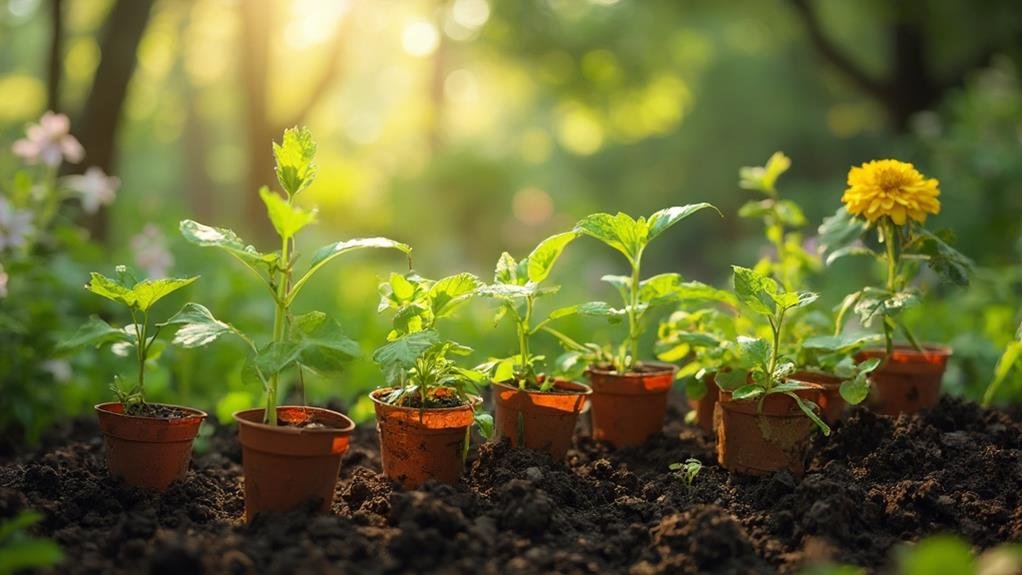
As you prepare to shift your seedlings outdoors, it's important to acclimate them gradually to their new environment. This process, often called "hardening off," helps your plants adjust to the sun, wind, and temperature changes they'll encounter outside.
Start by placing your seedlings in a sheltered spot for a couple of hours each day. Gradually increase their exposure to sunlight and outdoor conditions over a week or two.
During this time, monitor their moisture needs closely. Seedlings can dry out quickly in the wind, so make sure you keep them hydrated without overwatering. If you notice any signs of stress, like wilting leaves, bring them back indoors for a bit until they recover.
Choose a cloudy day or late afternoon to transplant your hardened seedlings. This timing minimizes shock and helps them settle into their new home more comfortably.
After planting, water them well and consider adding mulch to retain moisture.
Frequently Asked Questions
What Are the Best Seedling Varieties for Beginners?
For beginners, consider easy-to-grow seedlings like tomatoes, radishes, and lettuce. They thrive in various conditions, require minimal care, and yield delicious results, making your gardening experience enjoyable while you share fresh produce with others.
How Can I Tell if My Seedlings Are Healthy?
To tell if your seedlings are healthy, check their color for vibrancy, guarantee they're sturdy, and look for signs of pests or disease. Healthy seedlings grow strong and should have consistent moisture without being waterlogged.
Should I Use Organic or Synthetic Fertilizers?
When choosing between organic and synthetic fertilizers, consider your garden's needs. Organic options enrich soil health and promote sustainability, while synthetic fertilizers provide quick results. You'll want to balance immediate growth with long-term soil health.
When Is the Right Time to Transplant Seedlings?
You should transplant seedlings when they have two to three true leaves and the weather's consistently warm. Timing guarantees they adapt well, thrive in their new environment, and ultimately serve your gardening goals effectively.
Can Seedlings Be Grown Indoors Year-Round?
Yes, you can grow seedlings indoors year-round! Just guarantee they receive adequate light, warmth, and humidity. By creating the right environment, you'll help your plants thrive, allowing you to share your gardening passion with others.
Conclusion
By focusing on nurturing healthy soil and providing the right conditions, you can reveal the secret to thriving seedlings without breaking the bank. Remember to prioritize balanced nutrients from organic sources and maintain consistent moisture. Pay attention to light, temperature, and spacing to set your seedlings up for success. With these simple practices, you'll not only save money but also cultivate robust plants that flourish in your garden. Embrace these tips, and watch your seedlings thrive!