
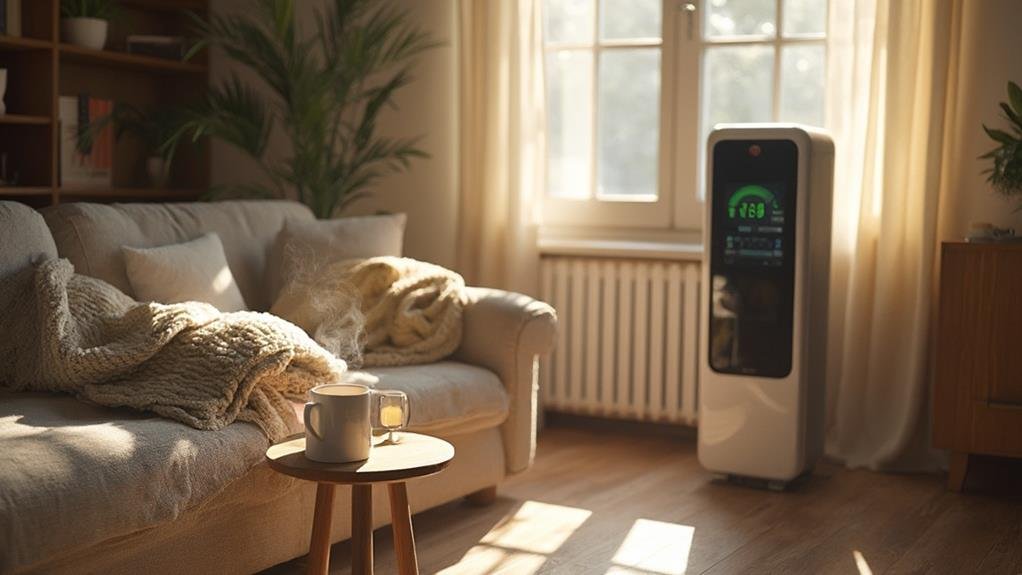
You might think controlling the temperature in your home is as simple as adjusting the thermostat, but there's a nuanced approach that often goes unnoticed. Balancing temperature with humidity, air circulation, and proper insulation can transform your environment into a haven of comfort. Yet, many overlook the subtle interplay of these factors, leaving potential benefits on the table. What if you could access a level of comfort you didn't know existed? Understanding this secret could change how you experience your space entirely.
Key Takeaways
- Achieving thermal comfort requires balancing temperature, humidity, and airflow for optimal well-being.
- Proper insulation and high R-value materials are crucial for maintaining stable indoor temperatures and reducing energy costs.
- Effective air circulation through fans and open windows prevents discomfort by distributing temperature evenly.
- Humidity control with dehumidifiers or humidifiers enhances comfort by regulating moisture levels in the air.
- Smart thermostats optimize energy efficiency and comfort by learning user preferences and adjusting temperatures automatically.
Understanding Thermal Comfort

When it comes to feeling comfortable in your environment, understanding thermal comfort is key. It's all about achieving that perfect balance between temperature, humidity, and air movement that makes you feel at ease.
If you're looking to serve others effectively, you'll want to guarantee their comfort too. Start by paying attention to the temperature settings in the spaces you manage. A room that's too hot or too cold can distract from the tasks at hand, making it harder for everyone to feel focused and productive.
Aim for a temperature range that's generally accepted, around 68 to 72 degrees Fahrenheit, but be ready to adjust based on personal preferences.
Also, consider the clothing people wear. Layers can help individuals stay comfortable regardless of your chosen temperature.
Don't forget about airflow—ensuring good ventilation can make a huge difference. Opening windows or using fans can help circulate air and keep the environment feeling fresh.
The Role of Humidity
Humidity plays an essential role in how we perceive temperature and comfort. When the air's moisture content increases, it can make warm temperatures feel even hotter, leading to discomfort. Conversely, low humidity can cause cooler air to feel chillier than it actually is. Understanding this relationship can help you create a more pleasant environment for yourself and those around you.
To serve others effectively, consider the humidity levels in your space. If you're in a humid climate, using dehumidifiers can help maintain a comfortable atmosphere, especially during summer months.
On the other hand, in drier areas, adding moisture through humidifiers can prevent dryness and enhance comfort.
You might also want to encourage others to stay hydrated in high humidity, as the body works harder to cool itself, leading to increased sweat. This can be a great conversation starter about the importance of both temperature and humidity in overall well-being.

Ultimately, by being mindful of humidity, you can elevate the comfort of your surroundings. This simple adjustment can have a significant impact, ensuring everyone feels their best, no matter the weather outside.
Air Circulation Effects

Effective air circulation is essential for maintaining a comfortable indoor environment, as it helps distribute temperature evenly throughout a space. When you guarantee proper airflow, you're not just creating comfort for yourself but also for those around you. Stagnant air can lead to hot or cold spots, making it difficult for everyone to enjoy a pleasant atmosphere.
Consider using ceiling fans or strategically positioned portable fans to promote airflow. These devices can help push warm air down in winter and circulate cooler air in summer. By doing this, you'll create a more inviting environment for your family, friends, or guests.
Additionally, keep vents clear and unobstructed. Furniture, curtains, or other items should never block airflow. This simple adjustment can greatly enhance the effectiveness of your heating and cooling systems.
You might also want to open windows occasionally to let fresh air in, especially during mild weather. This not only improves air quality but also balances indoor temperatures naturally.
Importance of Insulation
When it comes to maintaining a comfortable temperature in your space, insulation plays a vital role.
It not only boosts energy efficiency but also comes in various materials to suit your needs.
Understanding these benefits and options can help you make informed choices for your home or office.
Energy Efficiency Benefits
Maximizing energy efficiency in your home starts with understanding the critical role insulation plays. When you prioritize insulation, you're not just enhancing comfort; you're also reducing energy consumption. Proper insulation acts as a barrier, keeping the warmth in during winter and the cool air in during summer. This means your heating and cooling systems won't have to work as hard, leading to lower energy bills.
By serving others through your energy-efficient choices, you're contributing to a sustainable environment. When your home is well-insulated, it reduces reliance on fossil fuels and minimizes your carbon footprint. This commitment to energy efficiency not only benefits your household but also supports the greater community by promoting a healthier planet.
Investing in insulation might seem like a small step, but the ripple effects can be significant. You're not only creating a more comfortable living space for yourself and your loved ones, but you're also setting an example for your neighbors.
Encourage them to evaluate their insulation needs, too. Together, you can foster a culture of energy efficiency that positively impacts everyone. Your efforts in making your home more efficient truly make a difference for future generations.
Types of Insulation Materials
Choosing the right insulation material is essential for achieving ideal energy efficiency in your home. By selecting high-quality insulation, you're not just improving your own comfort; you're also contributing to a more sustainable environment for everyone.
There are several types of insulation materials to evaluate. Fiberglass is popular due to its affordability and effectiveness in various climates. It's non-combustible and resistant to moisture, making it a safe choice.
Spray foam insulation, on the other hand, provides excellent air sealing and can fill gaps that other materials might miss. This results in a more airtight home, reducing energy loss considerably.
Cellulose insulation, made from recycled paper, is an eco-friendly option that also offers impressive thermal performance. Its density helps in soundproofing as well, benefiting both you and your neighbors.
Materials and Temperature

Many people underestimate how essential materials are in temperature control. The right materials can make a significant difference in maintaining comfortable environments, whether you're serving guests in a home or managing a community center.
For instance, using thermal mass materials like concrete or stone can absorb heat during the day and release it at night. This property helps regulate indoor temperatures naturally, reducing the need for mechanical heating or cooling.
Choosing insulation materials is equally important. High-performance options like spray foam or cellulose slow down heat transfer, keeping spaces cozy in winter and cool in summer. When you select materials with higher R-values, you're enhancing the efficiency of your temperature control efforts.
Additionally, consider reflective materials for roofs and walls. These can deflect sunlight, minimizing heat absorption and keeping interiors cooler.
Adaptation to Temperature Changes
When the temperature shifts, your body kicks into gear to maintain balance through thermoregulation.
You can also adapt to different climates using various acclimatization techniques that help ease the adjustment.
As seasons change, understanding these processes can make all the difference in how you feel and perform.
Human Body Thermoregulation
The human body constantly adapts to temperature changes through a remarkable process called thermoregulation. This intricate system helps maintain your core temperature, ensuring that you function effectively regardless of external conditions.
When you're exposed to heat, your body sweats to cool down, enabling a revitalizing release of heat. Conversely, in cold environments, you shiver, generating warmth through muscle activity.
You may not realize it, but your body also employs blood vessel dilation and constriction to manage heat loss. In warmer weather, blood vessels near the surface of your skin expand, allowing excess heat to escape. In colder situations, they constrict, preserving core warmth.
This adaptability is essential not just for your comfort, but for your overall health.
As you serve others, understanding thermoregulation can help you support those who may struggle with temperature changes. Whether it's ensuring the elderly stay warm or helping children cool off during play, your awareness can make a significant difference.
Environmental Acclimatization Techniques
Adapting to temperature changes involves a range of environmental acclimatization techniques that can help you thrive in varying climates.
One effective method is gradually exposing yourself to different temperatures. Start by spending short periods in cooler or warmer environments, then slowly increase your time there. This allows your body to adjust without overwhelming it.
Another technique is to modify your clothing. Choose breathable fabrics in warm weather and layer up in colder conditions. This not only keeps you comfortable but also helps you adjust more easily to the changes around you.
Hydration plays a vital role, too. Staying well-hydrated helps your body regulate temperature better. Make sure to drink plenty of water, especially when shifting between extreme climates.
Lastly, consider your diet. Consuming foods rich in vitamins and minerals can boost your immune system, making it easier for you to adapt.
Incorporating seasonal fruits and vegetables can also support your body's acclimatization.
Impact of Seasonal Changes
As seasons shift, you'll notice how your body reacts to the changing temperatures. These fluctuations can impact your well-being, so it's essential to adapt effectively.
When winter's chill settles in, for instance, you might feel the urge to crank up the heat. But instead, consider layering your clothing to maintain warmth while conserving energy.
In spring, as temperatures rise, you may find yourself more active outdoors. Embrace this by staying hydrated and adjusting your meals to include lighter, fresher options. This not only aids your body's adaptation but also allows you to share nutritious meals with others.
Summer brings its own challenges, with heat making it easy to overheat. Keep your home cool with natural ventilation and encourage friends to join you for evening walks when it's cooler.
Come autumn, you can prepare for the temperature drop by incorporating cozy, hearty foods into your diet, promoting comfort for both you and your loved ones.
Smart Thermostat Benefits

Smart thermostats offer a range of benefits that can transform how you manage your home's climate. With their ability to learn your preferences, these devices adjust temperatures automatically, guaranteeing your family feels comfortable without you needing to lift a finger.
Imagine coming home to a perfectly warm or cool space, all thanks to your smart thermostat's intelligent programming.
Not only do these thermostats enhance comfort, but they also promote energy efficiency. By optimizing your heating and cooling schedules, you can considerably reduce energy usage, which translates to lower bills.
This is especially beneficial for families looking to cut costs while still providing a cozy environment for everyone.
Additionally, many smart thermostats come equipped with features like remote access, allowing you to adjust your home's temperature from anywhere.
This means you can guarantee your home is welcoming for guests or loved ones, even when you're not there.
With the ability to track energy consumption and provide insights, you'll be empowered to make smarter choices for your home and the environment.
Embracing a smart thermostat not only serves your family's needs but also contributes positively to the world around you.
Seasonal Adjustments
Seasonal adjustments are essential for maintaining ideal comfort and energy efficiency in your home. As the seasons change, so should your temperature settings. By making these adjustments, you not only enhance your comfort but also help your loved ones feel their best.
Start by lowering the thermostat a few degrees during the cooler months. This simple change can lead to significant savings on your energy bills while ensuring that everyone stays warm.
Similarly, during the hot summer months, consider raising the temperature slightly to reduce energy consumption without sacrificing comfort.
Don't forget to check and maintain your heating and cooling systems seasonally. Clean or replace filters, and schedule professional inspections to keep everything running smoothly.
These proactive steps not only serve your household but also extend the life of your equipment, benefiting future users.
Creating a Balanced Environment

Maintaining a comfortable home goes beyond just adjusting the thermostat; it involves creating a balanced environment that promotes overall well-being. To achieve this, consider factors like humidity, air quality, and natural light.
You can enhance your space by using humidifiers or dehumidifiers to maintain ideal humidity levels. This not only keeps your skin healthy but also helps prevent mold growth, ensuring a safe space for everyone.
Next, focus on air quality. Regularly change your HVAC filters and invest in air purifiers to keep allergens at bay. Cleaner air contributes to better health, making your home a sanctuary for your loved ones.
Lastly, embrace natural light. Position furniture to allow sunlight to flow in, creating a warm and inviting atmosphere. You might even consider using lighter curtains to maximize daylight exposure.
Frequently Asked Questions
How Does Color Choice Affect Room Temperature Perception?
Color choice greatly influences how you perceive room temperature. Lighter colors reflect light and create a cooler feel, while darker shades absorb heat, making spaces feel warmer. Choosing wisely can enhance comfort in your environment.
Can Plants Influence Indoor Temperature and Comfort Levels?
Yes, plants can definitely influence indoor temperature and comfort. They improve air quality, provide humidity, and create a calming atmosphere. Incorporating greenery into your space not only enhances aesthetics but also boosts overall well-being.
What Common Household Items Can Help Regulate Temperature?
You can use items like curtains, fans, or humidifiers to help regulate indoor temperature. They create shade, promote airflow, and add moisture, making your home more comfortable for you and those you care for.
How Does Body Heat Impact Shared Spaces?
Body heat can greatly affect shared spaces, causing discomfort if not managed. You'll want to adjust ventilation and dress appropriately, ensuring everyone feels comfortable and happy in the environment, promoting a more enjoyable experience for all.
Does the Time of Day Affect Indoor Temperature Significantly?
Yes, the time of day affects indoor temperature considerably. You'll notice morning and evening temperatures differ due to sunlight and outside conditions, impacting comfort levels for everyone. Adjusting accordingly can enhance shared space experiences for all.
Conclusion
To sum up, achieving the best thermal comfort isn't just about setting your thermostat. By balancing temperature, humidity, and air circulation, you can create a cozy environment that enhances your well-being. Don't underestimate the power of good insulation and smart technology; they make a significant difference. So, whether you're adjusting for the seasons or simply enjoying a comfortable space, remember that these elements work together to keep you feeling your best. Embrace this temperature control secret!