

If you're looking to elevate your indoor orchid care, you might want to contemplate the "Upside Down" method. This technique positions your orchids in a way that not only mimics their natural environment but also enhances drainage and airflow. You'll find that this simple shift can lead to healthier plants and more vibrant blooms. However, implementing this method isn't as straightforward as it seems, and you may encounter some pitfalls along the way. Curious about how to make it work effectively for your orchids?
Key Takeaways
- The Upside Down Method positions orchids for optimal drainage and air circulation, reducing root rot risk significantly.
- This method encourages stronger downward root growth, enhancing the overall vigor and health of the orchids.
- Improved visibility of leaves and blooms allows for better health monitoring and care adjustments.
- Adjusted watering schedules are necessary, often resulting in less frequent watering needs for orchids.
- The method fosters a sense of community among orchid enthusiasts, promoting shared knowledge and collaboration.
Understanding the Upside Down Method
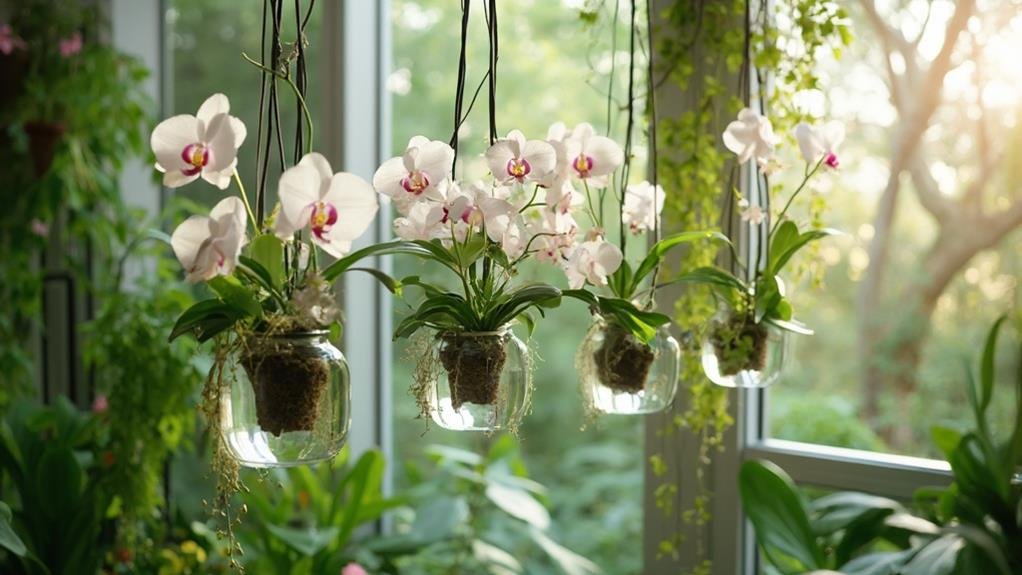
When it comes to indoor orchid care, understanding the Upside Down Method can revolutionize how you nurture your plants. This innovative approach emphasizes the importance of positioning your orchids in a way that mimics their natural habitat. By suspending your orchids upside down, you allow gravity to assist in drainage and air circulation, preventing excess moisture that can lead to root rot.
To implement this method, start by selecting a suitable container or support structure that holds your orchid securely while allowing the roots to hang freely. This position encourages the roots to grow downwards, which can enhance their strength and vigor.
You'll also notice improved visibility of your plant's leaves and blooms, making it easier to monitor their health. Be sure to adjust your watering schedule, as the upside-down position may require less frequent watering.
Keep an eye on humidity levels and provide adequate light, as these factors play significant roles in your orchid's well-being. By adopting the Upside Down Method, you're not just caring for your orchids; you're nurturing a flourishing ecosystem that can inspire others to appreciate the beauty of these remarkable plants.
Key Benefits for Orchid Care
Caring for orchids offers several key benefits that can enhance both your gardening experience and the health of your plants. By nurturing these beautiful blooms, you not only bring joy to your own life but also enrich the environment around you. Orchids can improve air quality, making your home a healthier space for everyone.
When you engage in orchid care, you cultivate a sense of responsibility and mindfulness. This practice connects you to nature and encourages you to be more attentive to the needs of living things, fostering empathy and patience.
Additionally, your efforts can inspire those around you, sparking interest in gardening and plant care within your community.
The satisfaction gained from successfully nurturing your orchids is immense. Watching them thrive under your care can boost your confidence and motivate you to explore more about horticulture.
Plus, sharing your knowledge and experiences with friends or family can create strong bonds and encourage collaboration.

Ultimately, caring for orchids not only beautifies your space but also serves as a gentle reminder of the importance of nurturing life. As you invest in their growth, you'll find that it enriches your own life in unexpected ways.
Step-by-Step Implementation Guide
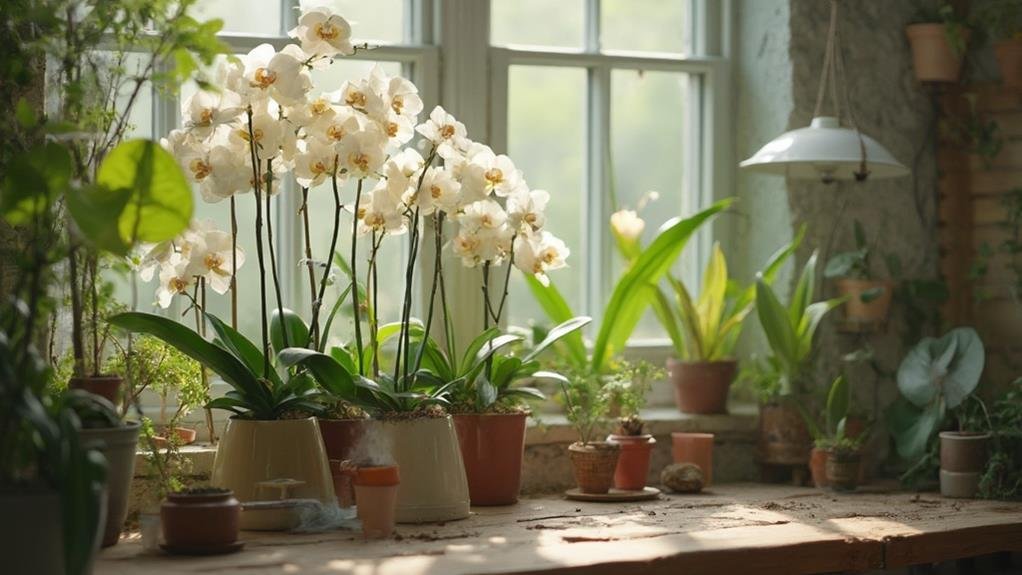
Orchid care requires a systematic approach to guarantee your plants thrive. To begin, select a suitable pot that allows for proper drainage. Use a well-aerated medium, such as bark or sphagnum moss, to support healthy root growth.
Next, gently remove your orchid from its current pot and inspect the roots. Trim any dead or rotten roots to encourage new growth.
Once repotted, place your orchid in a location with indirect light, ensuring it gets the right amount of sunlight without direct exposure. Water your orchid thoroughly, allowing excess water to drain out, and then let the medium dry slightly before the next watering. This method helps prevent root rot.
Fertilize every two weeks during the growing season with a balanced orchid fertilizer. Be sure to dilute it to half-strength to avoid shocking the plant.
Additionally, maintain humidity levels around 50-70% by misting your orchid or using a humidity tray.
Common Mistakes to Avoid
Avoiding common mistakes is vital for successful indoor orchid care. Many people mistakenly overwater their orchids, thinking more is better. Remember, orchids thrive in well-drained conditions, so water only when the potting medium feels dry.
Additionally, don't place your orchids in direct sunlight. While they do love light, too much can scorch their leaves. Instead, aim for bright, indirect light.
Another frequent error is neglecting to repot. Orchids need fresh potting medium every couple of years to guarantee proper aeration and nutrient absorption. Keep an eye on the roots; if they look cramped or the medium is breaking down, it's time to repot.
It's also important not to overlook temperature and humidity. Orchids prefer a stable environment, so avoid placing them near drafts or heating vents. Regularly check humidity levels; if the air is too dry, consider using a humidifier or pebble tray.
Lastly, resist the urge to fertilize too often. A balanced fertilizer every 2-4 weeks during the growing season is usually sufficient.
Success Stories From Orchid Enthusiasts
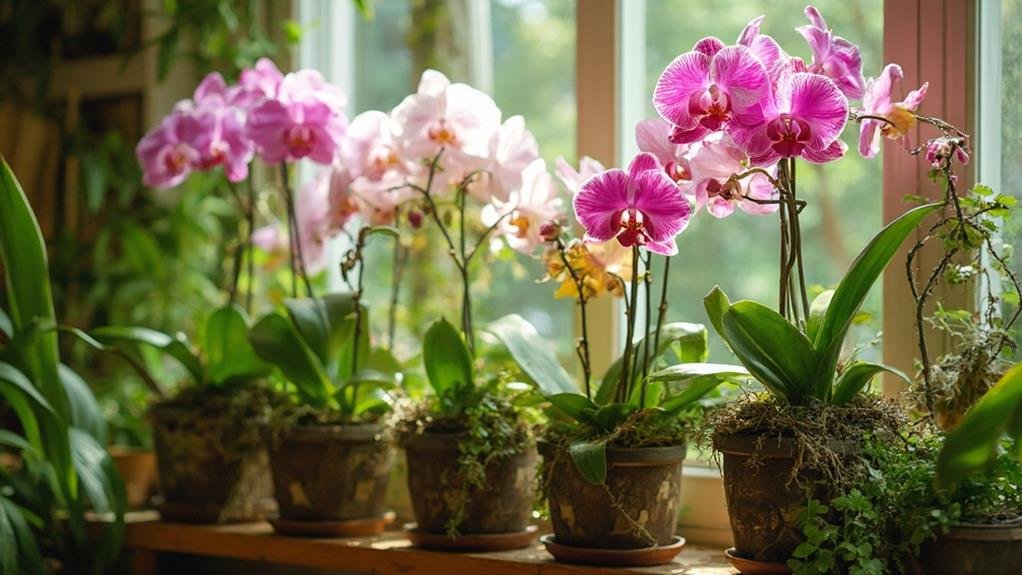
Many orchid enthusiasts have transformed their indoor spaces into vibrant gardens filled with stunning blooms. You might be surprised to hear about the incredible success stories that emerge from those who've embraced the 'Upside Down' method. This innovative technique has helped countless individuals nurture their orchids, creating lush displays that not only beautify their homes but also inspire others.
Take Sarah, for instance. She struggled with her orchids for years until she discovered this method. Once she flipped her orchids upside down, she noticed a significant improvement in their health and flowering. Her friends now marvel at the vibrant colors and fragrant blooms that light up her living room.
Then there's Michael, who decided to share his newfound knowledge with his local community. By hosting workshops, he's empowered fellow orchid lovers to adopt the 'Upside Down' method. His enthusiasm and commitment have fostered a supportive environment where everyone can learn and grow together.
These stories illustrate how a simple shift in care can lead to beautiful results. If you're willing to try this method, you might just find yourself inspiring others along the way, creating a vibrant community of orchid enthusiasts!
Frequently Asked Questions
Can I Use This Method for Other Houseplants?
You can definitely experiment with this method on other houseplants. Just make sure to observe how they respond, since each plant has unique needs. Adapt your approach based on their specific requirements for ideal growth.
What Type of Orchids Are Best Suited for This Method?
For this method, you'll find that Phalaenopsis and Cattleya orchids thrive best. They adapt well to changes and can benefit from the unique approach, enhancing their growth and blooming potential when cared for properly.
How Often Should I Rotate the Orchids?
You should rotate your orchids every couple of weeks to guarantee even light exposure. This practice helps promote balanced growth and healthy blooms, so don't hesitate to adjust their position regularly for ideal care.
Are There Specific Tools Required for This Method?
You don't need many tools for this method. A simple watering can, a sturdy support stake, and a humidity gauge can make a big difference. These tools help you nurture your orchids more effectively.
Is the Upside Down Method Suitable for Beginners?
Yes, this method's suitable for beginners! You'll find it simple and rewarding. Just remember to stay patient and attentive, and you'll cultivate beautiful orchids that bring joy to yourself and those around you.
Conclusion
Incorporating the Upside Down method into your orchid care routine can truly transform your indoor garden. By mimicking their natural habitat, you'll encourage healthier growth and vibrant blooms. Remember to follow the implementation guide and avoid common mistakes for the best results. With a little practice and patience, you'll be amazed by how your orchids thrive. So, grab your pots, flip them over, and watch your orchids flourish like never before! Happy gardening!