

You might think creating an orchid paradise in your home is complicated, but it's simpler than you'd expect. By choosing the right types of orchids and placing them in ideal locations, you can easily elevate your space. Consider how a few well-placed plants can transform your room from ordinary to extraordinary, but there's more to it than just selection and placement. The right care and design elements can make all the difference, and understanding these nuances could lead you to a flourishing indoor garden. What's the secret that ties it all together?
Key Takeaways
- Choose a variety of orchids, like Phalaenopsis and Cattleyas, to create visual interest with different colors, shapes, and fragrances.
- Position orchids near bright, indirect light sources, ideally south or east-facing windows, to ensure optimal growth.
- Use decorative pots that complement your interior decor and rotate orchids regularly for a fresh display.
- Incorporate complementary decor elements like greenery, textured baskets, and ambient lighting to enhance orchid aesthetics.
- Maintain proper humidity and temperature, ideally between 65°F to 80°F, to support healthy orchid growth throughout the year.
Choosing the Right Orchids

Choosing the right orchids for your collection can feel overwhelming, but it doesn't have to be. Focus on your goals and the needs of your future plants.
Start by considering the environment you can provide. Some orchids thrive in bright light, while others prefer shadier spots. Researching their specific care requirements will help you make informed choices.
Next, think about the types of orchids that resonate with you. Do you want vibrant colors, unique shapes, or fragrances that uplift?
Popular choices include Phalaenopsis for beginners, due to their resilience and beauty, and Cattleyas for their stunning blooms.
If you're enthusiastic to serve others, consider how you'll share your passion—gifting your blooms or hosting orchid workshops can spread joy.
Ideal Locations for Placement
Finding the ideal locations for your orchids can make a significant difference in their growth and blooming potential.
Start by placing them near a window that receives bright, indirect light. South or east-facing windows are often perfect, as they provide the sunlight orchids crave without the risk of scorching their delicate leaves.
Consider humidity levels, too. Orchids thrive in humidity, so placing them in kitchens or bathrooms can enhance their environment. If those spaces aren't suitable, you can use a humidity tray filled with water and pebbles beneath the pots to create a moist microclimate.
Avoid drafts and temperature extremes; orchids prefer a stable environment. Keeping them away from air conditioning vents and heating sources will help maintain the conditions they need to flourish.

Lastly, rotate your orchids periodically to guarantee all sides receive equal light exposure. This simple action will promote even growth and more symmetrical blooms.
Essential Care Tips
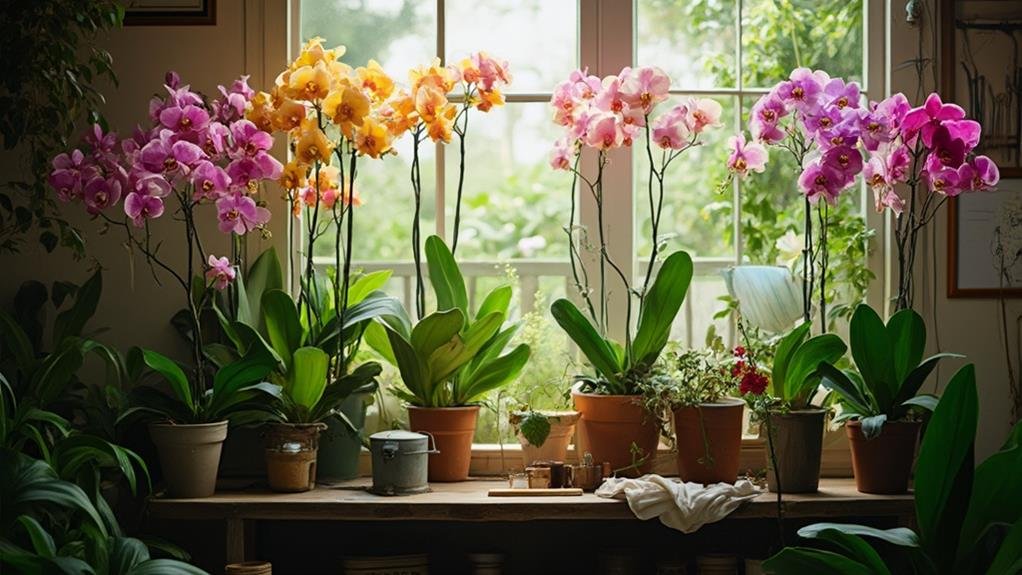
To keep your orchids thriving, you need to focus on three key aspects: light, water, and temperature.
Make sure they get the right amount of light without scorching their leaves, and water them properly to prevent root rot.
Also, pay attention to temperature, as orchids have specific ranges they prefer for ideal growth.
Ideal Light Conditions
Proper light conditions are essential for your orchids to thrive. These beautiful plants need bright, indirect light to flourish, so placing them near a window with filtered sunlight is ideal. Direct sunlight can scorch their delicate leaves, so consider using sheer curtains to diffuse the light.
You'll want to observe your orchids regularly; if the leaves turn yellow, they're likely getting too much sun. On the other hand, if the leaves are dark green and the plant isn't blooming, it mightn't be receiving enough light.
Orchids generally prefer a light intensity of around 1,000 to 2,000 foot-candles. You can achieve this by placing them in a room that receives plenty of natural light, but is shielded from harsh rays.
You may also want to rotate your orchids every few weeks to guarantee even light exposure, promoting balanced growth.
If natural light is limited, consider investing in grow lights specifically designed for orchids. These can provide the necessary spectrum of light your plants crave.
Proper Watering Techniques
Consistent watering is essential for keeping your orchids healthy and vibrant. To achieve this, you'll want to water your orchids thoroughly but infrequently. Start by checking the potting mix; when the top inch feels dry, it's time to water. Use room-temperature water, as cold water can shock the roots.
When watering, do so until water drains out of the bottom of the pot. This guarantees that the roots are getting enough moisture. Avoid letting your orchids sit in standing water, as this can lead to root rot. You'll find that orchids prefer to dry out a bit between waterings, so err on the side of less frequent watering rather than more.
During the warmer months, you might need to water more often, while in cooler months, you can cut back. Keeping a consistent schedule helps you monitor your orchids' needs better.
Lastly, consider the humidity of your environment. If it's low, you can mist your orchids or use a humidity tray to enhance moisture levels.
Optimal Temperature Range
Keeping your orchids healthy goes beyond watering; temperature plays a significant role in their well-being. Typically, orchids thrive in a temperature range of 65°F to 80°F during the day. At night, they prefer a cooler environment, ideally between 60°F and 70°F. This fluctuation mimics their natural habitat and encourages blooming.
If you want to create a perfect orchid paradise, be mindful of where you place them. Avoid drafts from windows or air conditioning vents, as sudden temperature changes can stress your orchids. Instead, find a stable spot that receives indirect light and maintains that ideal temperature range.
Monitoring temperature is key. You can use a simple thermometer to verify your orchids are comfortable. If your space tends to get too warm, consider using a fan to circulate air without directing it directly at the plants.
Conversely, if it gets too chilly, keep them away from cold drafts and consider using a small space heater if necessary.
Designing a Stunning Display
Creating a stunning display of orchids requires a keen eye for design and a touch of creativity. Start by selecting a focal point in your room, like a coffee table or a windowsill, where you can showcase your orchids beautifully. Use a variety of orchid types and colors to create visual interest. Group similar orchids together, but don't be afraid to mix and match for a more dynamic look.
Consider the heights of your orchids. Arrange taller varieties at the back or center, and shorter ones at the front. This creates depth and guarantees all your blooms get the attention they deserve.
Don't overlook the containers; choose pots that complement the colors of your orchids while also fitting your decor style. A cohesive color palette will tie your display together.
Lastly, remember to rotate your orchids occasionally. This not only promotes even growth but also refreshes the display for anyone visiting your home.
With these thoughtful arrangements, you'll create an inviting atmosphere that showcases your love for orchids and serves your guests with beauty and elegance. They'll appreciate the care and attention you've put into your stunning orchid paradise!
Complementary Decor Elements
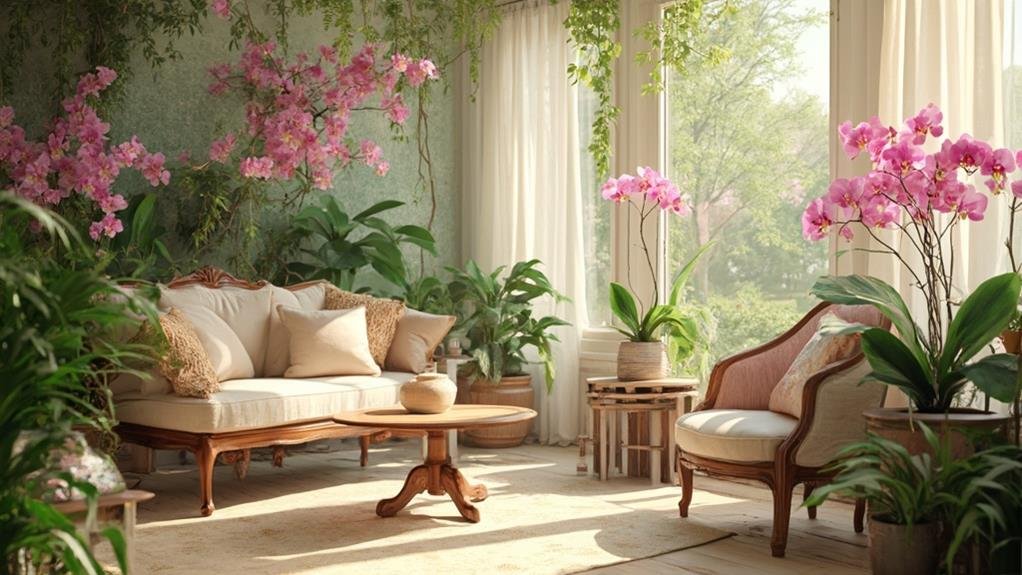
To enhance your orchid display, consider incorporating complementary decor elements that elevate the overall aesthetic. Think about using decorative pots that match your interior's color scheme. A sleek, modern pot can bring out the elegance of a phalaenopsis orchid, while a rustic terracotta pot might complement a more traditional setting.
Next, add layers with textures. A soft, woven basket can serve as a charming base for your orchid, while adding warmth to the room. Incorporate natural materials like wood or stone to create a harmonious vibe.
Lighting plays an essential role too. Use soft, ambient light to highlight your orchids, making them the focal point of your space. Place them near a window where they can bask in natural light, or use decorative lamps that cast a warm glow.
Lastly, consider pairing your orchids with other plants or decor items that share similar colors or shapes. This creates a cohesive look.
Seasonal Orchid Maintenance
As you enhance your orchid display with complementary decor elements, it's important to contemplate how seasonal changes can impact their care. Each season brings unique challenges and opportunities for your orchids.
In the colder months, you'll want to guarantee your orchids are kept warm and away from drafts. Lower humidity levels can also be an issue, so consider using a humidity tray or a room humidifier to maintain a comfortable environment.
During spring and summer, your orchids will thrive with increased light and warmth. Make certain to rotate them regularly to guarantee even growth and avoid sunburn. Regular watering is vital, but be mindful not to overdo it—allow the potting mix to dry out slightly between watering sessions.
As fall approaches, begin to adjust your watering and light exposure, preparing your orchids for the cooler months ahead. You might also want to repot them during this time if they've outgrown their containers.
Common Mistakes to Avoid
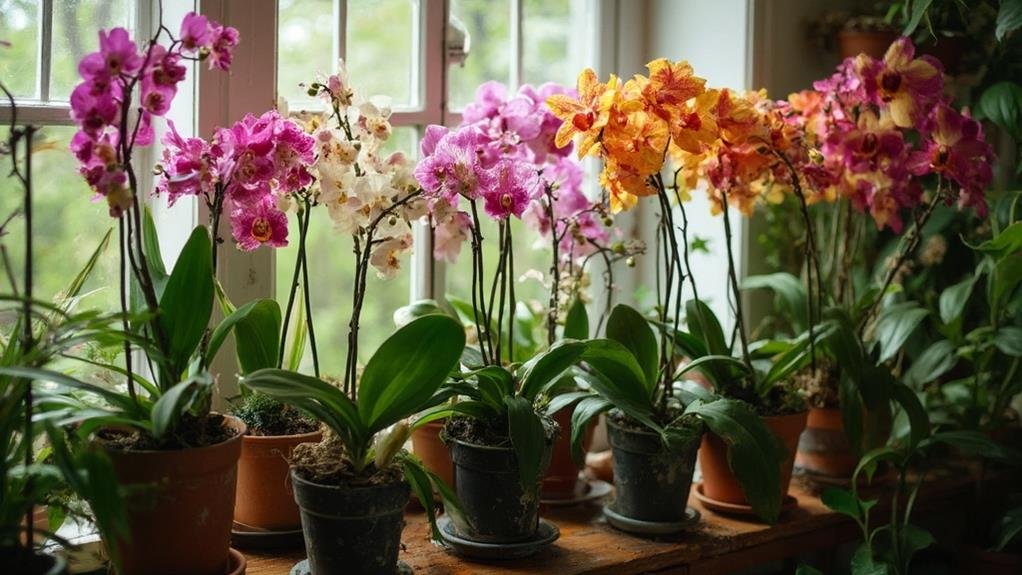
When caring for orchids, avoiding common mistakes can make all the difference in their health and longevity. One of the biggest errors you might make is overwatering. Orchids thrive in well-draining conditions, so it's vital to let the potting medium dry out between waterings. Instead of sticking to a rigid schedule, pay attention to the plant's needs.
Another common pitfall is poor lighting. Orchids generally prefer bright, indirect light. Placing them in direct sunlight can scorch their leaves, while too little light can stunt their growth. Adjust the location as needed to guarantee they receive the right amount of light.
Fertilizing too frequently is yet another mistake. While orchids benefit from nutrients, over-fertilizing can damage their roots. Use a balanced fertilizer every few weeks during the growing season, but cut back during dormancy.
Lastly, neglecting to repot your orchids can hinder their development. Aim to repot every couple of years to refresh the medium and check for any root issues.
Inspiring Orchid Paradise Examples
When creating your orchid paradise, think about elegant arrangements that showcase their beauty.
Colorful potting ideas can really make your orchids pop and enhance your space.
Plus, don't underestimate the impact of proper lighting; it can transform your orchids into stunning focal points.
Elegant Orchid Arrangements
Creating elegant orchid arrangements can transform any space into a serene paradise. When you arrange orchids, contemplate varying heights and textures to create visual interest. Start with a tall, striking orchid as your focal point, then layer shorter varieties around it. This not only draws the eye but also invites guests to appreciate the beauty from different angles.
For a sophisticated touch, choose a color palette that complements your decor. White and soft pink orchids can evoke a sense of calm, while vibrant purples and yellows add energy to the room. Mix in greenery like ferns or moss to enhance the natural feel.
Use decorative pots that resonate with your theme—ceramic for a classic look, or metallic for a modern flair.
Don't forget to contemplate placement; group arrangements on a well-lit table or a windowsill where they'll be admired.
Colorful Potting Ideas
Your choice of pots can greatly enhance the beauty of your orchids and elevate the overall aesthetic of your space. When you think about potting, consider vibrant colors that complement your orchids. A bright blue or a sunny yellow pot can bring a cheerful touch, especially when grouped with white or pastel blooms.
You might also want to experiment with textured pots, like woven baskets or ceramic pots with intricate designs. These can add depth and interest, making your orchid display truly enchanting.
For a more elegant look, choose pots in metallic shades like gold or copper that reflect light and draw attention to your lovely plants.
Don't forget about the size and shape of your pots! Tall, slender pots can create a striking vertical display, while shallow, wide pots can showcase multiple orchids together.
Mixing different sizes and colors can create a dynamic arrangement that serves as a focal point in any room.
Lighting for Orchids
Choosing the right pots sets the stage for your orchids, but lighting plays a pivotal role in their growth and vibrancy. To create an orchid paradise, you need to understand how light impacts their development. Orchids thrive in bright, indirect sunlight, so positioning them near east or west-facing windows is ideal. This way, they'll receive the gentle morning or late afternoon sun without getting scorched.
If natural light is limited, consider using grow lights. These specialized lights mimic sunlight and can be adjusted to provide the right intensity. Position the lights about 12 to 18 inches above your orchids, and keep them on for 12 to 14 hours a day, ensuring your plants receive the energy they need.
It's also essential to observe your orchids closely. If their leaves turn yellow, they might be getting too much light. Conversely, if they're stretching toward the light source, they may need more.
Frequently Asked Questions
Can Orchids Thrive in Low-Light Conditions?
Orchids can struggle in low-light conditions, but some varieties, like Phalaenopsis, do tolerate it better. If you provide just a bit more light, you'll see them thrive and bloom beautifully in your care.
How Often Should I Water My Orchids?
You should water your orchids every one to two weeks, depending on the humidity and temperature. Always check the potting mix; if it's dry an inch down, it's time to water them.
What Types of Soil Are Best for Orchids?
When choosing soil for your orchids, look for a well-draining mix, ideally with bark, sphagnum moss, or perlite. This helps prevent root rot and promotes healthy growth, ensuring your plants thrive beautifully.
Are There Any Orchids That Are Pet-Friendly?
Yes, some orchids are pet-friendly! Phalaenopsis and Dendrobium orchids are non-toxic to dogs and cats. You'll enjoy their beauty without worrying about your furry friends. Just guarantee they don't nibble on the leaves!
How Do I Propagate My Orchids Successfully?
To propagate your orchids successfully, you'll need a healthy plant. Cut a stem with at least two nodes, place it in a sterile medium, and keep it moist. Patience is key; roots will develop over time.
Conclusion
By following these simple tips, you can easily create your own orchid paradise at home. Choose the right orchids, place them in ideal spots, and provide the care they need to thrive. Designing a stunning display with complementary decor will enhance their beauty, while seasonal maintenance keeps them healthy. Avoid common mistakes, and you'll enjoy a vibrant, lush environment that brings joy to any room. Get ready to transform your space into an orchid haven!