Have you ever wondered why rare orchid species seem to flourish effortlessly in tropical rainforests?
The intricate web of interactions within these lush ecosystems holds the key to their thriving existence.
As you explore the fascinating adaptations and relationships that rare orchids have developed, you will uncover the captivating world of biodiversity that sustains these delicate yet resilient flowers.
The secrets behind their success may surprise you as we unravel the mysteries of their survival in the vibrant tapestry of the tropical rainforest.
Biodiversity in Tropical Rainforests
Explore the vibrant array of plant and animal species that thrive in the rich biodiversity of tropical rainforests. As you wander through the lush undergrowth, you'll encounter a mesmerizing variety of life forms. From colorful birds flitting among the canopy to elusive jaguars prowling the forest floor, the diversity of wildlife in these rainforests is truly astounding.
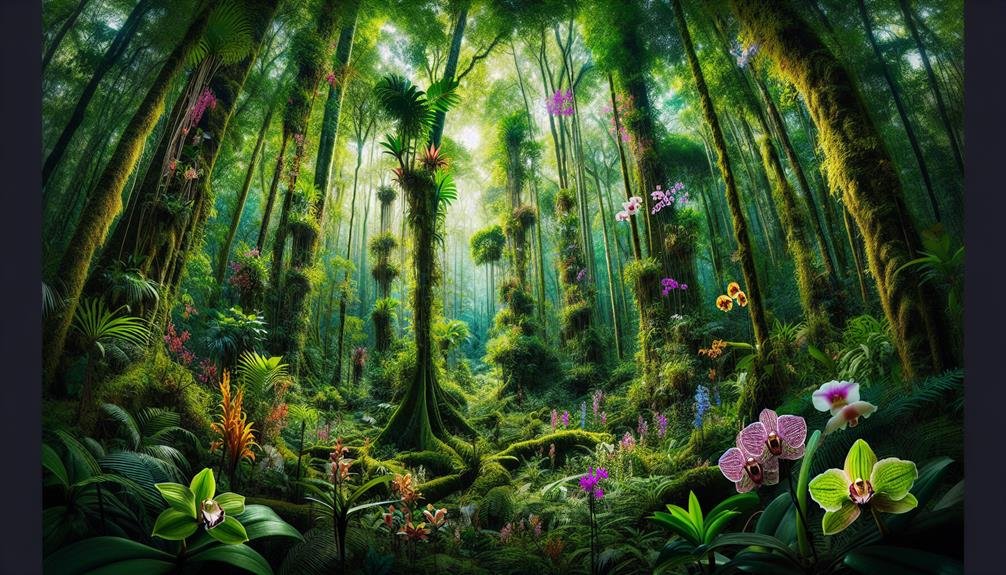
The tropical rainforests are teeming with life, with countless species coexisting in a delicate balance. Trees of all shapes and sizes stretch towards the sun, creating a dense canopy that provides shelter for a multitude of creatures. The symphony of sounds – the chirping of insects, the calls of monkeys, and the rustling of leaves – fills the air, immersing you in the vibrant tapestry of life that thrives here.
Every corner of the rainforest holds new surprises, from colorful frogs hidden among the foliage to intricate webs spun by industrious spiders. The interconnectedness of these species is a testament to the resilience and complexity of the ecosystem. Take a moment to appreciate the wonders of nature that unfold before you in the tropical rainforests.
Adaptations of Rare Orchids
In the intricate world of tropical rainforests, rare orchids have evolved remarkable adaptations to thrive in their unique environment. These exquisite flowers have developed specialized features that allow them to survive and flourish amidst the intense competition for resources. One of their key adaptations is their ability to grow as epiphytes, meaning they can attach themselves to trees and absorb nutrients and moisture from the air and surrounding debris. This strategy enables rare orchids to access essential resources without relying on roots buried in the ground.
Furthermore, rare orchids have evolved intricate relationships with pollinators, often developing elaborate shapes, colors, and scents to attract specific insects or birds for pollination. Some orchids mimic the appearance or scent of female insects to deceive males into pollinating them. This clever adaptation ensures successful reproduction, even in the challenging environment of the rainforest where resources are limited. Overall, the adaptations of rare orchids showcase the incredible diversity and ingenuity of nature in tropical rainforests.
Symbiotic Relationships With Organisms
Rare orchids in tropical rainforests form intricate symbiotic relationships with various organisms, contributing to their survival and reproduction in this diverse ecosystem. These orchids rely on pollinators like bees, butterflies, and hummingbirds to transfer pollen between flowers, enabling fertilization and seed production. In return, the orchids provide nectar as a food source for these pollinators, establishing a mutually beneficial partnership.

Additionally, rare orchids often engage in mycorrhizal associations with fungi in the soil. The orchids supply sugars to the fungi, while the fungi aid in nutrient uptake for the orchids, especially in nutrient-poor tropical soils. This symbiosis enhances the orchids' ability to thrive in challenging environments.
Furthermore, some orchid species develop relationships with specific tree species, using them as hosts for their growth. These epiphytic orchids attach themselves to tree branches, obtaining structural support and access to sunlight high above the forest floor. In return, the orchids don't harm the trees and contribute to the overall biodiversity of the ecosystem. These complex interdependencies highlight the importance of symbiotic relationships in the success of rare orchids in tropical rainforests.
Role of Microclimates in Thriving
In tropical rainforest ecosystems, the role of microclimates significantly impacts the thriving of rare orchid species. Microclimates are small-scale environmental conditions that vary from the surrounding area, creating unique habitats for orchids to flourish.
These microclimates can provide orchids with the specific temperature, humidity levels, and light conditions they need for optimal growth. For example, the dense canopy in rainforests creates pockets of cooler, moister air where orchids can thrive, shielded from direct sunlight that could be too harsh for them.
Additionally, microclimates formed by the proximity of water bodies or rocky outcrops can offer orchids the necessary moisture levels or stability for growth. Understanding these microclimates is crucial for conservation efforts as changes in these conditions can directly impact the health of orchid populations.
Conservation Efforts and Future Prospects
To ensure the continued thriving of rare orchid species in tropical rainforests, conservation efforts must focus on preserving the unique microclimates crucial for their growth. Protecting these specialized environments is essential to safeguarding the diversity and abundance of rare orchids. Conservation strategies should prioritize the maintenance of pristine rainforest habitats, as human activities like deforestation and climate change pose significant threats to orchid populations. Establishing protected areas, promoting sustainable land use practices, and implementing reforestation projects are key actions that can help conserve the delicate balance of orchid microclimates.
Furthermore, collaboration between governments, conservation organizations, and local communities is vital for the success of conservation initiatives. By working together, stakeholders can develop comprehensive plans that address the specific needs of rare orchid species and their habitats. Education and awareness programs can also play a crucial role in engaging the public and fostering a sense of responsibility towards protecting these valuable ecosystems. Through dedicated conservation efforts and a collective commitment to preserving tropical rainforests, there's hope for a future where rare orchid species continue to thrive in their natural environments.
Frequently Asked Questions
How Do Rare Orchids Contribute to the Overall Ecosystem Health in Tropical Rainforests?
Rare orchids contribute significantly to the overall ecosystem health in tropical rainforests. These delicate flowers play a crucial role in pollination, supporting biodiversity and ensuring the reproduction of various plant species.
Orchids also provide habitats for insects and animals, further enhancing the ecosystem's balance. By thriving in these diverse environments, rare orchids help maintain the intricate web of life that sustains the rainforest ecosystem.
Are There Any Cultural or Economic Benefits Associated With Rare Orchids in Tropical Rainforests?
There are indeed cultural and economic benefits linked to rare orchids in tropical rainforests. These flowers hold significant value in traditional ceremonies, symbolizing beauty and grace.
Additionally, rare orchids attract tourists and researchers, boosting local economies through ecotourism and scientific exploration.
What Are the Potential Threats to Rare Orchids in Tropical Rainforests, Aside From Human Impact?
Potential threats to rare orchids in tropical rainforests, aside from human impact, include climate change, habitat destruction due to natural disasters, and invasive species. These factors can disrupt the delicate balance required for orchids to thrive in their natural environment.
It's crucial to address these threats through conservation efforts and sustainable practices to ensure the continued survival of these beautiful and unique plant species in the rainforest ecosystem.
Do Rare Orchids Face Competition From Other Plant Species in Tropical Rainforests?
In tropical rainforests, rare orchids do face competition from other plant species. Due to the high biodiversity in these ecosystems, orchids must compete for resources like sunlight, water, and nutrients. This competition can be intense, but it also drives orchids to adapt and evolve unique strategies to thrive in their environment.
How Do Rare Orchids Disperse Their Seeds in Tropical Rainforests, and What Impact Does This Have on Their Population Distribution?
In tropical rainforests, rare orchids disperse their seeds through various methods like wind, water, or hitching a ride on animals.
This diverse dispersal strategy helps orchids reach new areas, promoting genetic diversity and increasing their population distribution.
Conclusion
In conclusion, rare orchid species are thriving in tropical rainforests due to their unique adaptations, symbiotic relationships with organisms, and the role of microclimates.
Conservation efforts are crucial in protecting these delicate ecosystems and ensuring the future survival of these beautiful plants.
By understanding the factors that contribute to their thriving, we can work towards preserving the biodiversity of tropical rainforests for generations to come.