
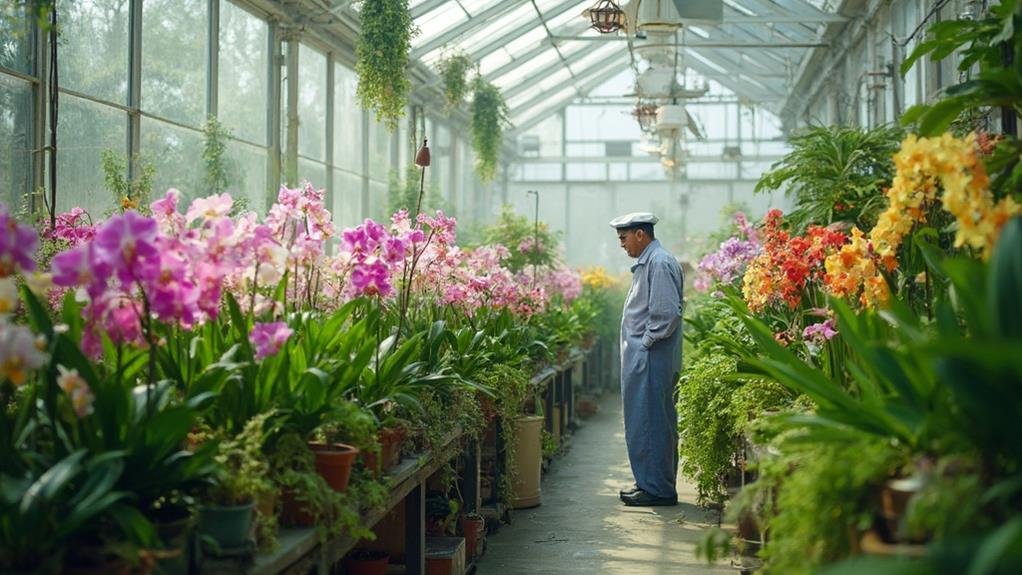
You might wonder why Asian orchid growers seem to sidestep the common challenges that often plague others in the field. Their success isn't just luck; it stems from a combination of traditional cultivation techniques and an acute understanding of their unique environments. By mastering local climate nuances and employing specific potting mixes, they create ideal conditions for growth. But it's not just about the plants themselves—there's a deeper strategy at play that intertwines community knowledge and sustainable practices. What if you could uncover the secrets behind these methods and apply them to your own growing experience?
Key Takeaways
- Asian orchid growers often utilize traditional growing techniques, fostering a deeper connection to their plants and enhancing care practices.
- They have a profound understanding of local climate, adapting their strategies for temperature, humidity, and light effectively.
- The use of tailored potting mixes ensures optimal drainage and aeration, preventing root suffocation and promoting healthy growth.
- Integrated Pest Management (IPM) practices are widely adopted, focusing on prevention and natural predators to minimize pest issues sustainably.
- Regular observation and seasonal adjustments to watering and fertilization routines lead to healthier orchids and reduced problems overall.
Traditional Growing Techniques
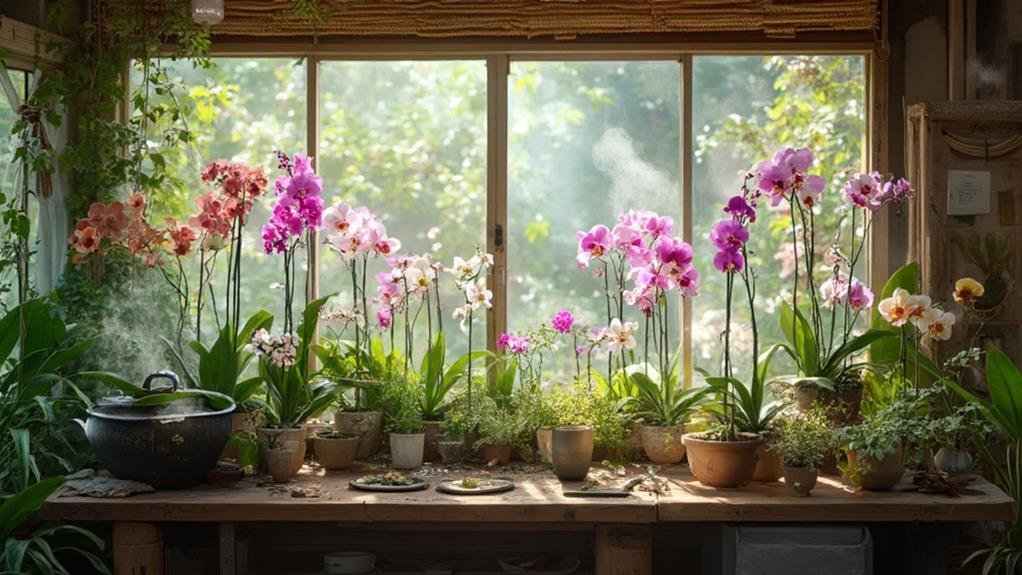
When it comes to growing Asian orchids, tradition plays a significant role in shaping the methods used. You'll find that these time-honored techniques, passed down through generations, foster a deep connection to the plants and their natural habitats.
Embracing these methods not only helps you cultivate healthier orchids but also allows you to honor the wisdom of those who came before you.
Start by paying attention to the potting medium. Traditional growers often use a blend of bark, moss, and charcoal, which mimics the orchids' native environments. This mix provides excellent drainage and aeration, fundamental for healthy root development.
You should also consider the watering schedule; many experienced growers recommend soaking the medium and allowing it to dry slightly before the next watering, ensuring ideal moisture levels.
Another essential aspect is light. Traditional growers understand that orchids thrive under filtered sunlight.
Position your plants where they can receive soft, indirect light, which promotes robust growth and vibrant blooms.
Understanding Local Climate
Understanding the local climate is essential for successfully growing Asian orchids. As you begin this rewarding journey, you'll need to recognize how temperature, humidity, and light conditions impact your orchids' growth. Each species has its preferences, so take the time to familiarize yourself with their specific needs.
Start by observing your environment throughout the seasons. If you notice that winters are colder, consider providing extra warmth or moving your plants indoors. During hot summers, make sure your orchids receive adequate shade to prevent sunburn.
Humidity is another vital factor. Orchids thrive in moist air, so if your home is dry, think about using a humidifier or placing trays of water near your plants to boost humidity levels.

Also, remember that light plays a significant role. East-facing windows often provide the gentle light many orchids crave, but be cautious of direct sunlight, which can scorch the leaves.
Soil and Potting Mix Choices
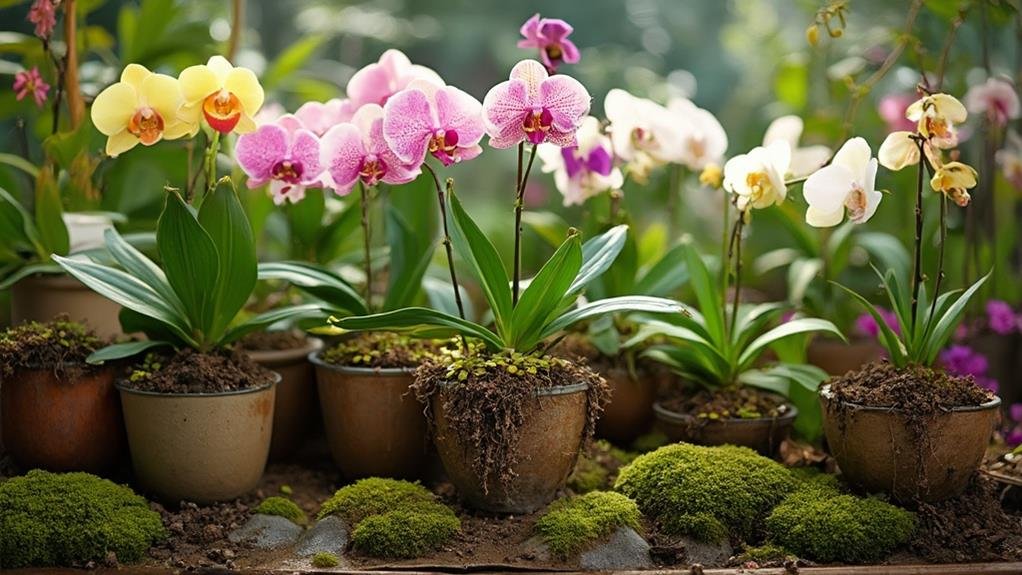
When it comes to growing orchids, choosing the right soil and potting mix is essential for their health.
You'll need to take into account the ideal soil composition and explore various potting mix options that suit your specific orchids.
Plus, understanding drainage requirements will help guarantee your plants thrive.
Ideal Soil Composition
Often, selecting the right soil composition is essential for the health and growth of your orchids. You want a mix that provides excellent drainage while retaining enough moisture for the roots. A well-balanced blend includes components like bark, sphagnum moss, and perlite. This combination allows air circulation around the roots, preventing rot and promoting healthy growth.
When you're choosing your soil, consider the specific needs of your orchids. For instance, epiphytic orchids thrive in lighter, more aerated mixes, while terrestrial types may benefit from a denser composition.
It's also important to avoid standard potting soil, as it can become compacted and suffocate your orchids.
Potting Mix Variations
Exploring potting mix variations is essential for optimizing your orchids' growth. The right mix can greatly influence how well your orchids thrive. You might want to reflect on a blend that offers excellent aeration and retains moisture without becoming waterlogged.
For instance, some growers use a mix of fir bark, sphagnum moss, and perlite. This combination allows for good drainage and airflow while still retaining enough moisture to keep the roots happy.
You could also experiment with coconut coir as an eco-friendly alternative, which provides a great balance of moisture retention and drainage.
Additionally, you may find that different orchid species prefer specific potting mixes. Phalaenopsis orchids often thrive in a coarse mixture, while dendrobiums may favor something that retains a bit more moisture.
By tailoring your potting mix to your orchids' needs, you not only enhance their growth but also contribute to their overall health and vibrancy.
Don't hesitate to adjust your potting mix based on the climate and environmental conditions you're working with. Your orchids will flourish when you craft an environment that reflects their natural habitat!
Drainage Requirements Explained
Understanding drainage requirements is vital for successful orchid cultivation. Proper drainage not only prevents root rot but also guarantees your orchids receive the right amount of moisture.
When choosing a potting mix, consider materials that promote airflow and water retention, like bark, sphagnum moss, or perlite. These components help create a well-aerated environment for the roots.
When selecting pots, opt for ones with ample drainage holes. This feature allows excess water to escape, keeping your orchids healthy. You might also want to elevate pots on saucers or use pot feet to facilitate drainage.
Remember, waterlogged conditions can quickly lead to problems, so it's important to strike a balance between moisture and airflow.
Regularly check your orchid's roots and potting mix. If the mix becomes compacted or retains too much moisture, it's time for a refresh.
By staying attentive to drainage needs, you not only serve the well-being of your orchids but also enhance their beauty for those who admire them.
Ultimately, understanding and addressing these drainage requirements will lead to thriving orchids and a satisfying experience for both you and those you share your blooms with.
Effective Pest Management
When it comes to keeping your orchids healthy, effective pest management is essential.
You can implement integrated pest management strategies that combine various techniques to minimize pest damage.
Additionally, utilizing natural predators can help maintain a balanced ecosystem right in your garden.
Integrated Pest Management Strategies
Integrated Pest Management (IPM) strategies offer a thorough approach to tackling pest issues that threaten Asian orchid growers. By focusing on prevention, monitoring, and control, you can create a sustainable environment for your orchids while minimizing harm to beneficial organisms.
Start by evaluating your growing conditions and identifying potential pest problems before they escalate.
Regularly inspect your plants and maintain accurate records of pest populations. This proactive monitoring allows you to make informed decisions about interventions.
When pests are detected, consider using a combination of mechanical, cultural, and biological controls. For example, you might introduce barriers to prevent pests from accessing your orchids or adjust your watering practices to deter infestations.
Incorporating environmentally friendly pesticides as a last resort can also be effective, but always follow application guidelines to protect non-target species.
By adopting these IPM strategies, you're not only safeguarding your orchids but also contributing to a healthier ecosystem.
Ultimately, your commitment to effective pest management reflects your dedication to nurturing beautiful orchids for others to enjoy, fostering a sense of community and shared appreciation for nature's wonders.
Natural Predators Utilization
Natural predators play an essential role in effective pest management for Asian orchid growers. By harnessing the power of nature, you can protect your beautiful orchids from harmful pests without relying solely on chemical pesticides.
Beneficial insects, like ladybugs and lacewings, feed on aphids and other pests that threaten your plants. When you introduce these natural predators into your orchid environment, you create a balanced ecosystem that promotes healthy growth.
To utilize natural predators effectively, start by evaluating your pest problem. Identify the specific pests affecting your orchids, then research which predators target those pests.
You might consider releasing them at dusk when they're most active. Additionally, providing a habitat for these beneficial insects, such as flowering plants, can help sustain their populations.
Expert Watering Practices

Watering orchids requires a keen understanding of their unique needs. You'll want to observe your plants closely to determine when they truly need water. Overwatering is a common mistake, leading to root rot, while underwatering can stress the plant. A good rule of thumb is to check the potting medium; if it feels dry a couple of inches down, it's time to water.
When you do water, it's best to do so in the morning. This timing allows excess moisture to evaporate, reducing the risk of fungal diseases. Use room-temperature water, as cold water can shock the roots. Instead of a quick splash, aim for a deep soak, ensuring that water reaches the roots and drains thoroughly.
Consider the humidity levels in your growing environment. If your orchids thrive in high humidity, misting can help maintain moisture without overwatering.
Fertilization Strategies
To keep your orchids thriving, understanding their fertilization needs is just as important as mastering your watering techniques. You'll want to provide your orchids with balanced nutrients to promote healthy growth and beautiful blooms.
Start by using a fertilizer specifically formulated for orchids, which typically contains a mix of nitrogen, phosphorus, and potassium.
During the growing season, you should fertilize every two weeks. This frequency guarantees your orchids receive the essential nutrients they need without overwhelming them. Dilute the fertilizer to half-strength; orchids are sensitive to strong solutions, and less is often more.
Incorporating slow-release fertilizers can also be a game-changer. These products gradually release nutrients over time, providing a steady supply without frequent applications. Just be sure to follow the manufacturer's instructions for application rates.
Don't forget to monitor your orchids for signs of nutrient deficiency, such as yellowing leaves or poor growth. Adjust your fertilization strategy accordingly to guarantee they get what they need.
Seasonal Care Adjustments

As the seasons change, it's crucial to tweak your orchid care routine to keep them thriving.
During spring, when temperatures rise, increase your watering frequency. Orchids love the warmth, and they'll benefit from a little extra hydration. Just make sure the potting mix drains well to prevent root rot.
In summer, humidity levels can soar, so consider misting your orchids or placing a humidity tray nearby. This extra moisture will prevent stress and keep your plants healthy.
As autumn approaches, gradually reduce watering; your orchids will enter a rest period.
Winter is when you need to be most mindful. With lower light levels, cut back on fertilization and adjust your watering schedule to avoid over-saturating the roots.
But don't forget to check for pests; they can be more prevalent in dry indoor air.
Community Knowledge Sharing
Orchid care can often feel isolating, but connecting with fellow growers can enhance your experience and knowledge. By sharing insights, you not only expand your understanding but also foster a supportive community that thrives on collaboration.
Engaging with others allows you to exchange tips on pest management, watering techniques, and ideal lighting conditions, ensuring that everyone benefits from each other's successes and challenges.
Consider joining local orchid clubs or online forums where you can ask questions and share your experiences. These platforms provide a wealth of information, from growing techniques to troubleshooting common issues.
When you share your challenges, you invite others to provide their perspectives and solutions, which can be invaluable.
Don't hesitate to host workshops or meet-ups in your area. These gatherings create an opportunity for hands-on learning and mentorship.
As you grow your network, you'll find that the collective wisdom of the community can help you overcome obstacles you might face alone.
Ultimately, by contributing your knowledge and experiences, you're not just improving your own skills—you're uplifting others in the orchid community and creating a culture of generosity and support that benefits everyone involved.
Sustainable Growing Practices

Sustainable growing practices not only benefit your orchids but also contribute to a healthier environment. By embracing these practices, you're not just caring for your plants; you're also nurturing the planet.
Start by using organic fertilizers and pest control methods. These options minimize chemical runoff, protecting local ecosystems while promoting the health of your orchids.
Consider implementing water-saving techniques, like drip irrigation, to guarantee your orchids get the moisture they need without waste. This approach conserves water and reduces your environmental footprint.
Additionally, utilizing renewable resources, such as coconut coir or recycled materials for potting, can further enhance sustainability.
Engaging in companion planting can also help your orchids thrive while fostering biodiversity. By planting complementary species nearby, you create a natural balance that deters pests and encourages pollination.
Lastly, share your knowledge with fellow growers. By educating others on sustainable techniques, you're expanding the impact of your efforts. Together, you can build a community dedicated to preserving nature while cultivating beautiful orchids.
Frequently Asked Questions
What Common Mistakes Do Beginner Orchid Growers Make?
Beginner orchid growers often overwater, use inappropriate potting media, and neglect humidity levels. They might also place orchids in direct sunlight or fail to fertilize properly. Learning these aspects can help you nurture thriving orchids.
How Can I Identify Different Orchid Species?
To identify different orchid species, observe their unique flower shapes, colors, and leaf patterns. Use guides or apps for assistance, and connect with local growers to share insights and expand your knowledge about these beautiful plants.
What Are the Signs of a Healthy Orchid?
To identify a healthy orchid, check for vibrant leaves, firm roots, and good growth. You'll notice blooming flowers and no signs of pests. Regular watering and proper light will help maintain its health, too.
Can Orchids Thrive Indoors Without Natural Light?
Yes, orchids can thrive indoors without natural light. You should provide artificial light, maintaining a consistent schedule. Guarantee proper humidity and airflow, and your orchids will flourish even in less-than-ideal lighting conditions.
How Often Should I Repot My Orchids?
You should repot your orchids every one to two years, or when you notice the potting medium breaking down. Pay attention to their roots; if they're crowded, it's time to give them more space.
Conclusion
In summary, by embracing traditional growing techniques and understanding local climates, Asian orchid growers consistently avoid common pitfalls. Their careful selection of potting mixes, effective pest management, and expert watering practices guarantee thriving plants. By adjusting care seasonally and sharing knowledge within their communities, they cultivate a sustainable approach that benefits both their orchids and the ecosystem. You can learn a lot from their practices to enhance your own orchid-growing experience and enjoy vibrant blooms.